
The allure of water, with its rhythmic flow and serene ambiance, has long been a cherished element in design. When this fluid elegance is paired with the enduring character of limestone, a unique alchemy occurs. Let’s delve into the curated collection of limestone wall fountains by Ancient Surfaces, where each piece offers a fresh perspective on time-honored beauty.
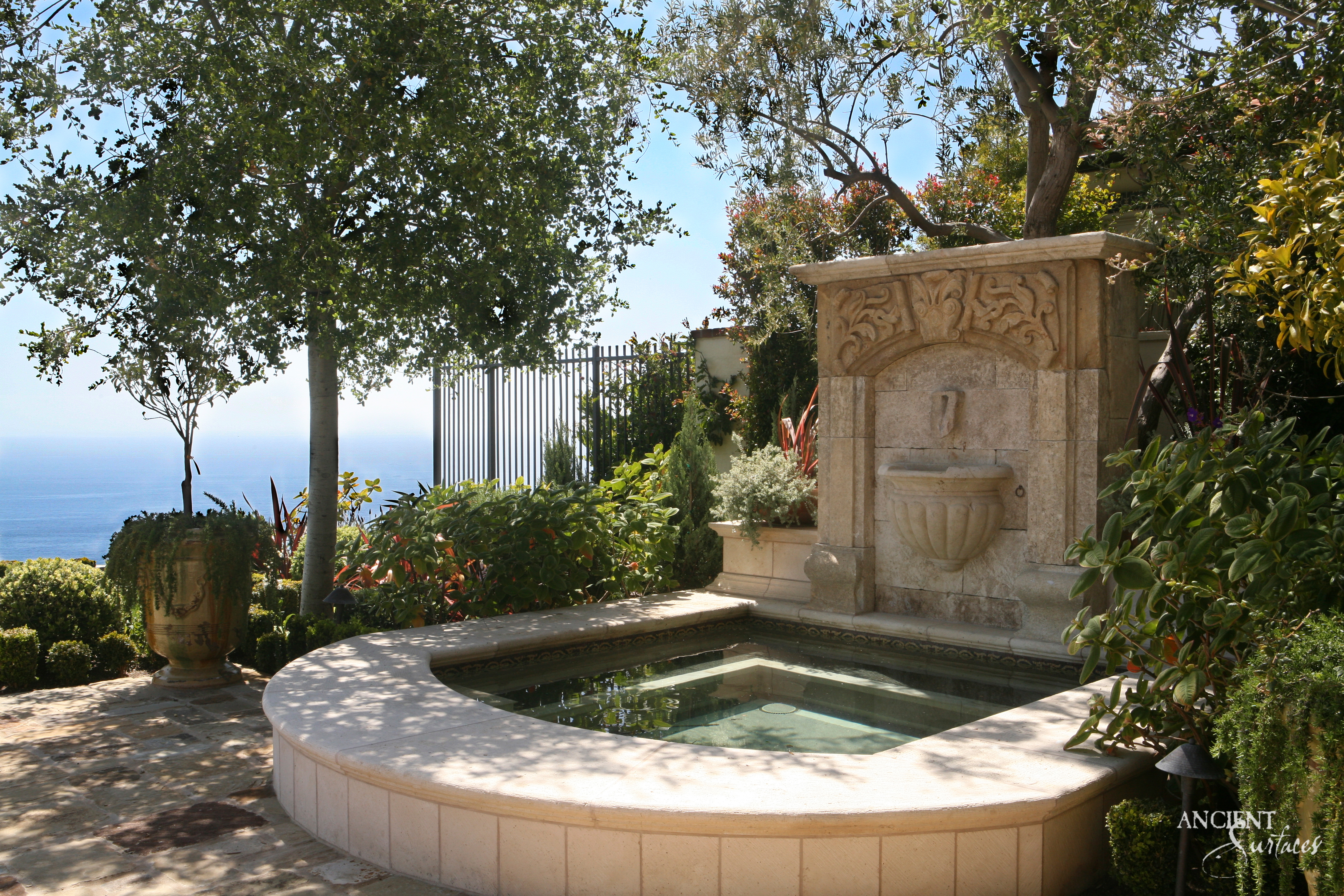
One of the standout pieces in the collection draws inspiration from the hidden gardens of Tuscany. This fountain, with its modest basin and archaic facade, transports you to a world where every droplet of water has a tale to tell. The limestone, kissed by the sun and caressed by the winds of yesteryears, adds an authentic touch to this Italian masterpiece.

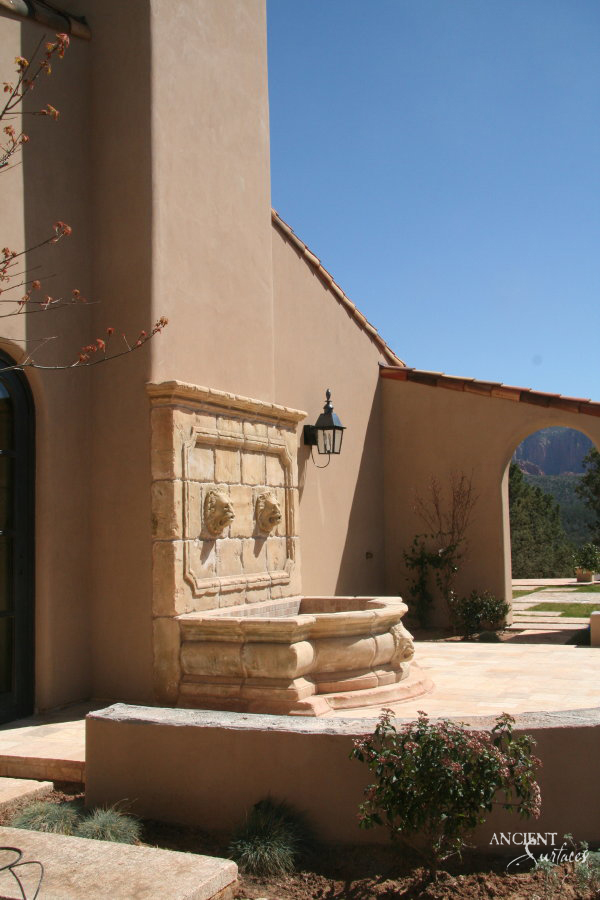
Venturing further, we discover a fountain that seems to have been plucked straight from a Spanish hacienda. Its bold carvings and robust stature exude a sense of strength and heritage. The limestone, with its earthy tones, contrasts beautifully with the water’s clarity, making it a focal point in any courtyard.

For aficionados of subtlety, there’s a fountain that embodies the essence of Scandinavian simplicity. Its understated design, devoid of excessive ornamentation, lets the limestone’s texture and hues take center stage. The gentle cascade of water on this backdrop creates a calming spectacle, perfect for introspective moments.

Drawing cues from ancient Arabian courtyards, we find a fountain that intertwines geometric precision with organic charm. The design, characterized by symmetrical patterns, is a nod to the meticulous artistry of the Middle East. The seasoned limestone enhances this fountain’s authenticity, making it a piece that resonates with history.

Concluding our exploration, we encounter a fountain that is a blend of the old and the new. While its design is contemporary, the use of aged limestone infuses it with a touch of antiquity. This juxtaposition makes it a versatile piece, suitable for both modern lofts and classic villas.

In summary, the limestone wall fountain collection by Ancient Surfaces offers a fresh take on the union of water and stone. Each fountain, distinct in its design and narrative, is a testament to the versatility of limestone and the transformative power of water. As you navigate this collection, let each piece inspire you, offering fresh perspectives on integrating timeless beauty into contemporary spaces.


Come visit our interactive digital online catalog
Call us at: 212-461-0245 // 212-913-9588
Water has always held a mystical allure. Its gentle murmurs, the way it catches light, and its soothing presence have made it a coveted element in design and architecture. At the heart of this allure lies the wall fountain, a timeless piece that marries the beauty of water with artistry. As we journey through the captivating collection of limestone wall fountains by Ancient Surfaces, each piece emerges as a symphony of history, craftsmanship, and nature.
The first fountain in our collection is reminiscent of a bygone era. Carved from a single slab of limestone, its surface bears the marks of time. As water cascades down its face, it seems to narrate tales from ancient courtyards and secluded monasteries.


Venturing deeper into the collection, there’s a fountain that celebrates the Renaissance. With intricate motifs and delicate carvings, it’s a testament to the artistry of a time when sculptors and masons were revered. The play of water over its detailed surface creates mesmerizing patterns, making it a visual and auditory treat.

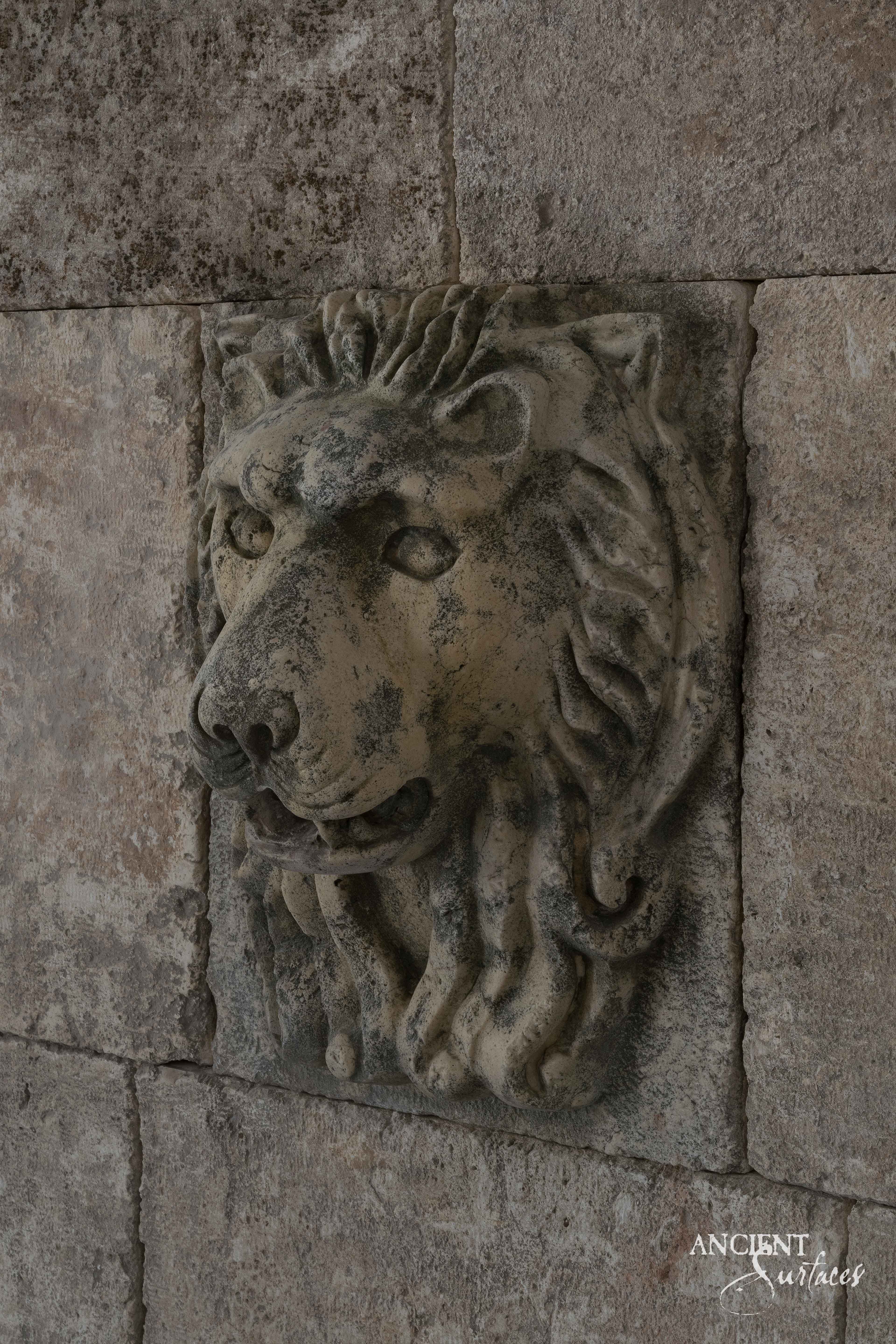
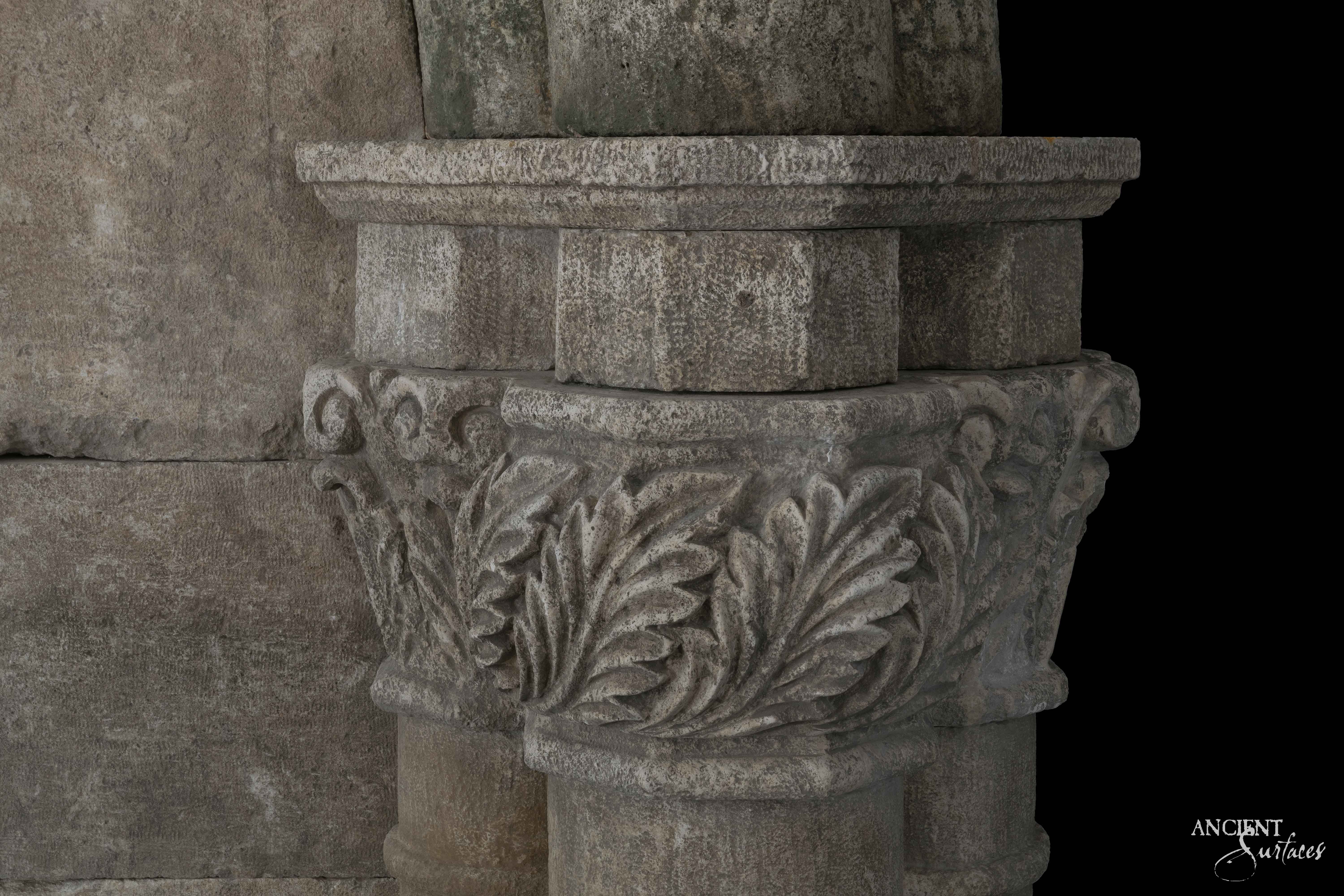
For those with a penchant for minimalism, Ancient Surfaces presents a fountain that embodies simplicity. With clean lines and a smooth surface, it’s a piece that lets water take center stage. The sound of water gently hitting the basin below is a reminder of nature’s simple pleasures.
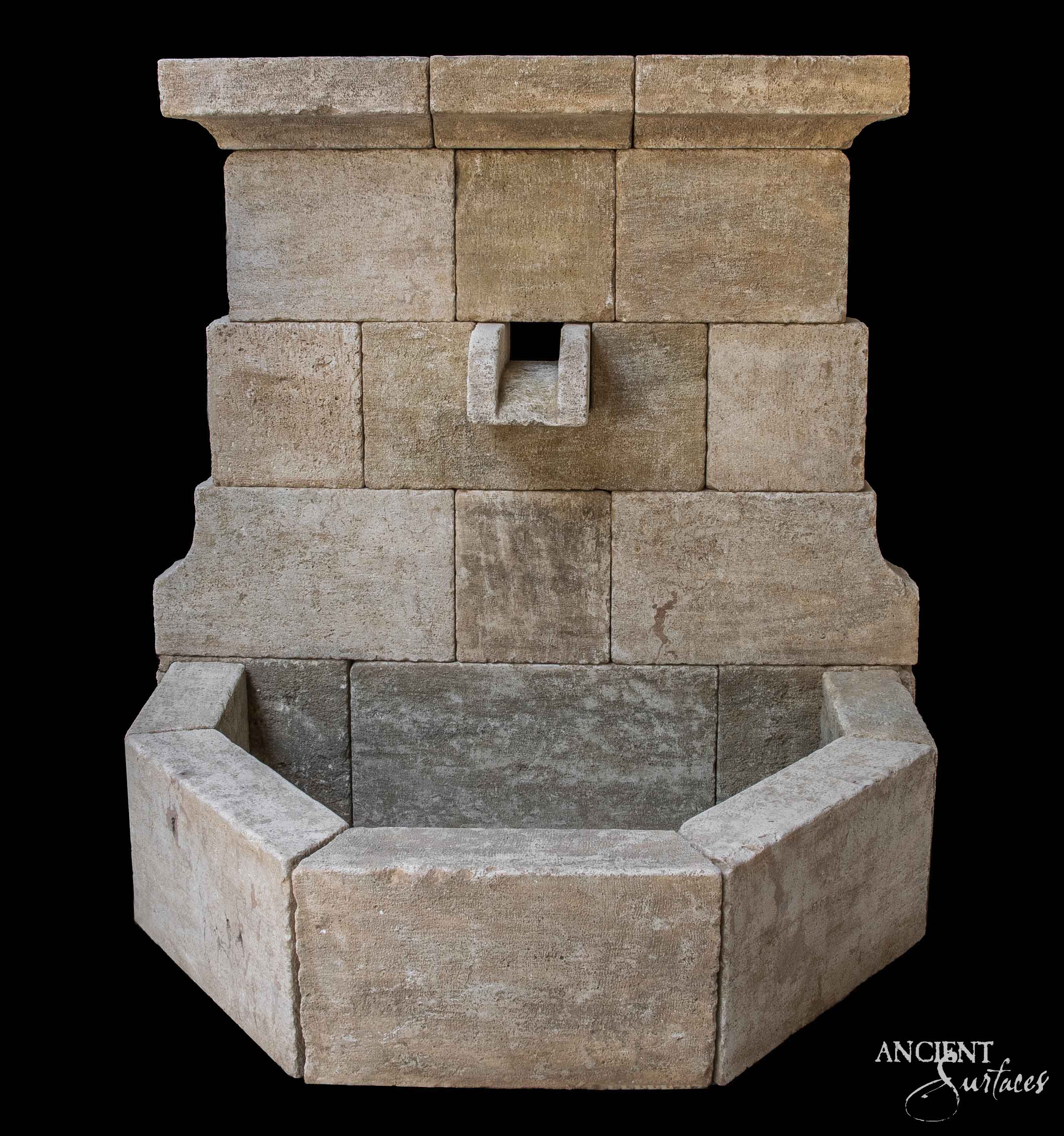
Drawing inspiration from the East, another piece in the collection is reminiscent of traditional Persian gardens. With geometric patterns and a symmetrical design, it’s a fountain that brings a sense of harmony and balance to any space.
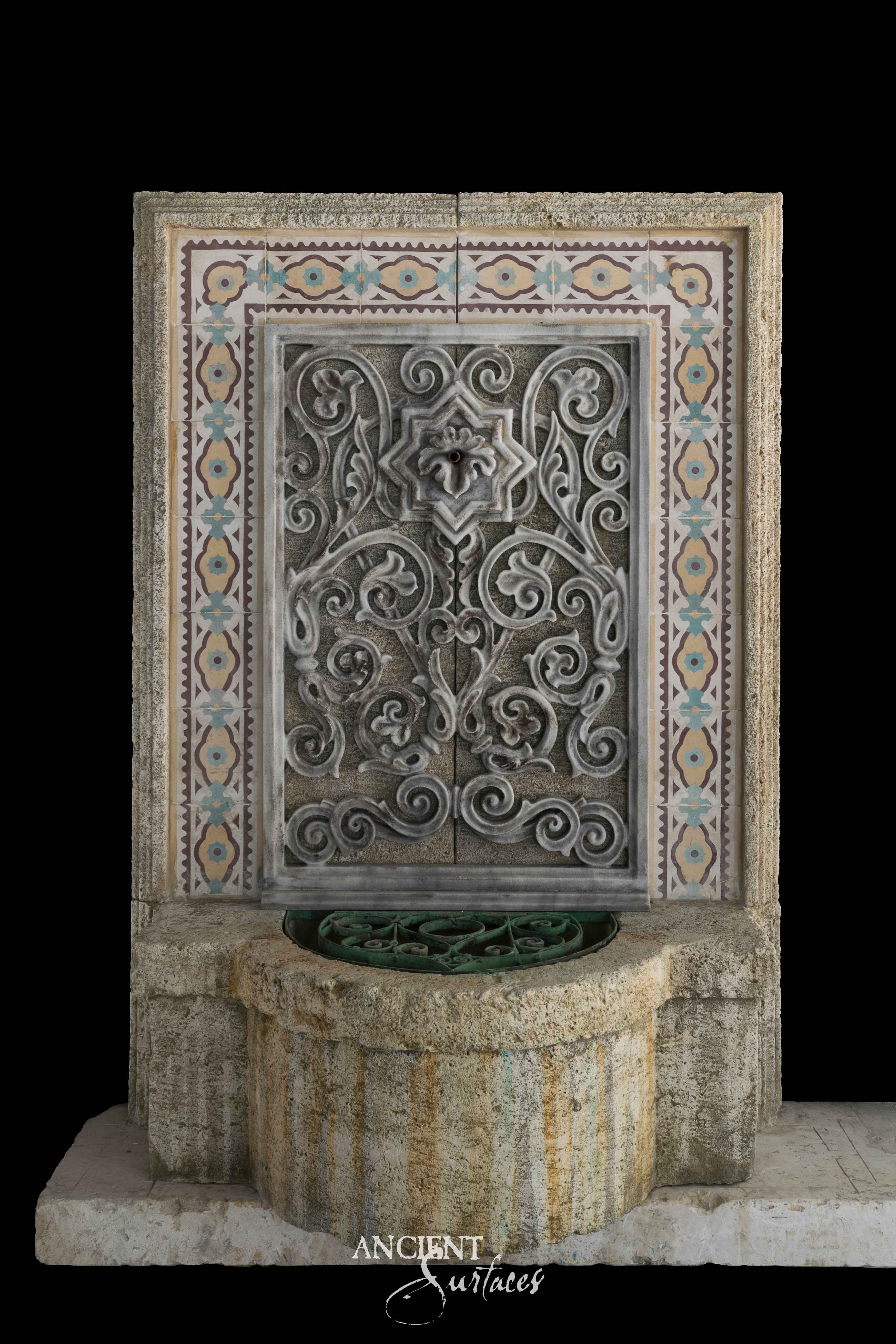
The wall fountain collection by Ancient Surfaces is more than just a showcase of designs; it’s an invitation to experience the magic of water. Each fountain, with its unique design and history, promises to transform spaces into sanctuaries of peace and beauty. As you explore this collection, we invite you to listen to the whispers of water, to let it soothe your soul, and to find that perfect piece that resonates with your spirit.
Come visit our interactive digital online catalog
Call us at: 212-461-0245 // 212-913-9588
In the world of design, where every element has its role, there’s a unique performance that captures the essence of both art and nature: the limestone pool fountain. Crafted with meticulous care by the artisans at Ancient Surfaces, these fountains are not mere decorative pieces. They are poetic expressions in stone and water, elevating the entrance of any home or estate into a realm of timeless beauty and serenity.
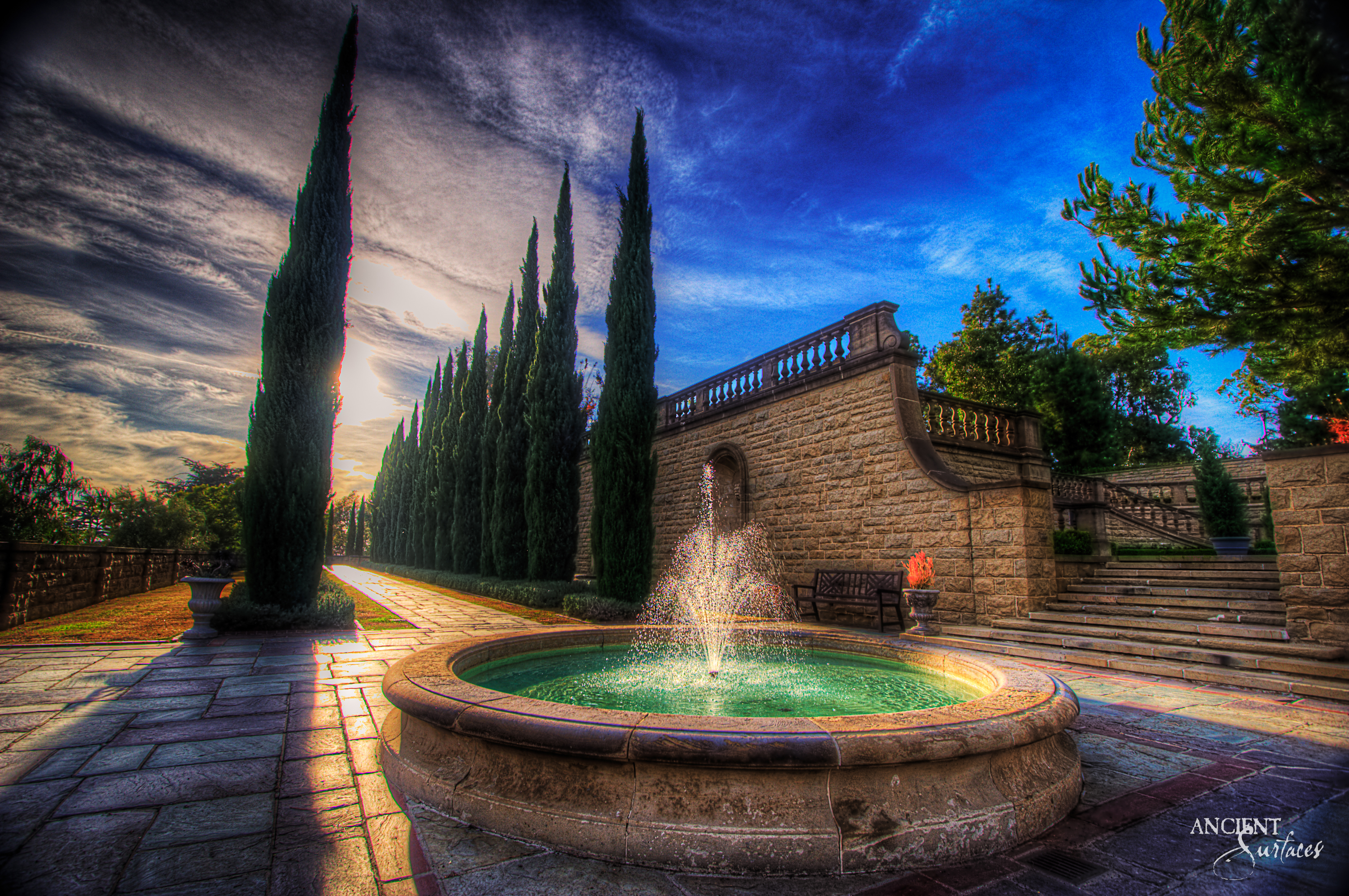
The journey of creating a front courtyard limestone pool fountain begins with the selection of the perfect stone. Ancient Surfaces’ artisans handpick limestone blocks that carry the whispers of time, ensuring that each fountain has its own unique story to tell.
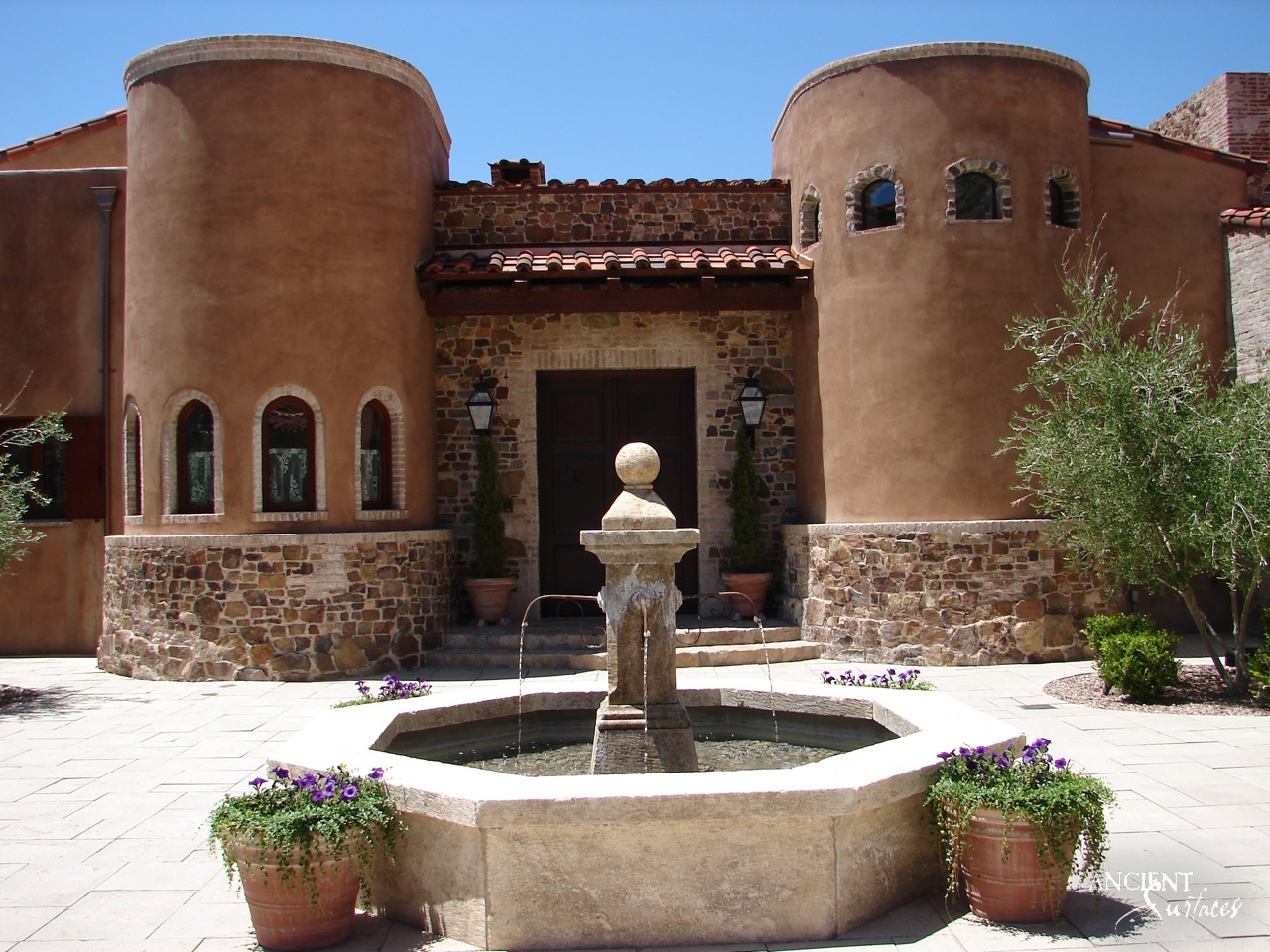
Once the stone is chosen, the real magic begins. The artisans treat each block as a canvas, carving intricate patterns and designs that range from classical to contemporary. The chisel’s dance on the limestone is a sight to behold, as it slowly transforms the raw stone into a masterpiece.
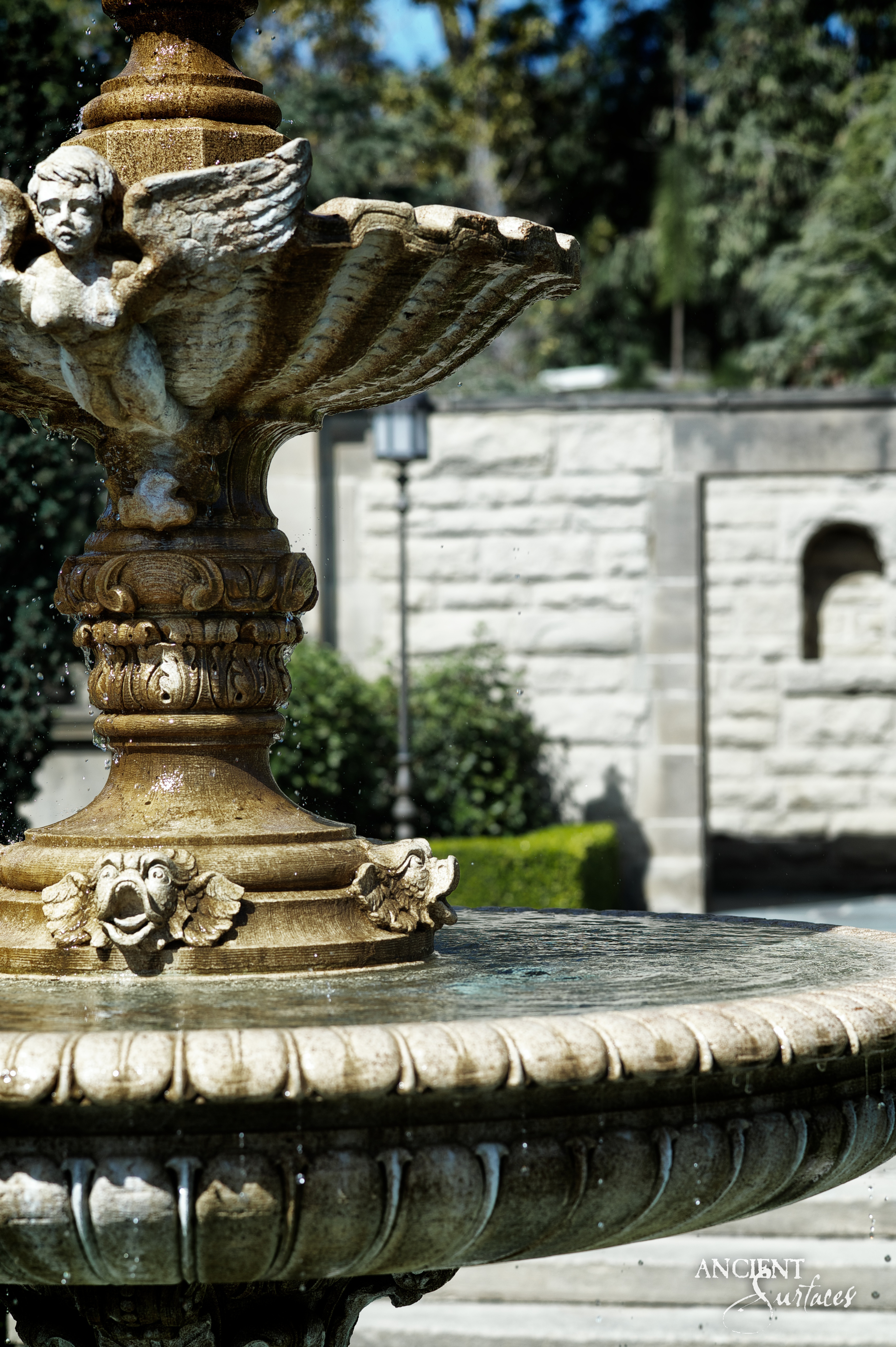
But these fountains are not just about visual appeal. The way the water cascades down the limestone surface creates a melody that is both soothing and invigorating. It’s functional artistry at its best, where form and function exist in perfect harmony.
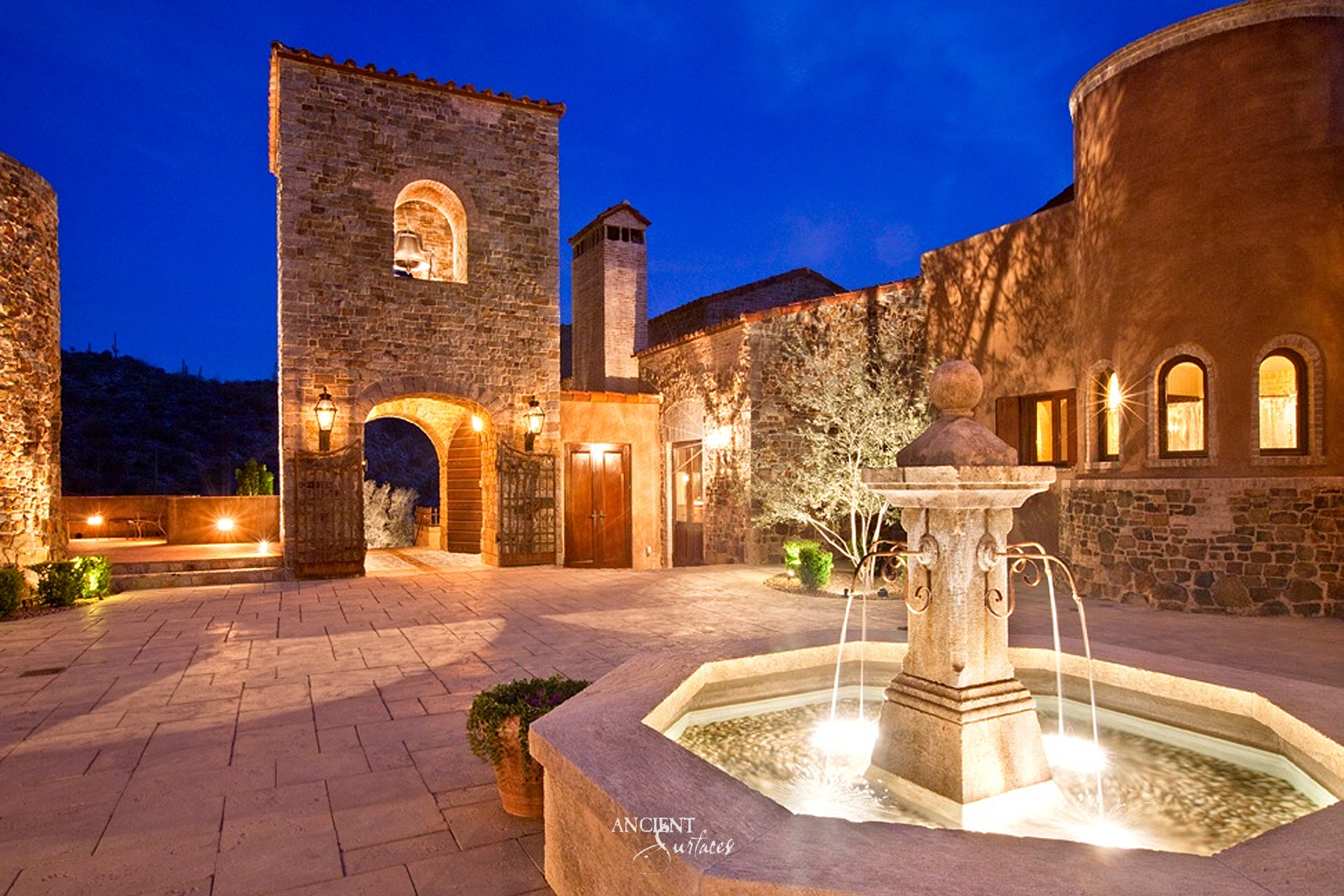
The last step in this artistic journey is finding the fountain’s perfect home. Whether it’s the centerpiece of a grand entrance or a subtle addition to a garden, the limestone fountain becomes a living entity that adds character and soul to its surroundings.
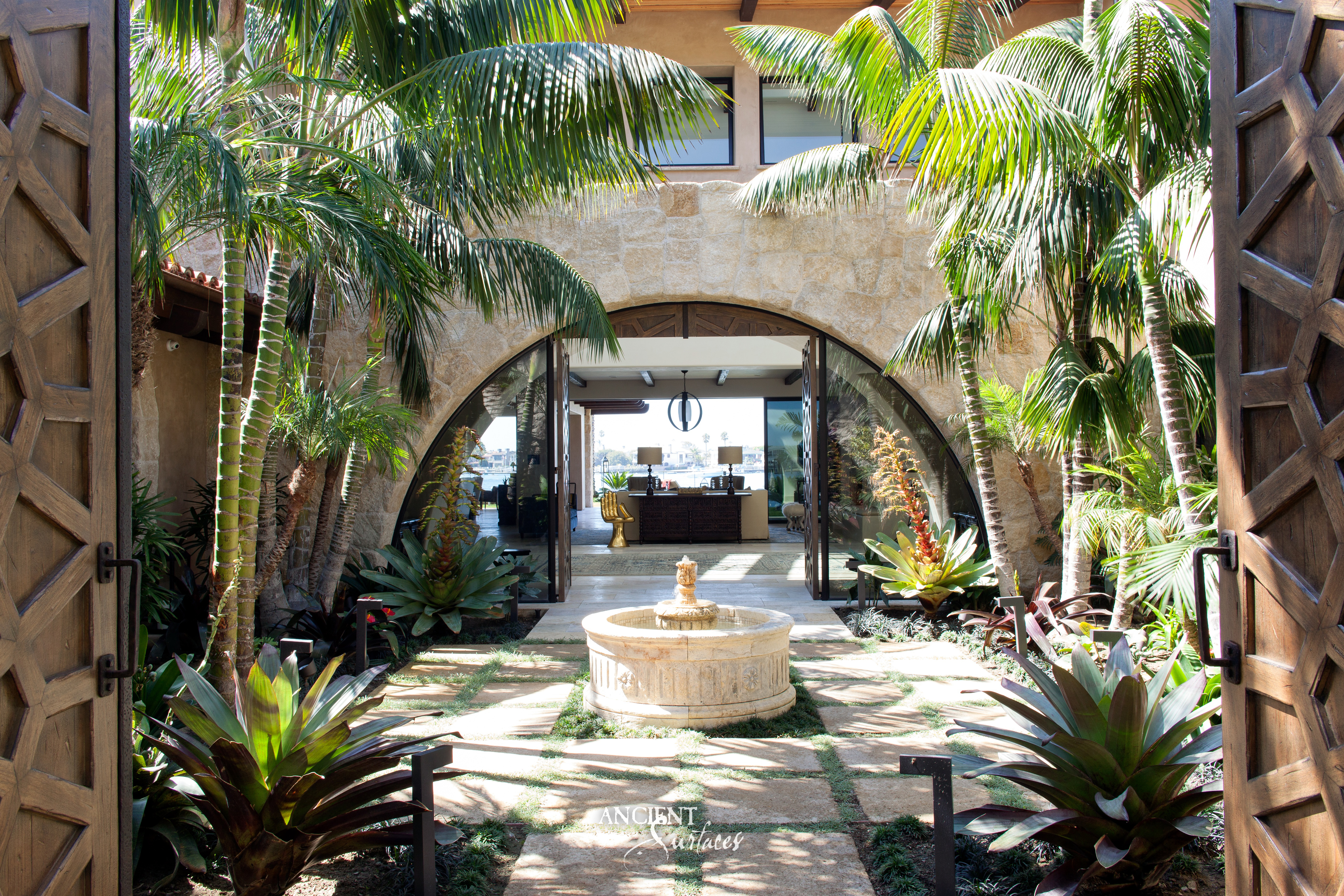
A front entrance fountain by Ancient Surfaces is more than just a water feature; it’s a living canvas where stone and water come together to create a timeless piece of art. It’s the culmination of skilled craftsmanship, artistic vision, and the eternal beauty of limestone.
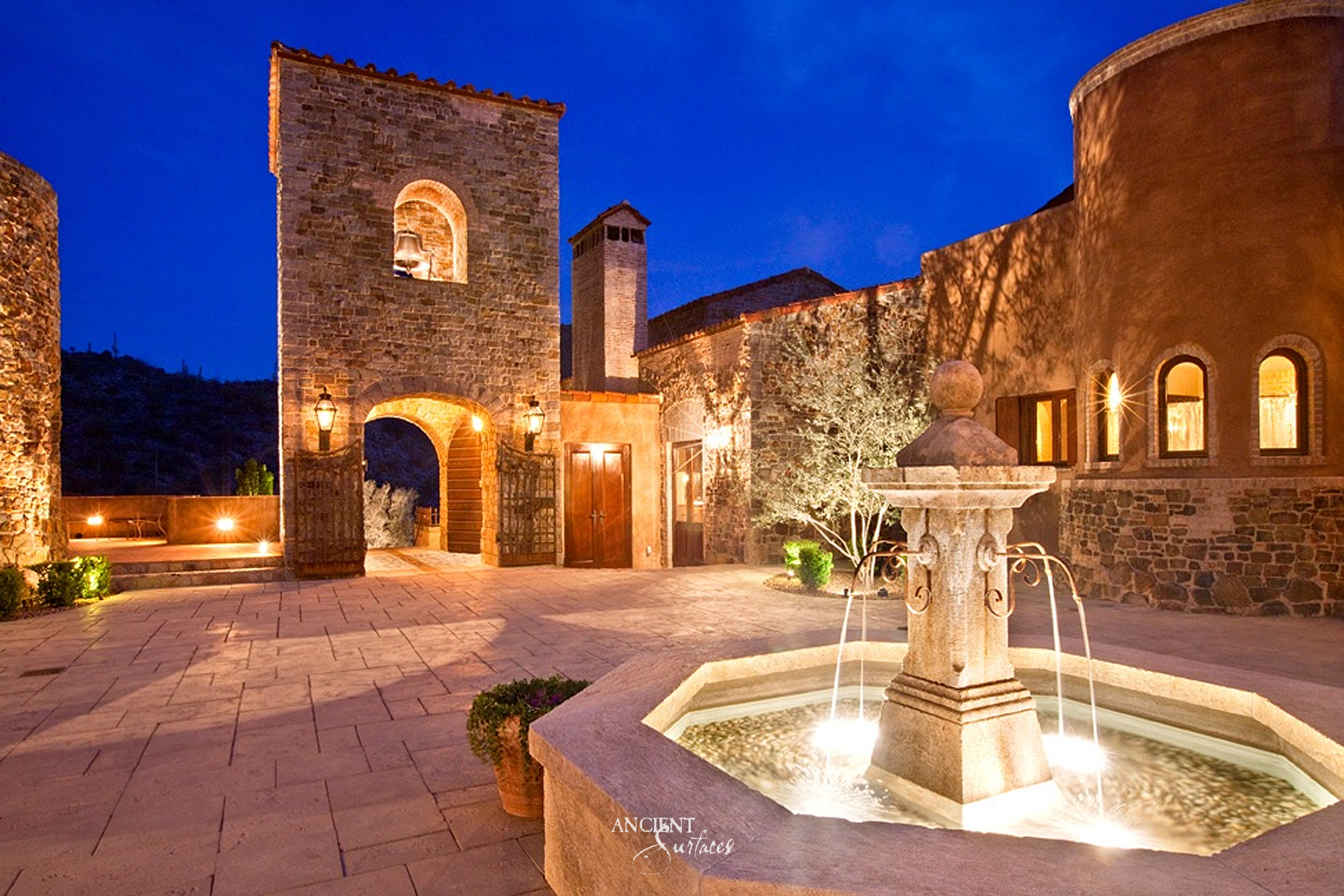
Come visit our interactive digital online catalog
Call us at: 212-461-0245 // 212-913-9588
In the symphony of design, where every element plays its part, there’s a melody that often goes unnoticed – the gentle murmur of water against stone. This is where Ancient Surfaces steps in, crafting wall fountains from ancient limestone, turning mere walls into storytellers of time and tradition.

Limestone, a material that has stood the test of time, carries with it tales of epochs gone by. When this age-old stone is sculpted into a wall fountain by the artisans at Ancient Surfaces, it becomes a bridge between the past and the present. Each droplet of water that cascades down the limestone surface seems to echo tales of ancient civilizations, sun-drenched Mediterranean towns, and the timeless dance of nature.
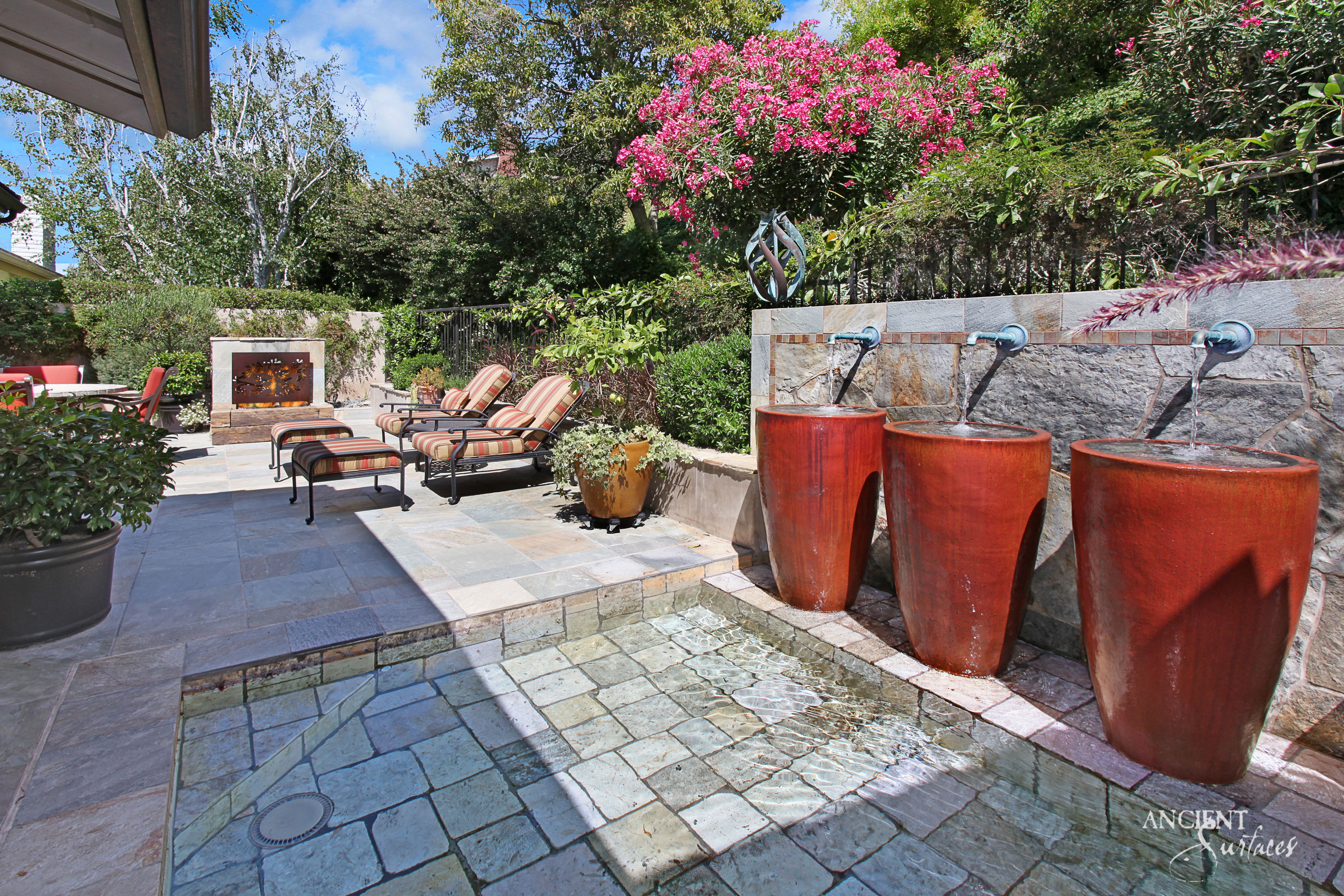
The beauty of these limestone wall fountains lies not just in their material but in their design. Every curve, every nook, and cranny is a testament to the craftsmanship of Ancient Surfaces. From intricate carvings that depict tales of old to sleek, modern designs that fit seamlessly into contemporary spaces, these fountains are more than just water features; they’re pieces of art.
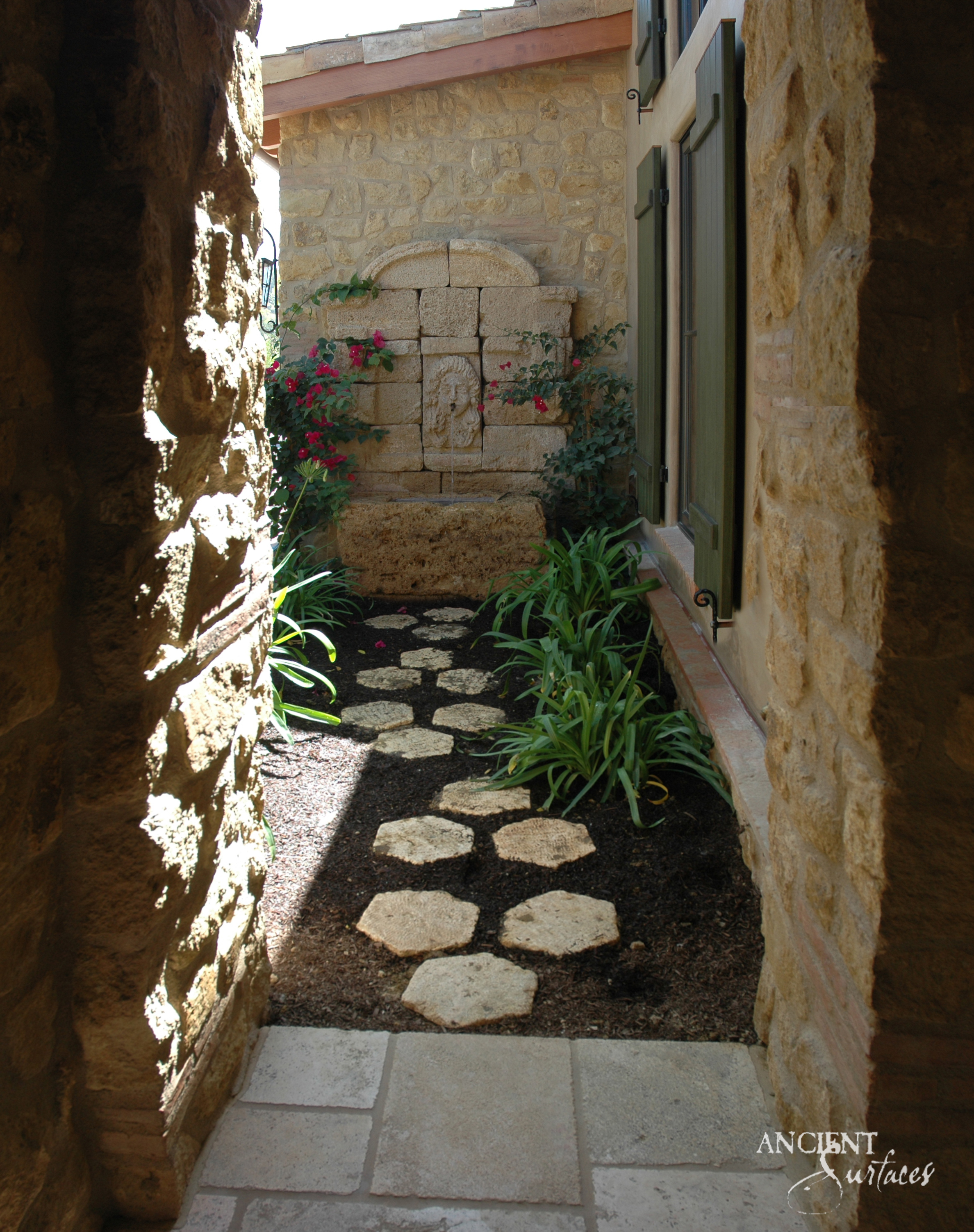
Imagine a courtyard where the gentle sound of water complements the chirping of birds, or an indoor space where the murmur of a fountain soothes the soul. These limestone wall fountains, with their timeless appeal, transform spaces into sanctuaries. They serve as reminders of the beauty of simplicity and the magic that happens when nature and design converge.
Come visit our interactive digital online catalog
Call us at: 212-461-0245 // 212-913-9588
Imagine stepping into a space where the gentle murmur of water greets you, where a masterpiece of stone and water stands as a welcoming entity, inviting you into a world steeped in history and beauty. This is the magic that Ancient Surfaces, a company renowned for its timeless creations, brings to life with their handcrafted fountains.
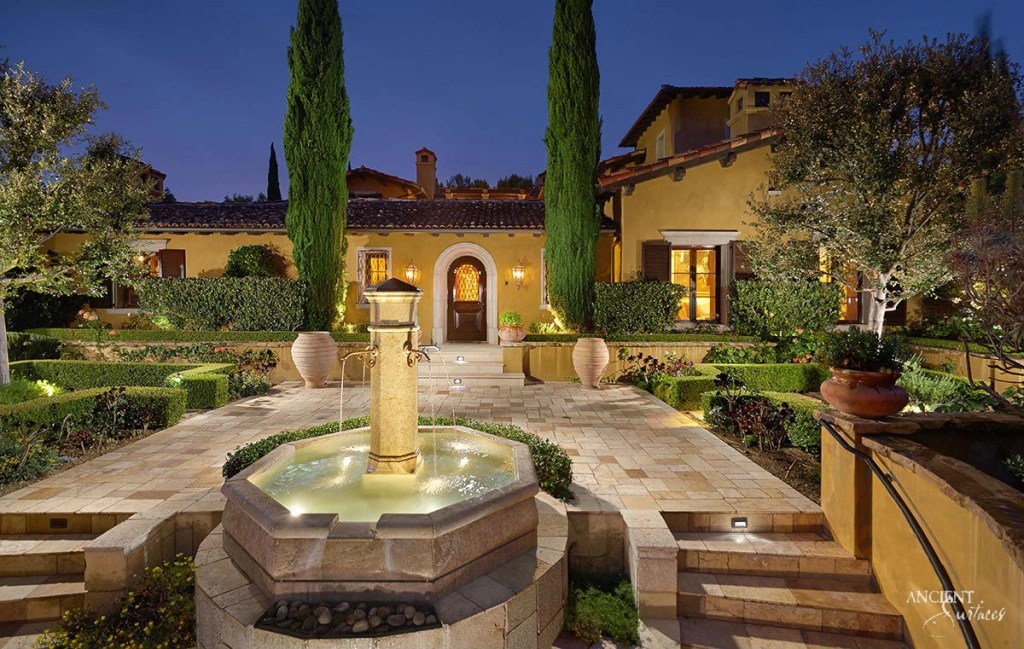
Our story begins with a vision. The artisans at Ancient Surfaces saw more than just stone; they saw a canvas, a medium through which the stories of the past could be told. They set out to create fountains that were not just decorative, but also deeply meaningful, each one a tangible piece of history.
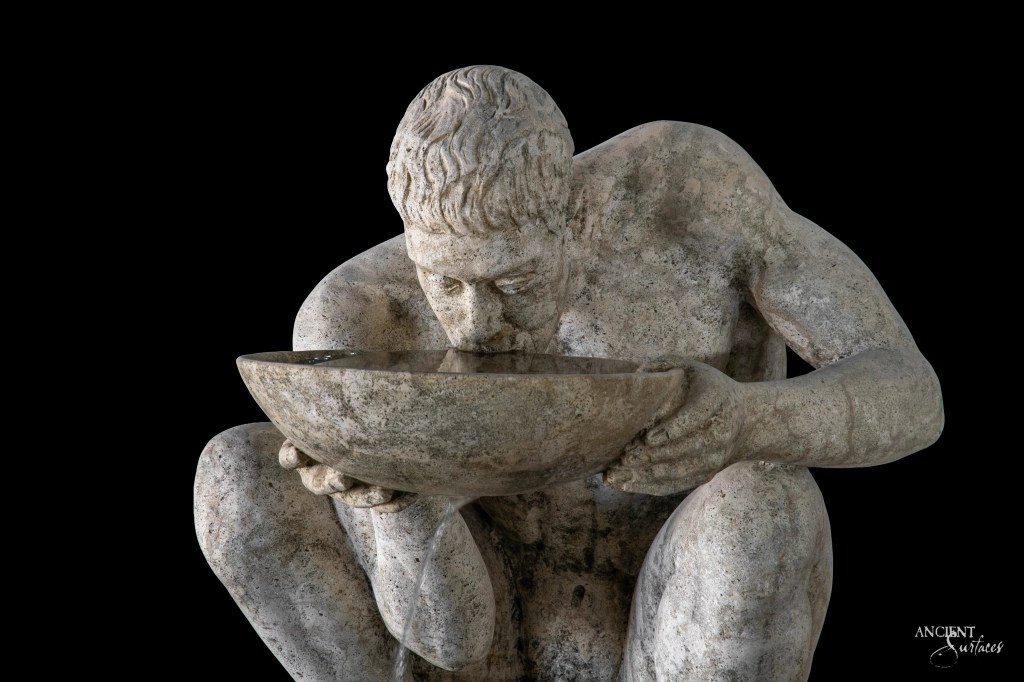
The first of these creations were the Greek-inspired fountains. Each fountain was meticulously hand-carved, capturing the essence of ancient Greek artistry. The intricate designs, the weathered texture, the timeless appeal – every detail was a nod to the grandeur of Greek civilization.

Next came the Roman-inspired fountains. These pieces, with their robust forms and warm hues, were a tribute to the architectural prowess of the Roman Empire. Each fountain was a testament to the enduring allure of Roman design, a piece of history that could transform any space into a historical masterpiece.
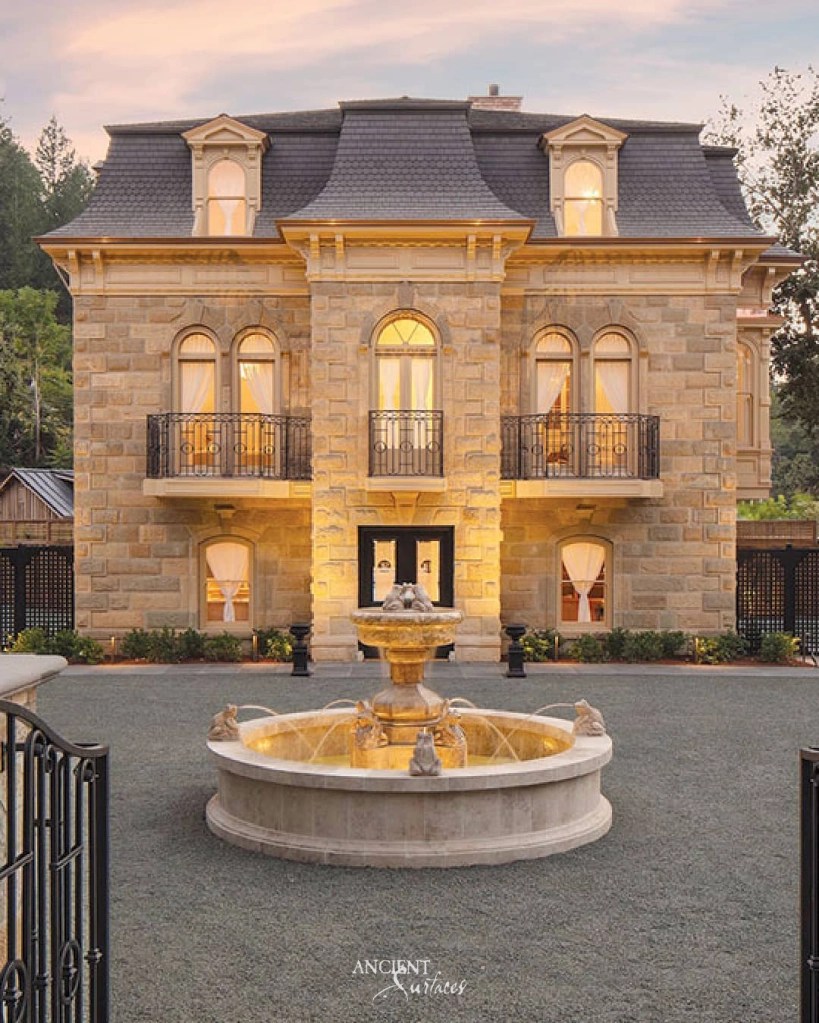
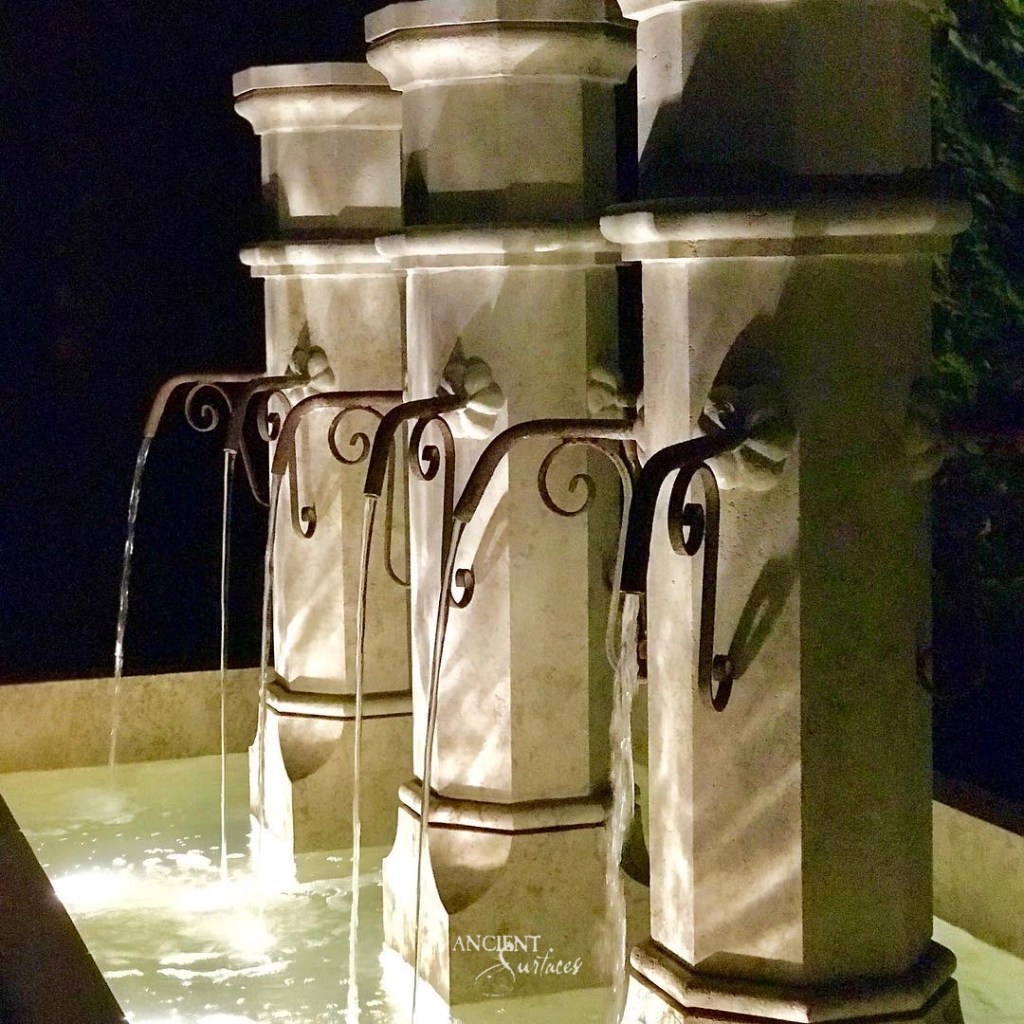
But these fountains were more than just beautiful. They were fragments of history, each one carrying a story etched in time. As these fountains found their way into homes around the world, they brought with them a piece of the past, a connection to our shared architectural heritage.

Come visit our interactive digital online catalog
Call us at: 212-461-0245 // 212-913-9588
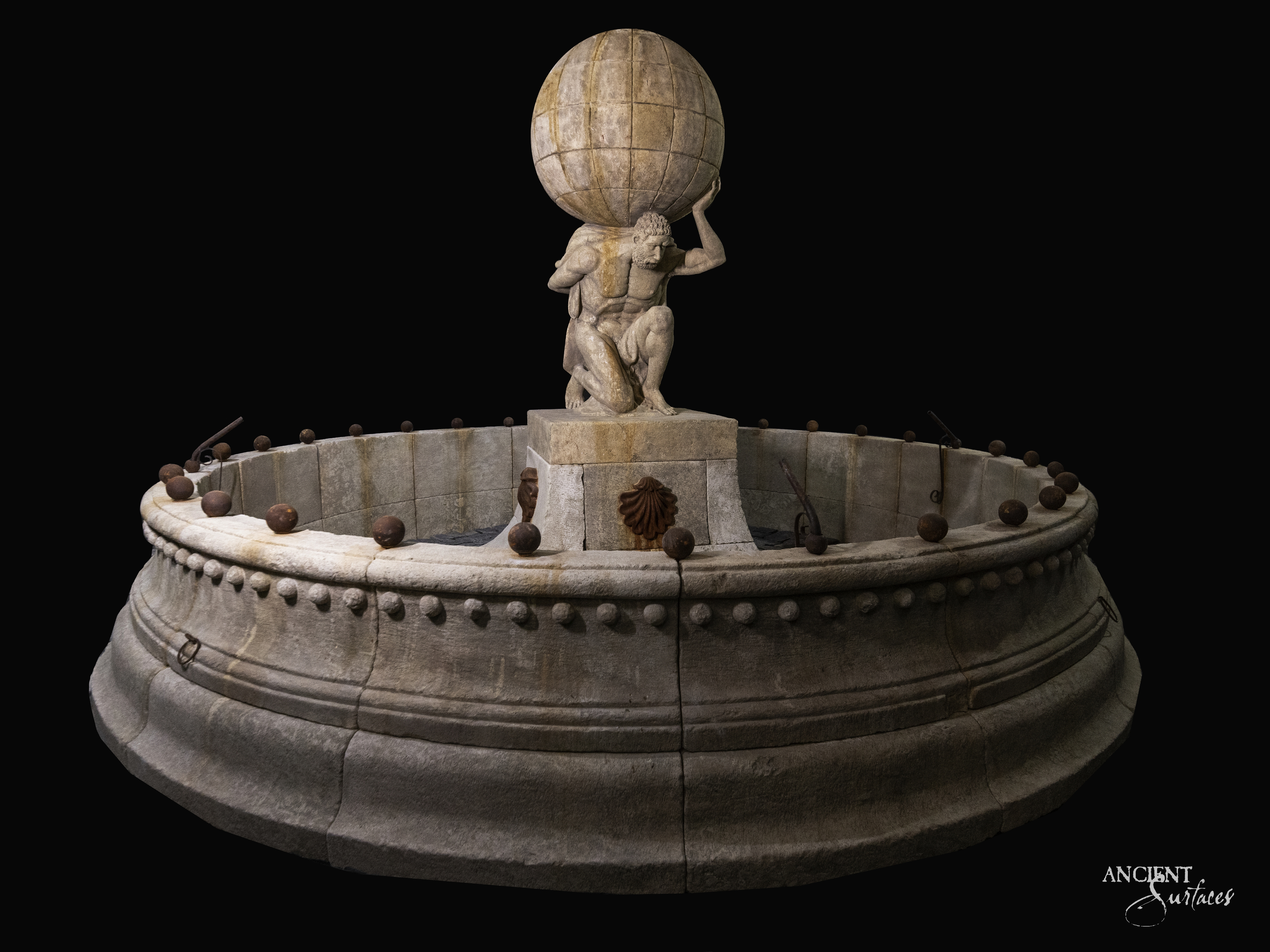
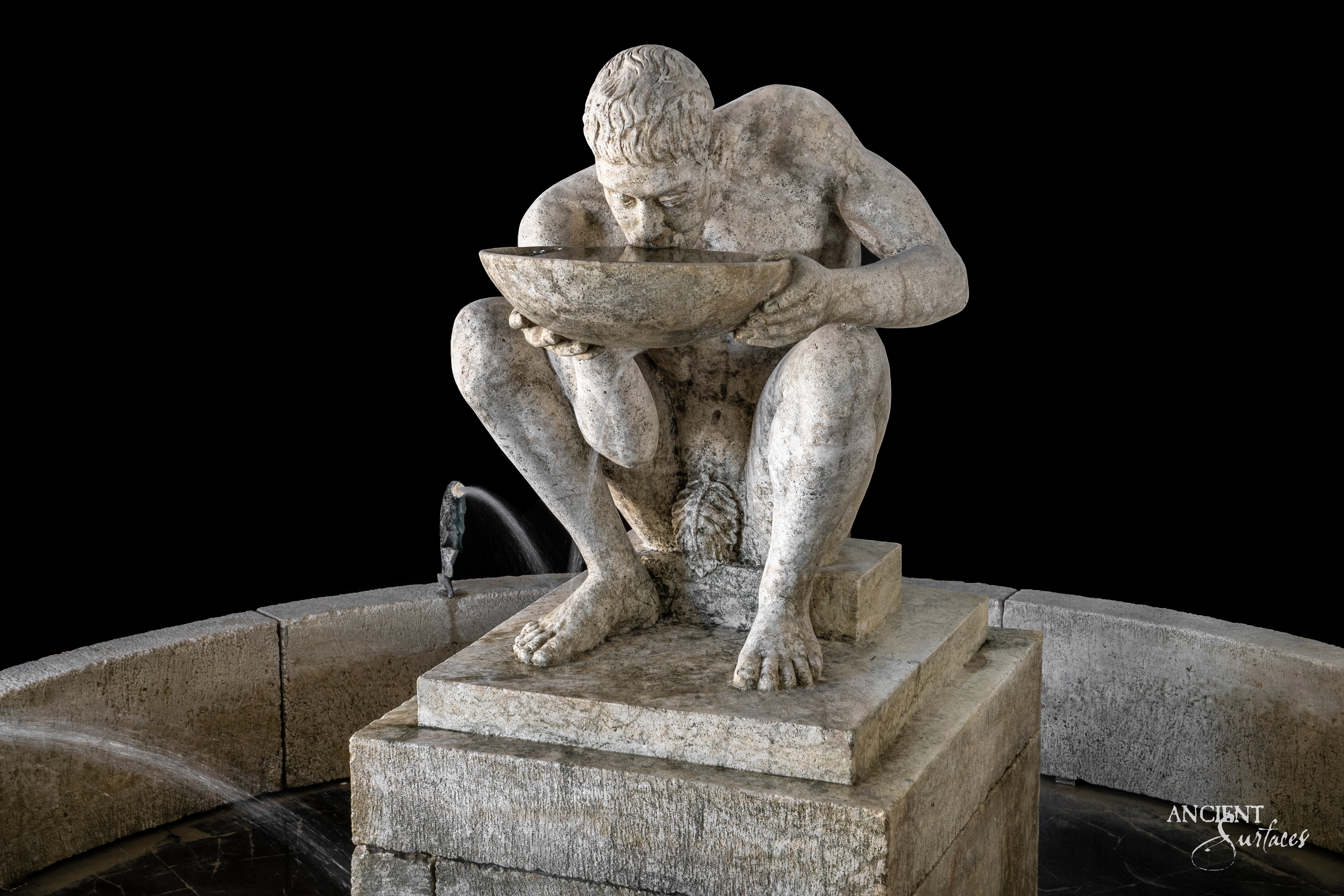
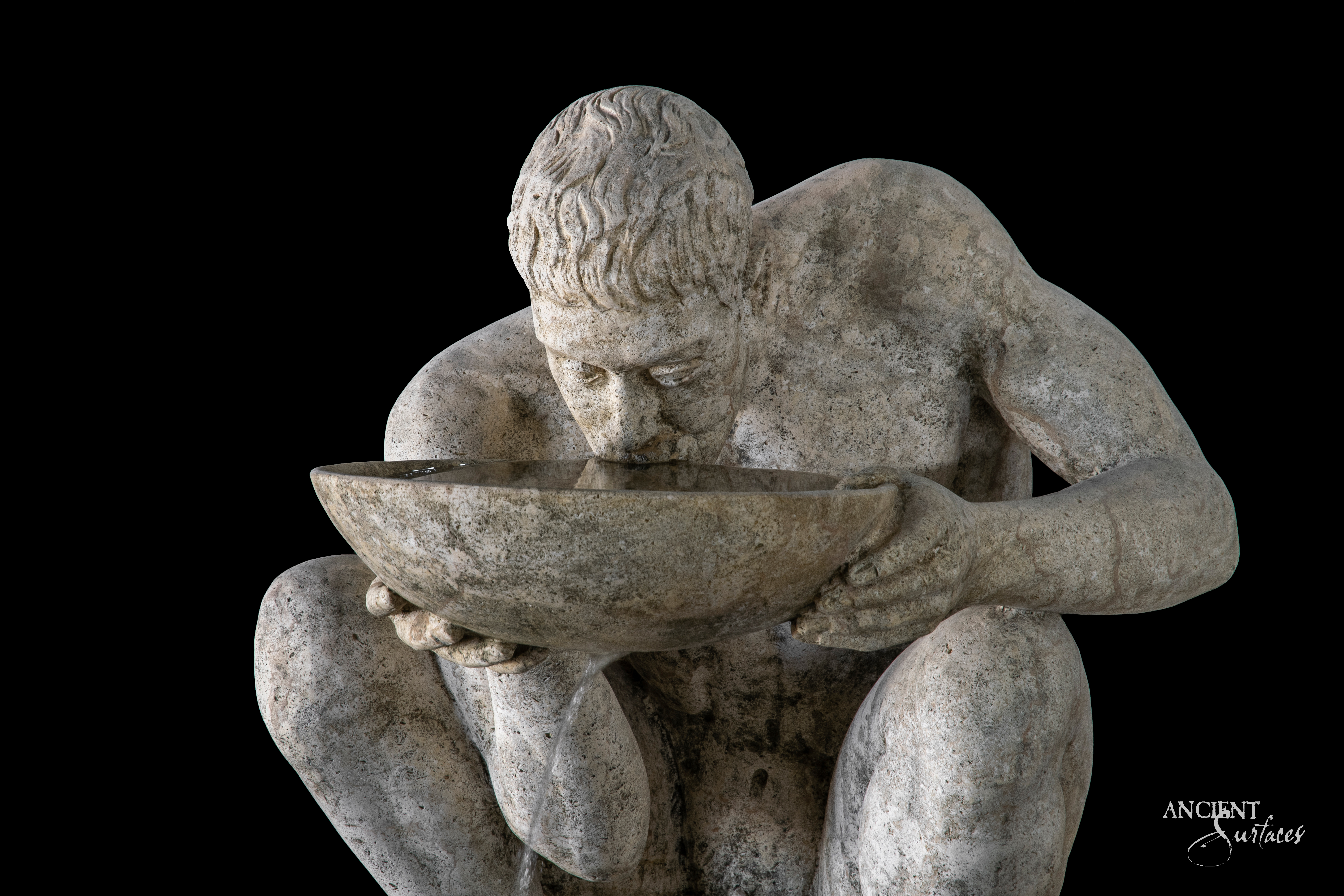
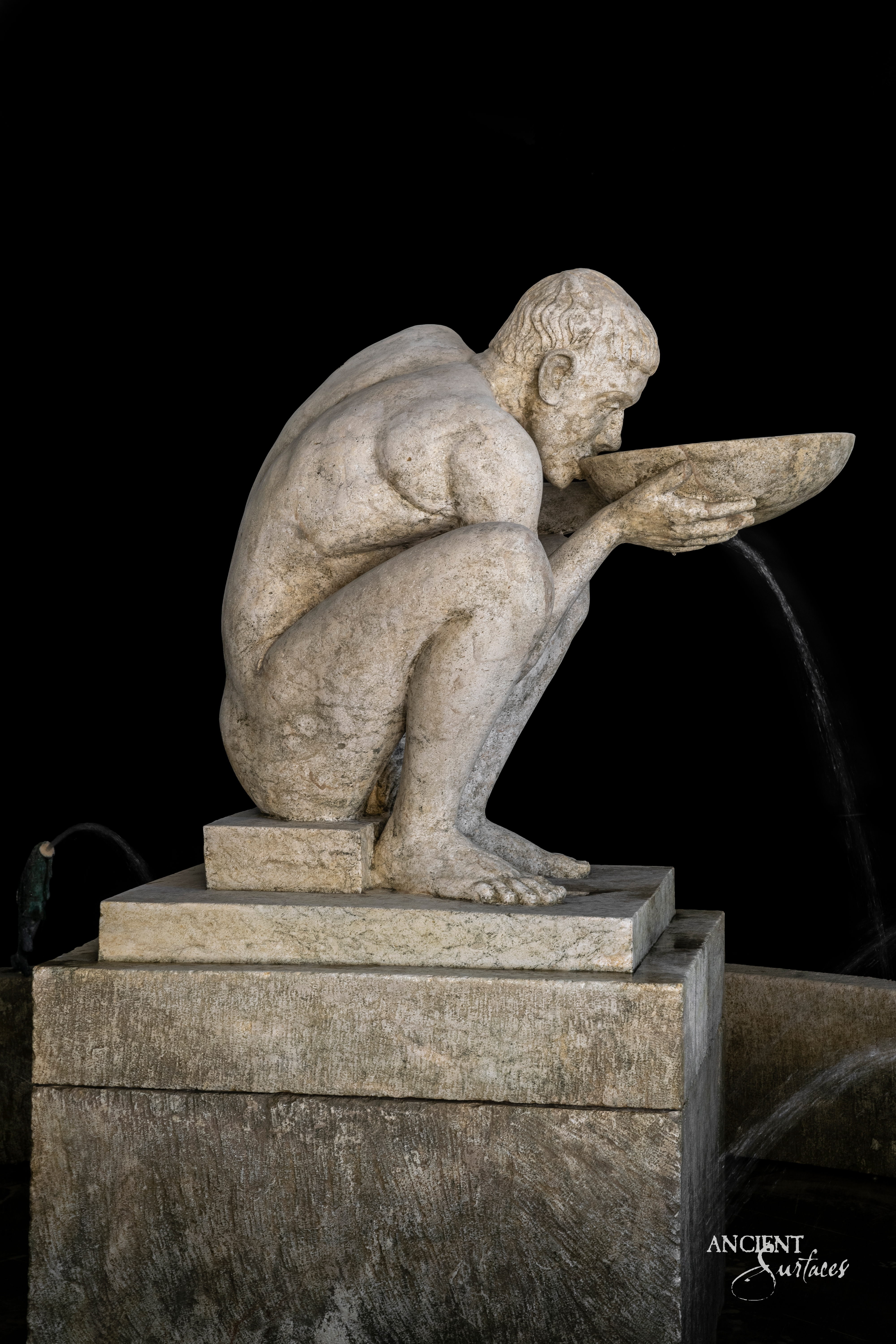
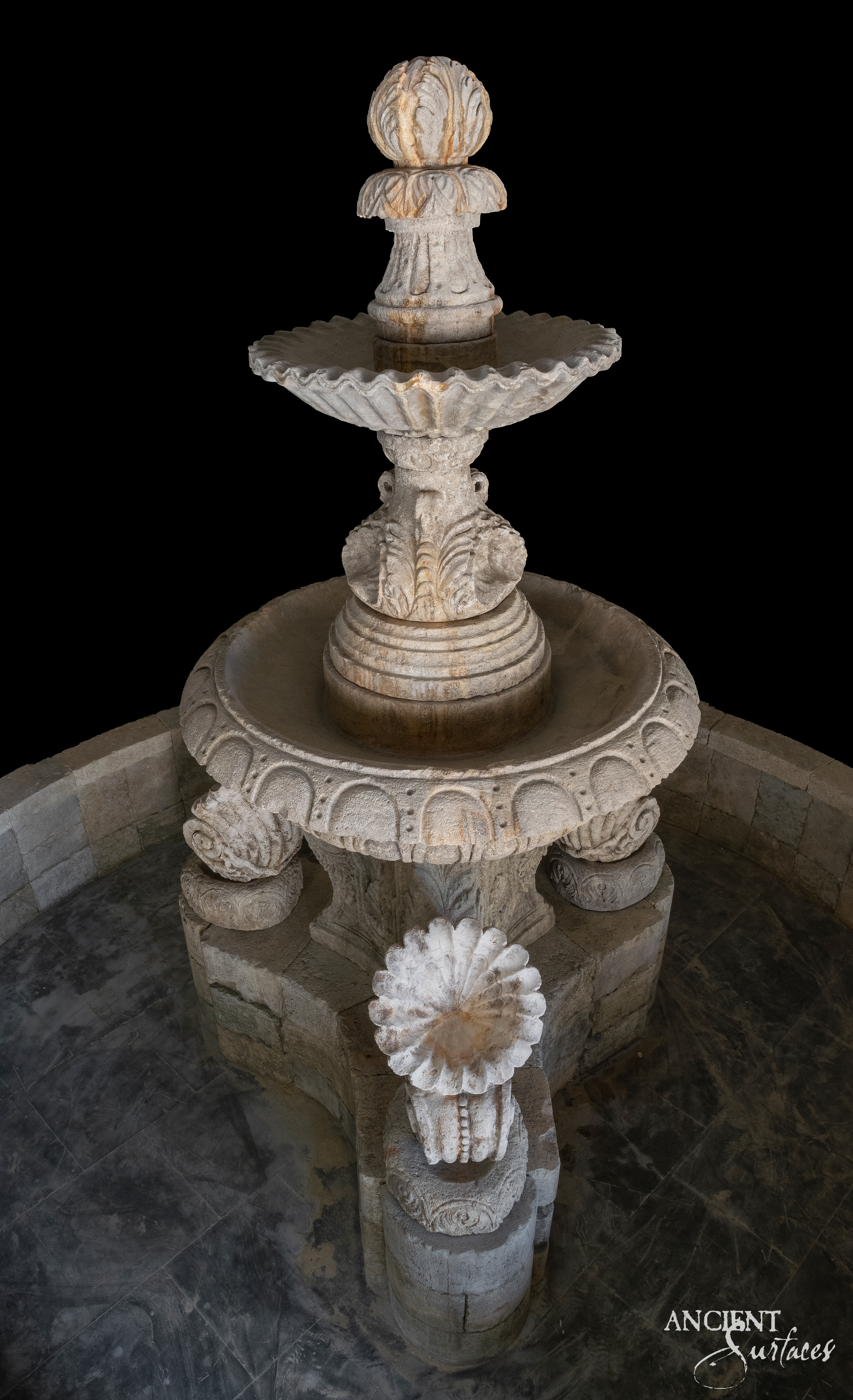
Architectural design and landscape craftsmanship find a soulful resonance in the beauty of ancient surfaces. With tales etched in their grains and an aesthetic that speaks volumes, they transform spaces into timeless masterpieces. Notably, the handcrafted antique fountains, echoing the majesty of Italian and Greek traditions, are a sight to behold. Pioneering this celebration of historic elegance is Ancient Surfaces, a brand that crafts history into every piece.

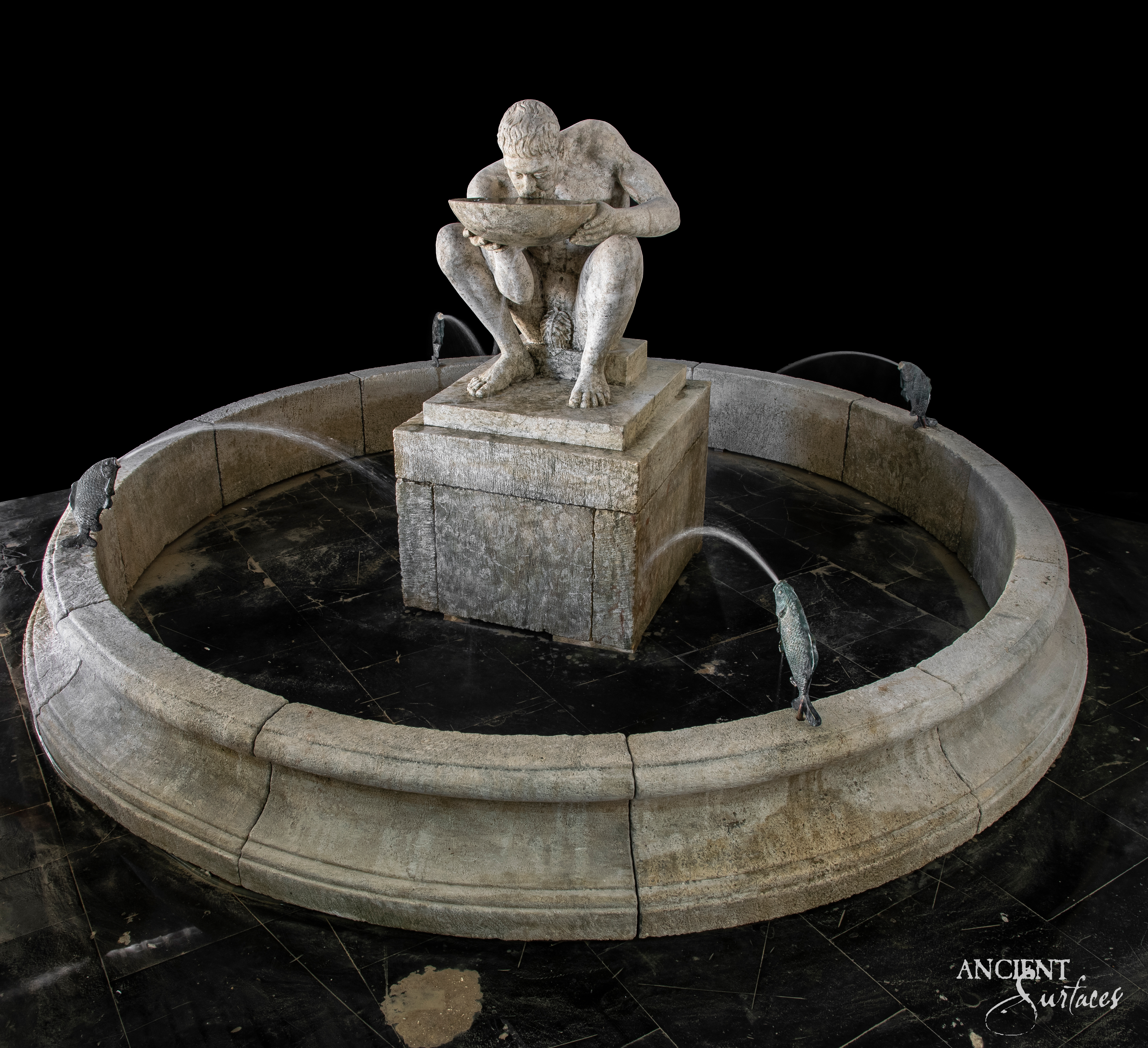
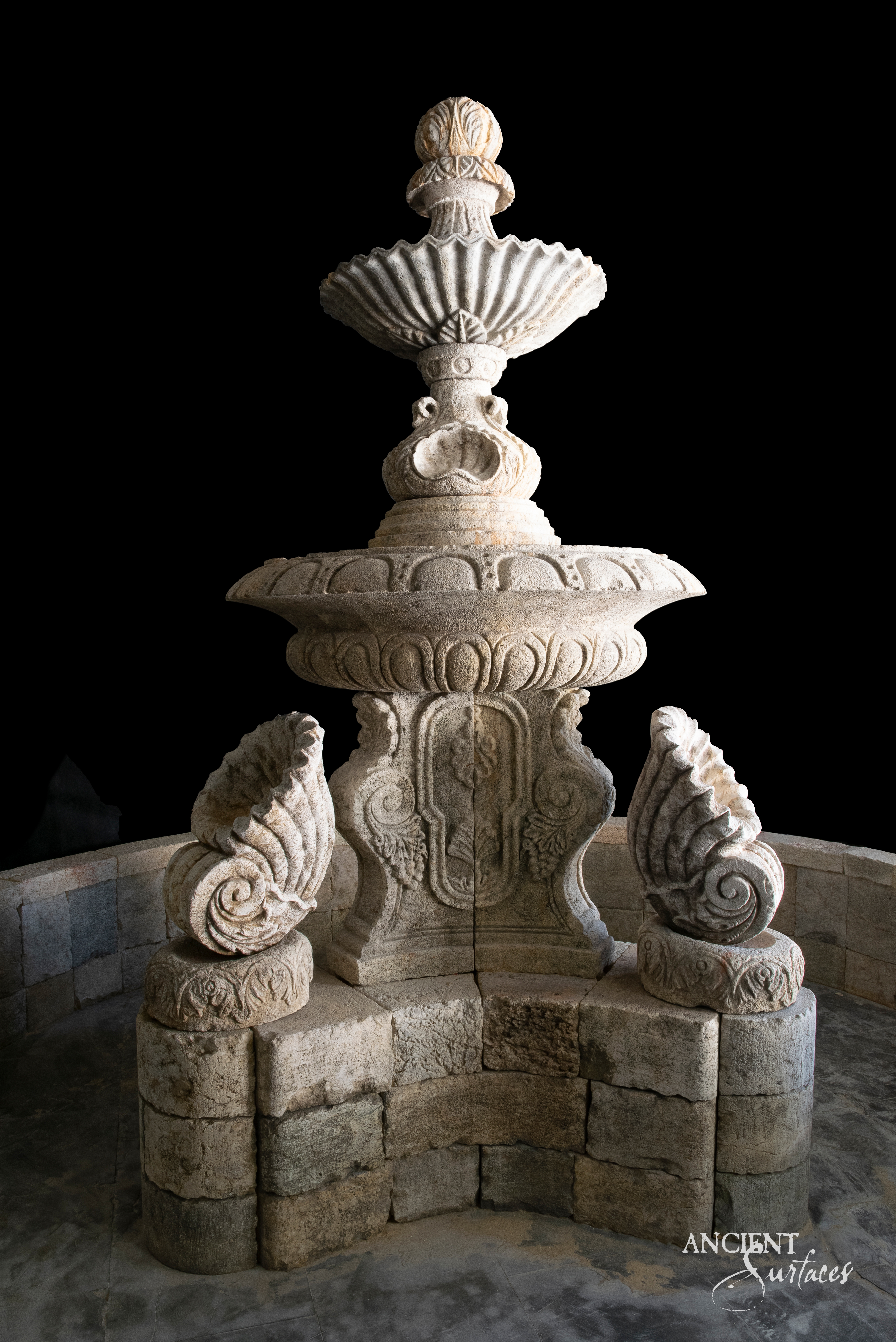
Ancient Surfaces’ commitment to quality and authenticity is evident in every handcrafted antique fountain they create. Each piece is meticulously crafted, ensuring it not only meets but exceeds their clients’ expectations. Whether it’s a fountain echoing the Greek style or a piece inspired by Italian design, Ancient Surfaces ensures their products enhance the beauty and functionality of any space.



Come visit our interactive digital online catalog
Call us at: 212-461-0245 // 212-913-9588
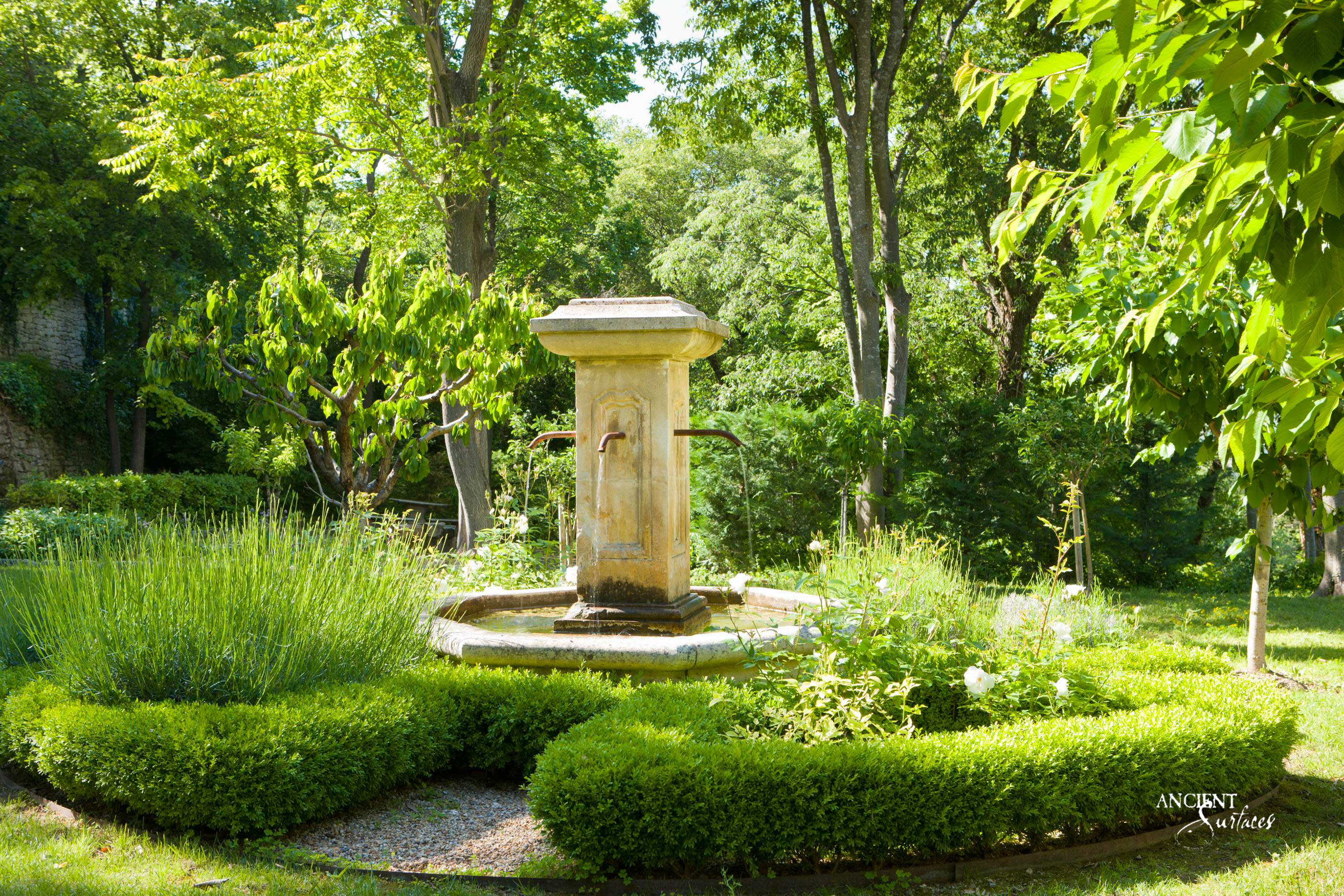
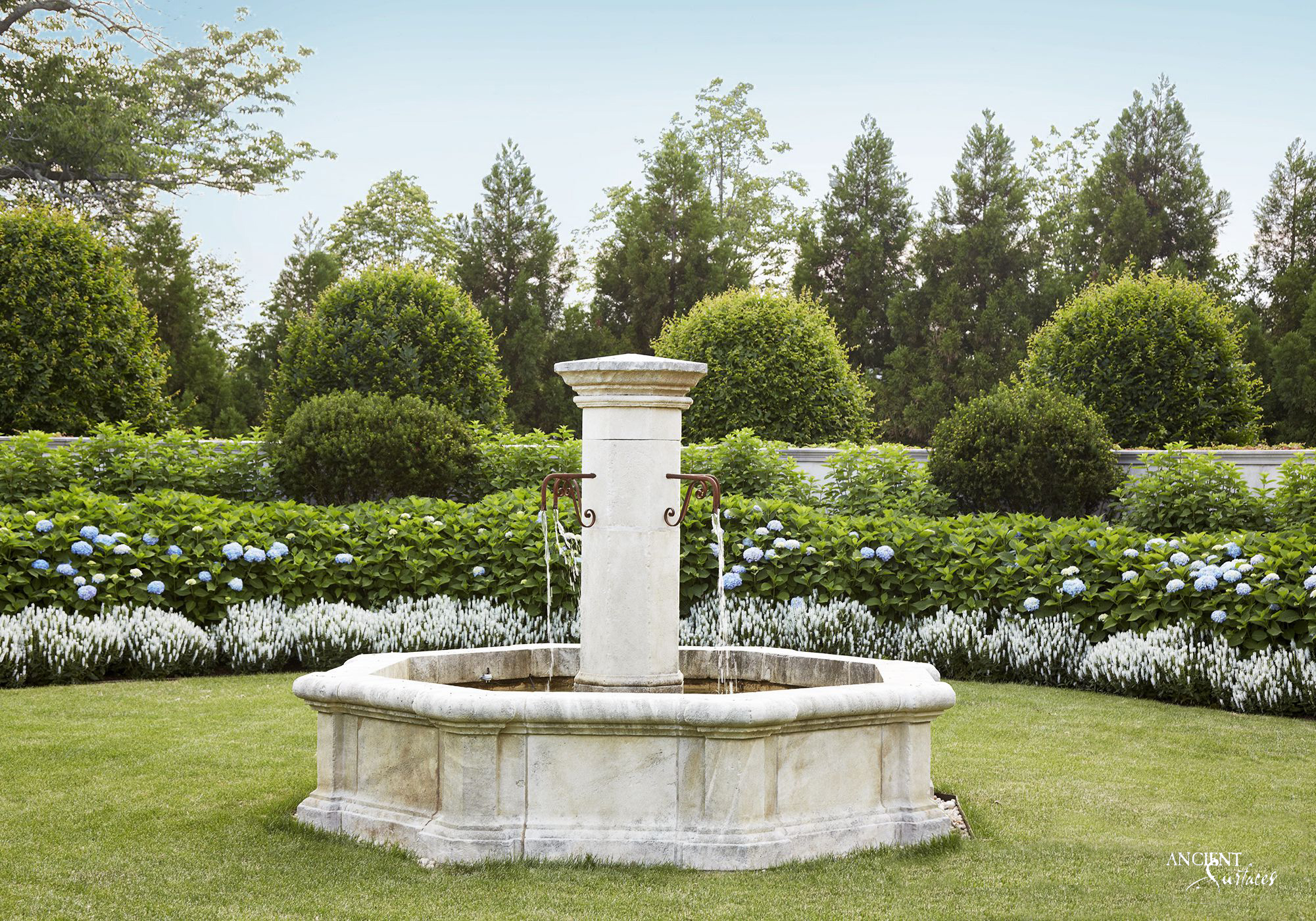
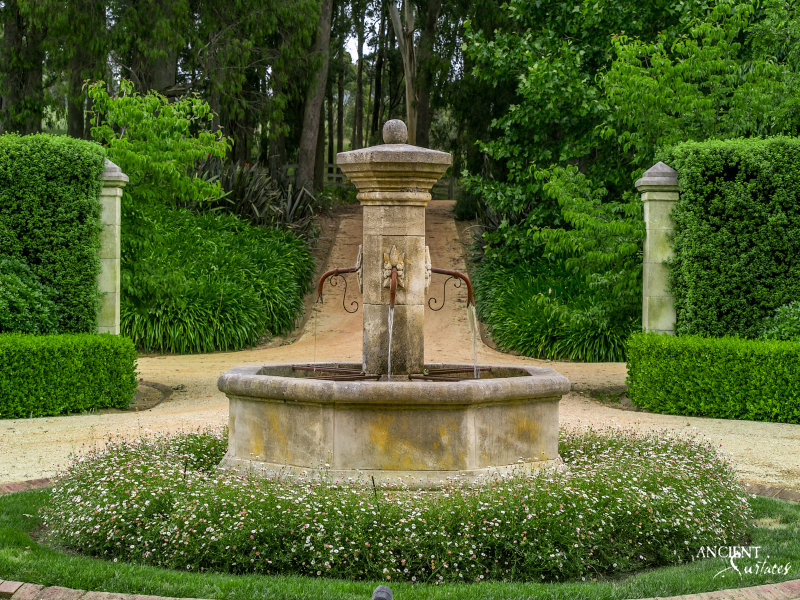
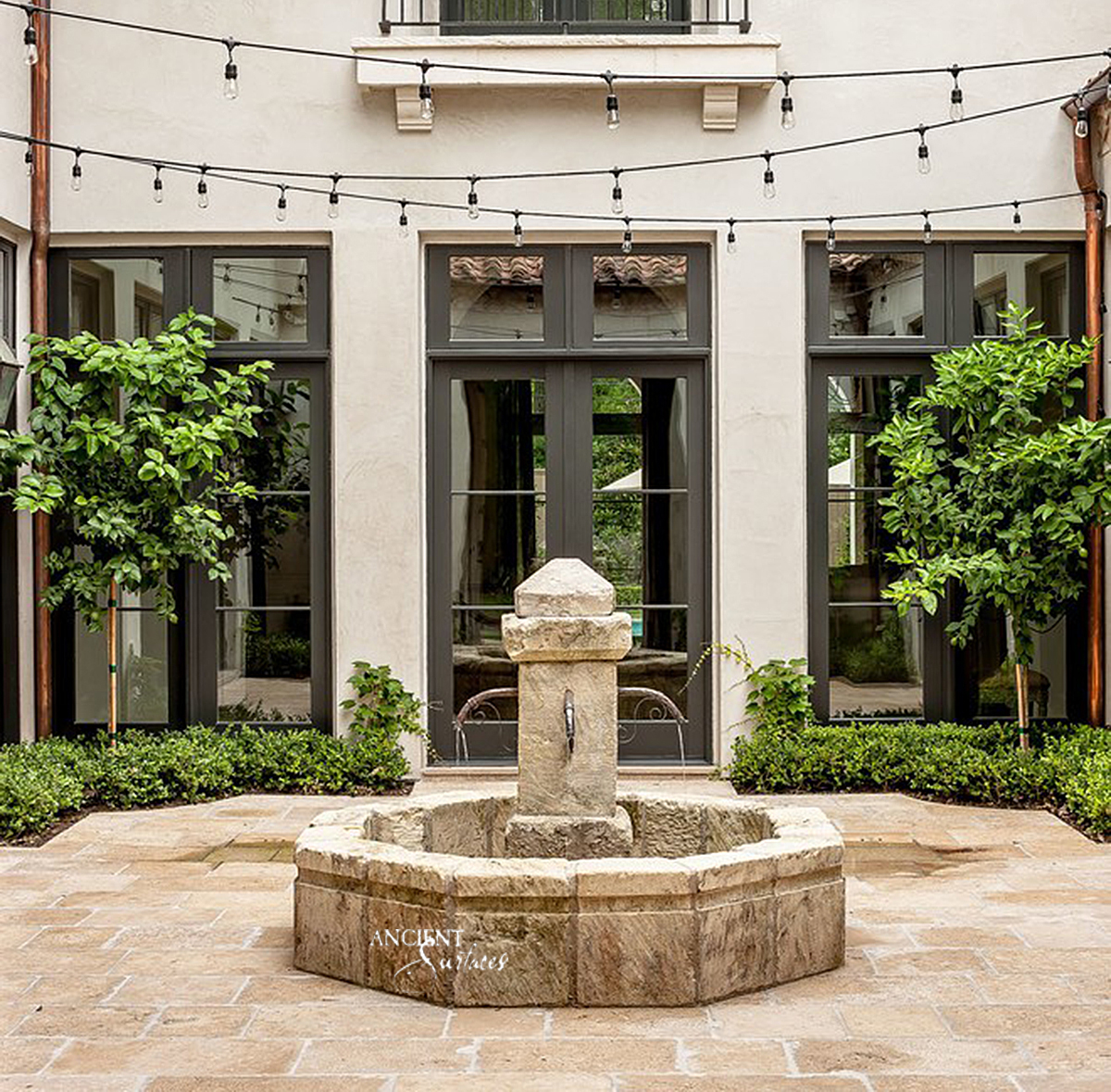
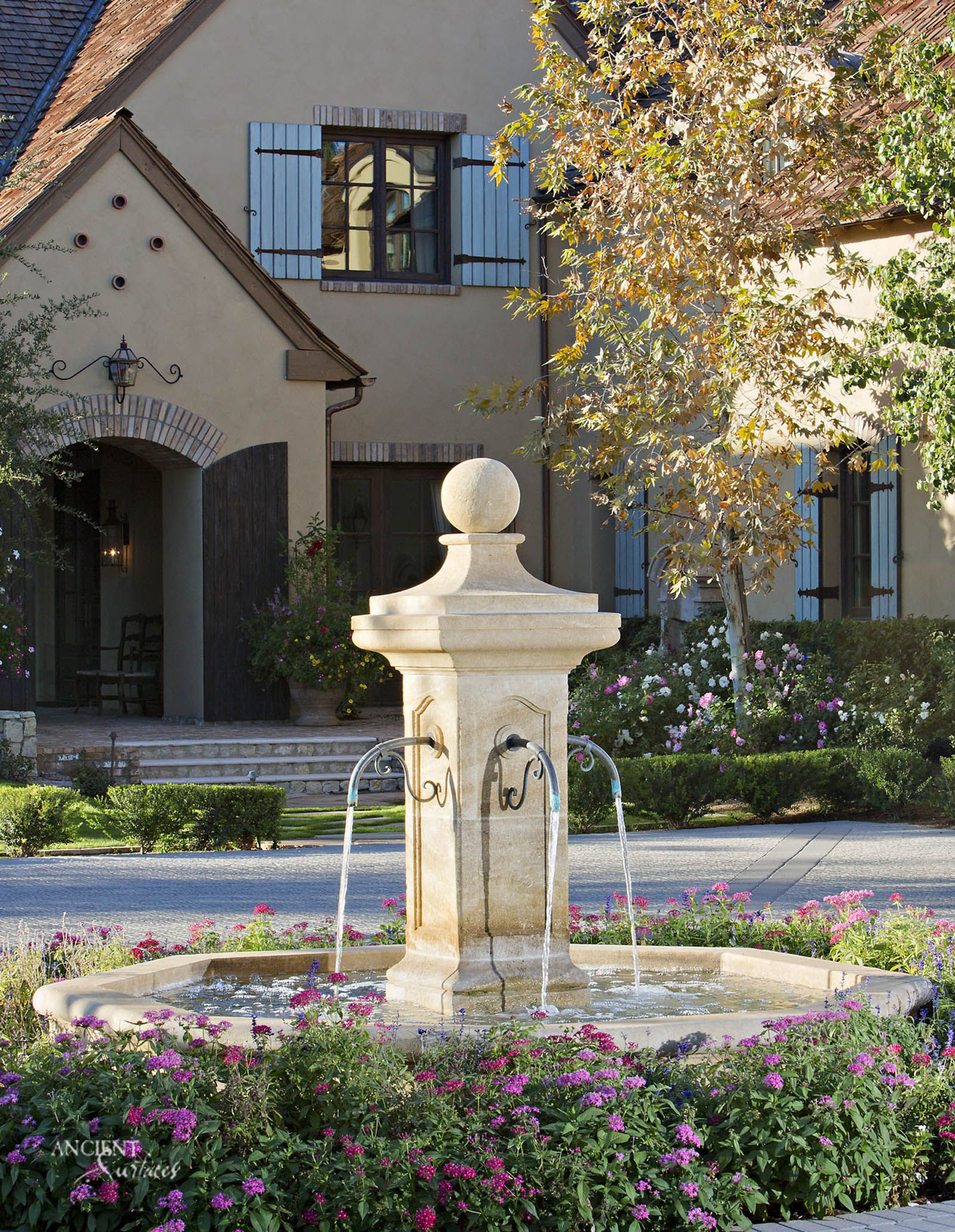
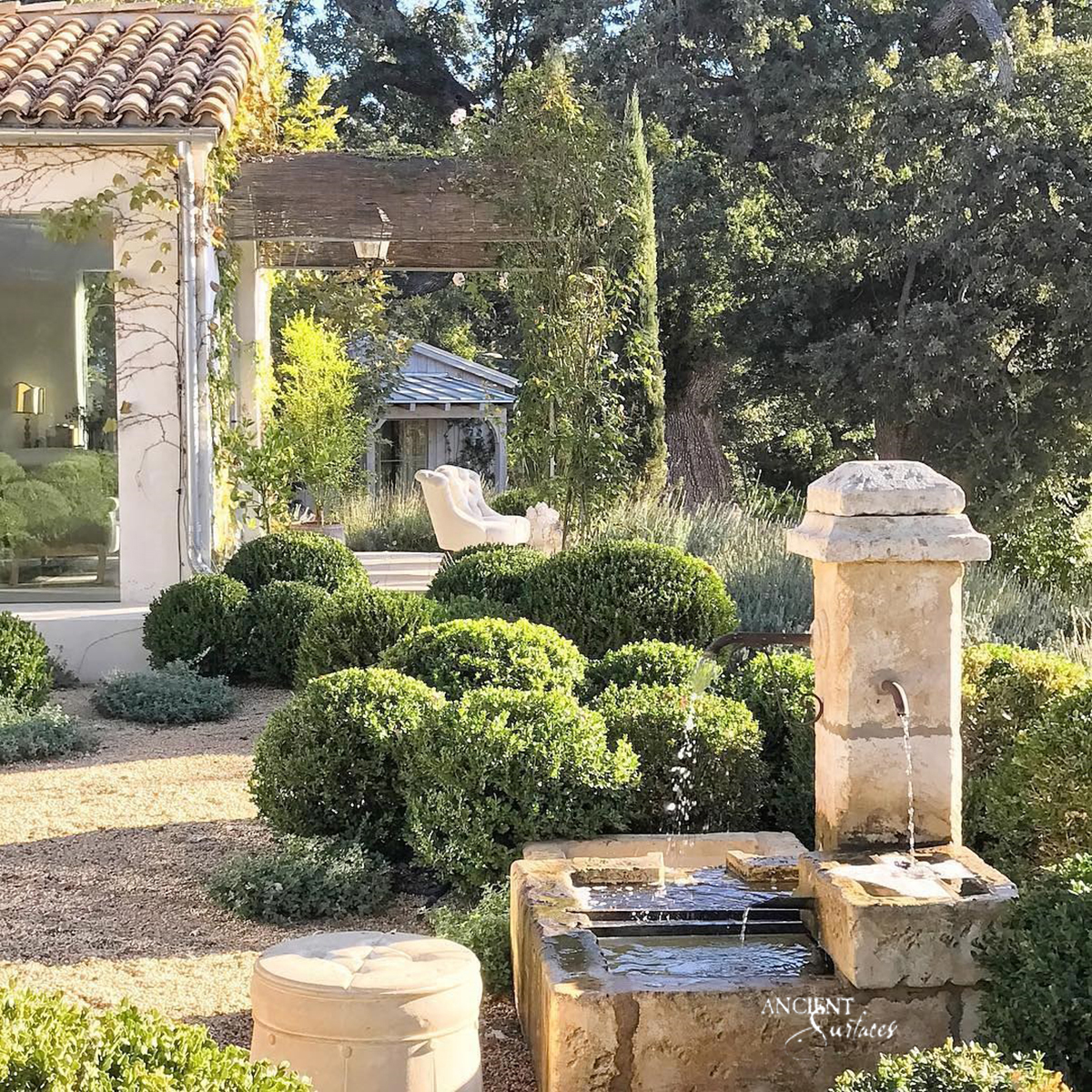
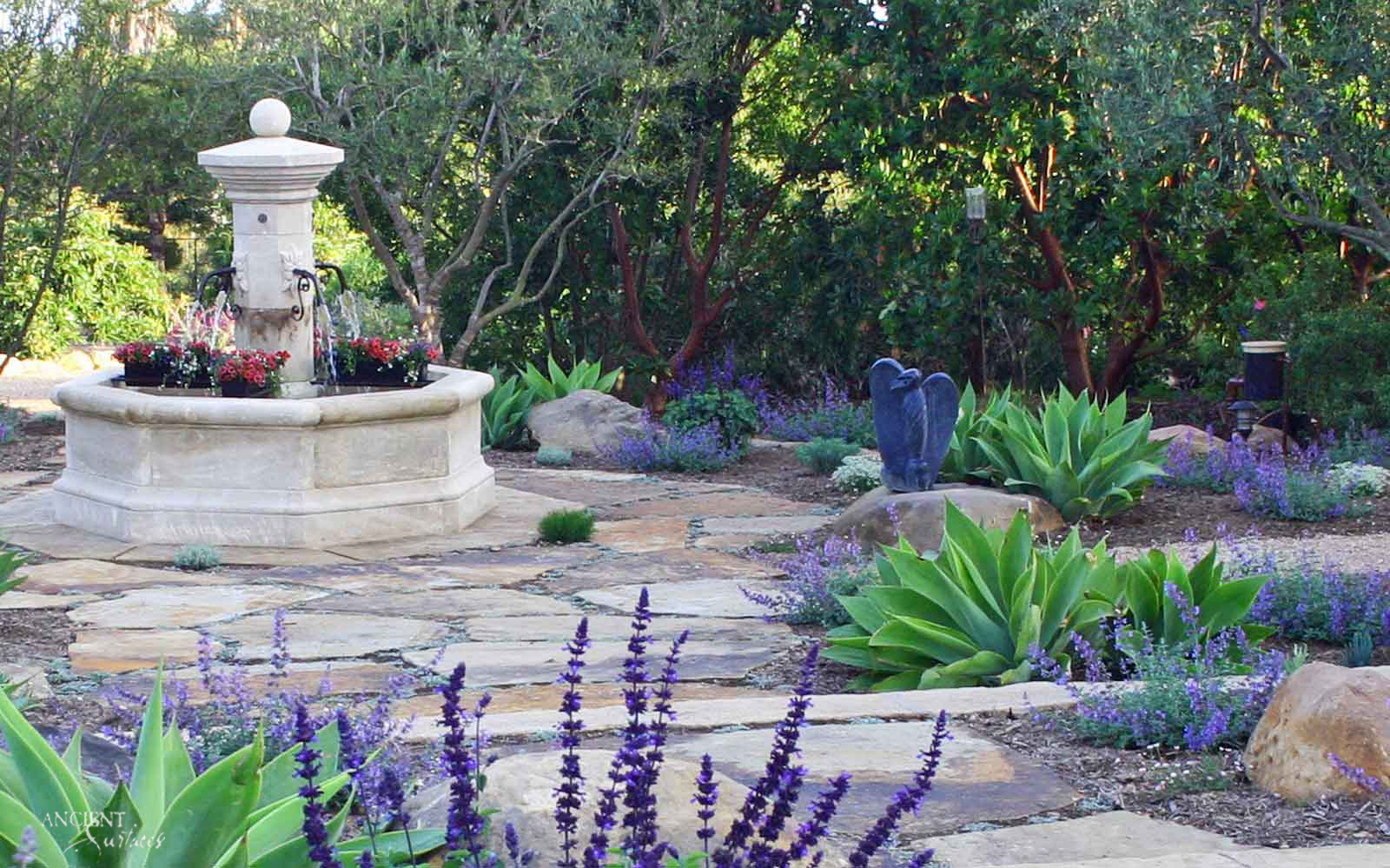
Regardless of the outdoor landscaping styles, one thing is certain: We are 90% water by weight and we all thrust ‘by design’ to water and are very fond of fountains and water features, streams, wells and sources in our gardens. We see this even more accentuated in arid and semi-desert states of the south west where the sun shine bright 9 months of the year. No matter how small the backyard or the fountain, we always believe that the movement of water helps to create a more livable, breathable microclimate and the noise certainly contributes to relaxation especially in summer time. These two
reasons would be sufficient, but the icing on the cake is the immeasurable added architectural benefit that stone water walls and stone water fountains infuse any outdoor area. This striking effect on architecture also makes the space more livable and cozy as the Italians have discovered when they have coined the term Al-Fresco Living or ppen Air Living.
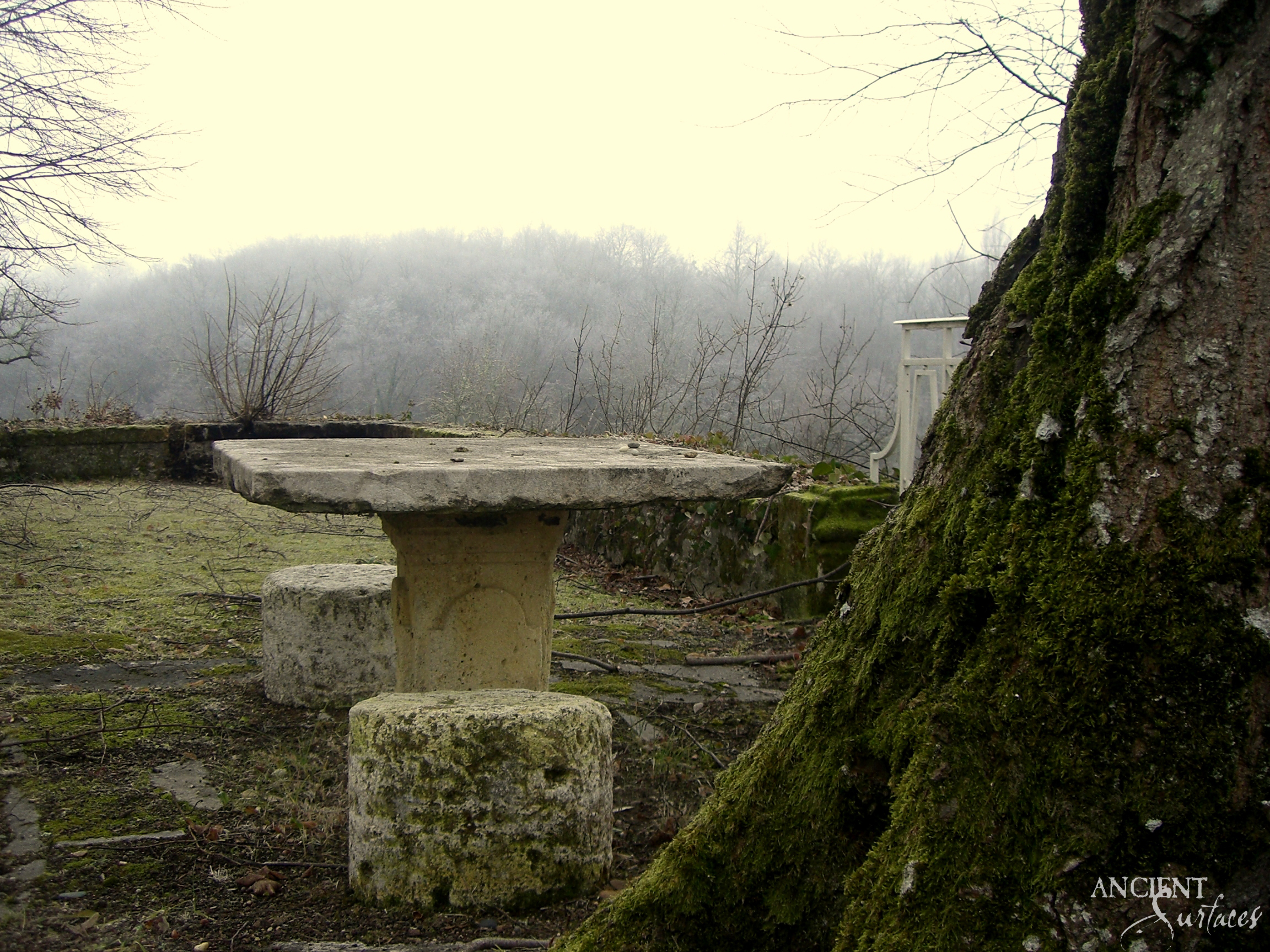
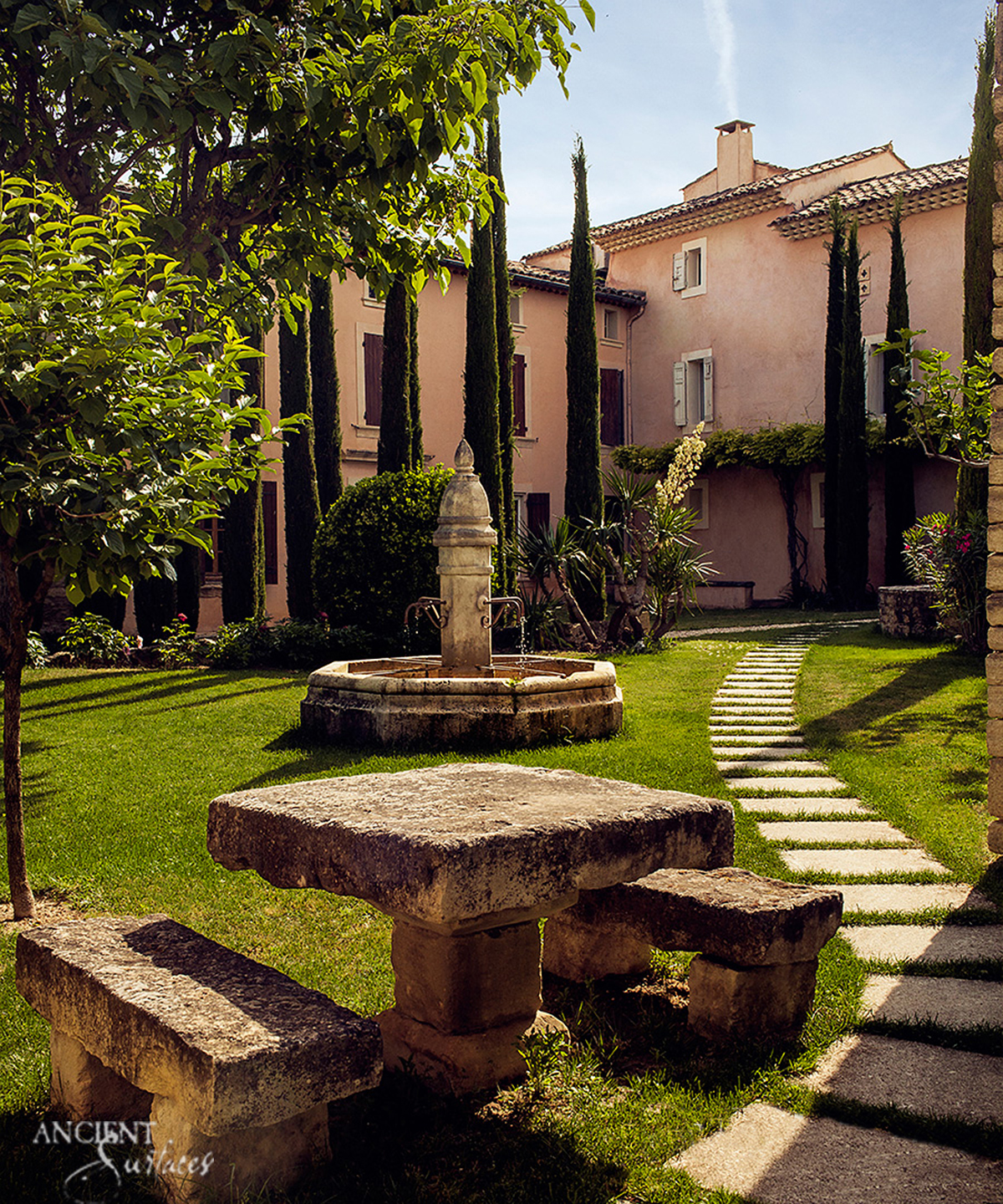
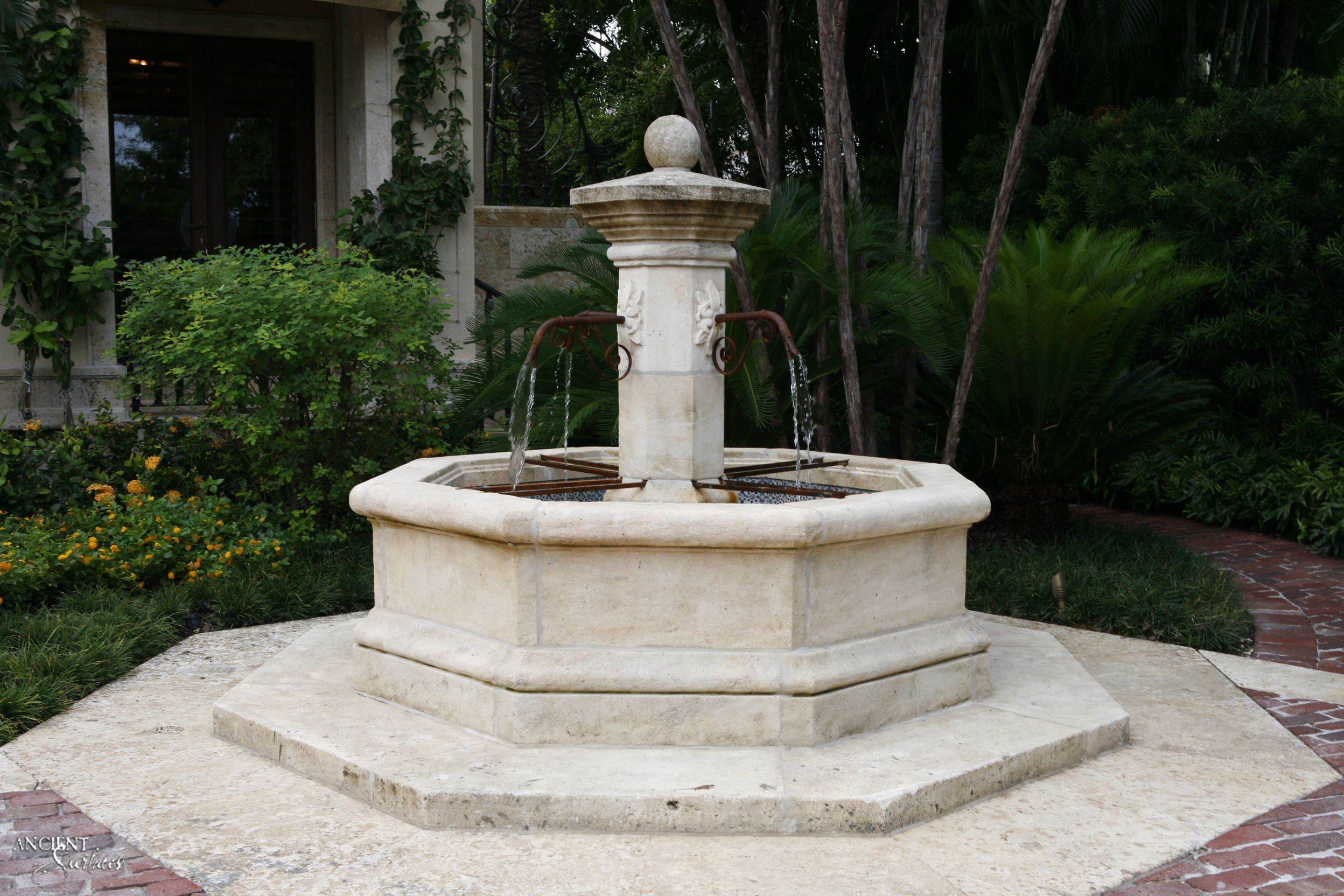
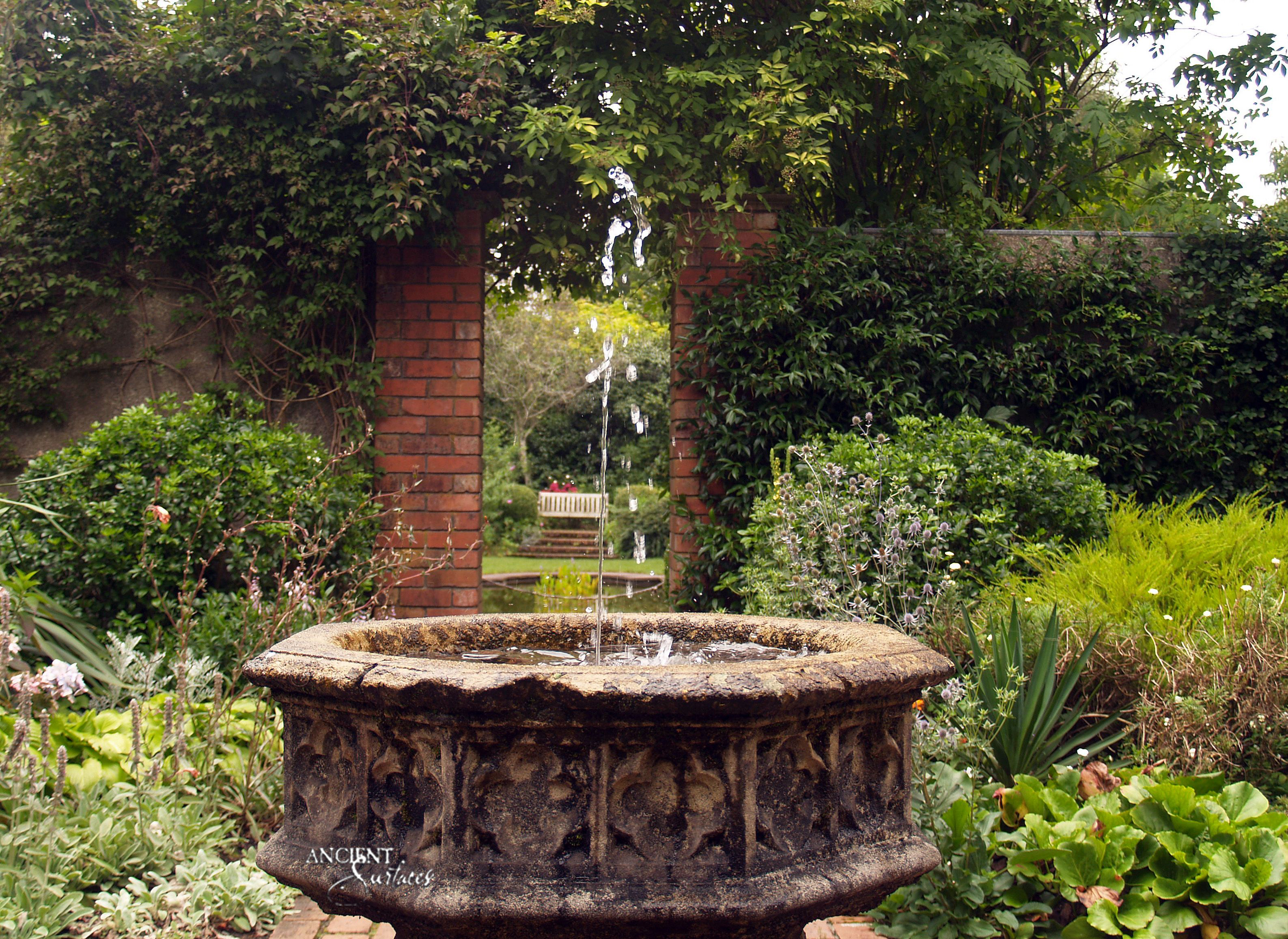
Please enjoy those lovely images we’ve gathered for you in the hopes of inspiring your next outdoor remodel or improvement project.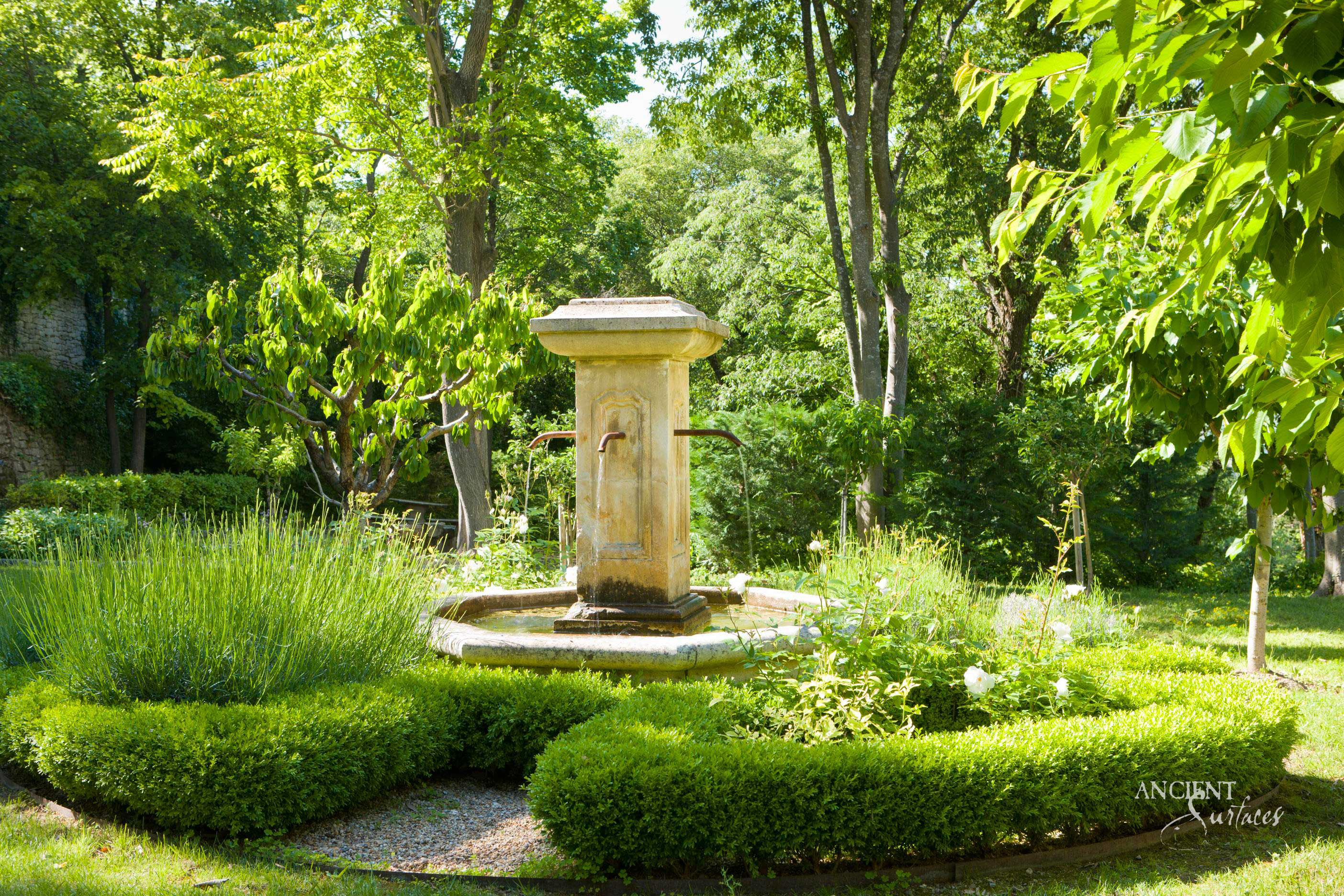
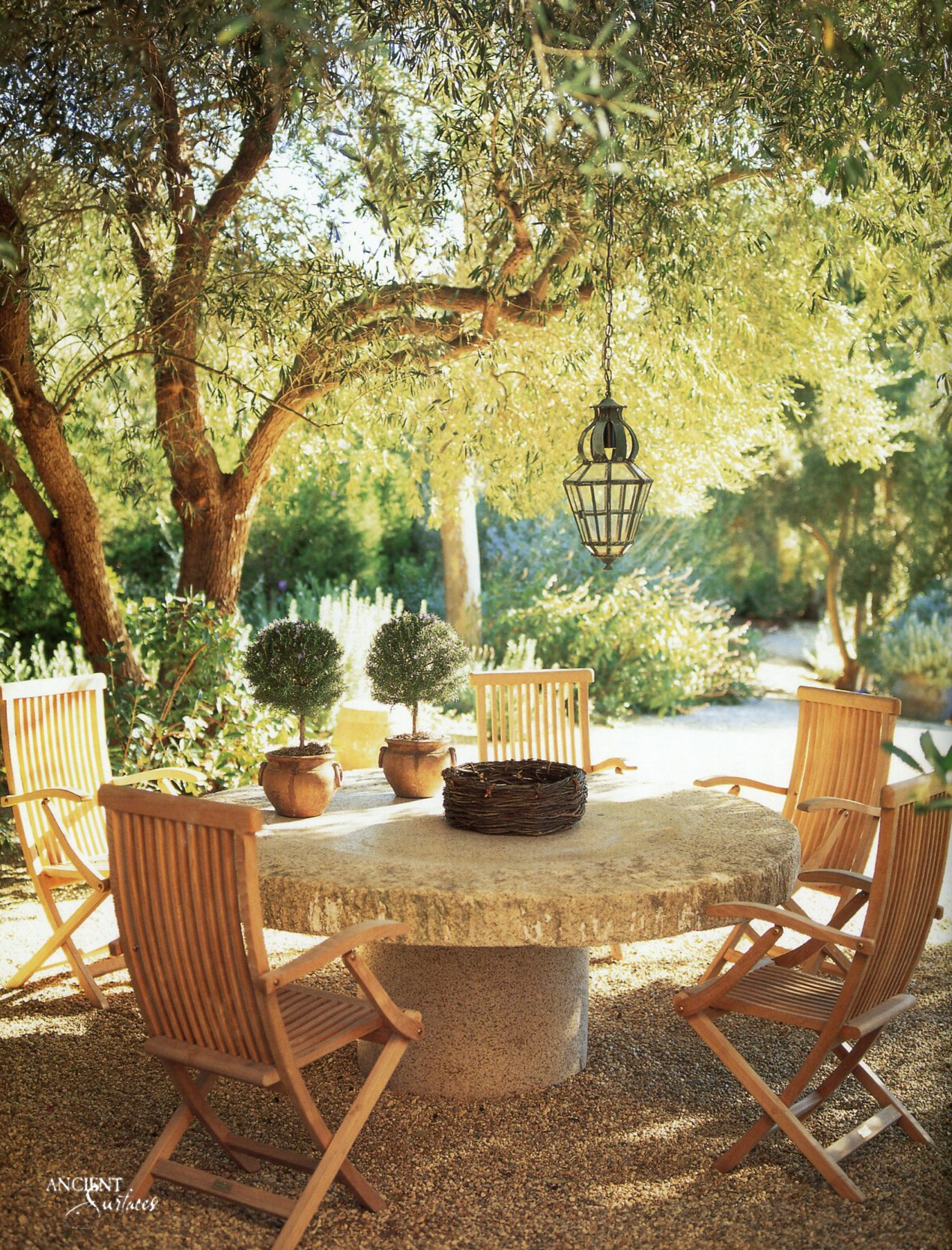
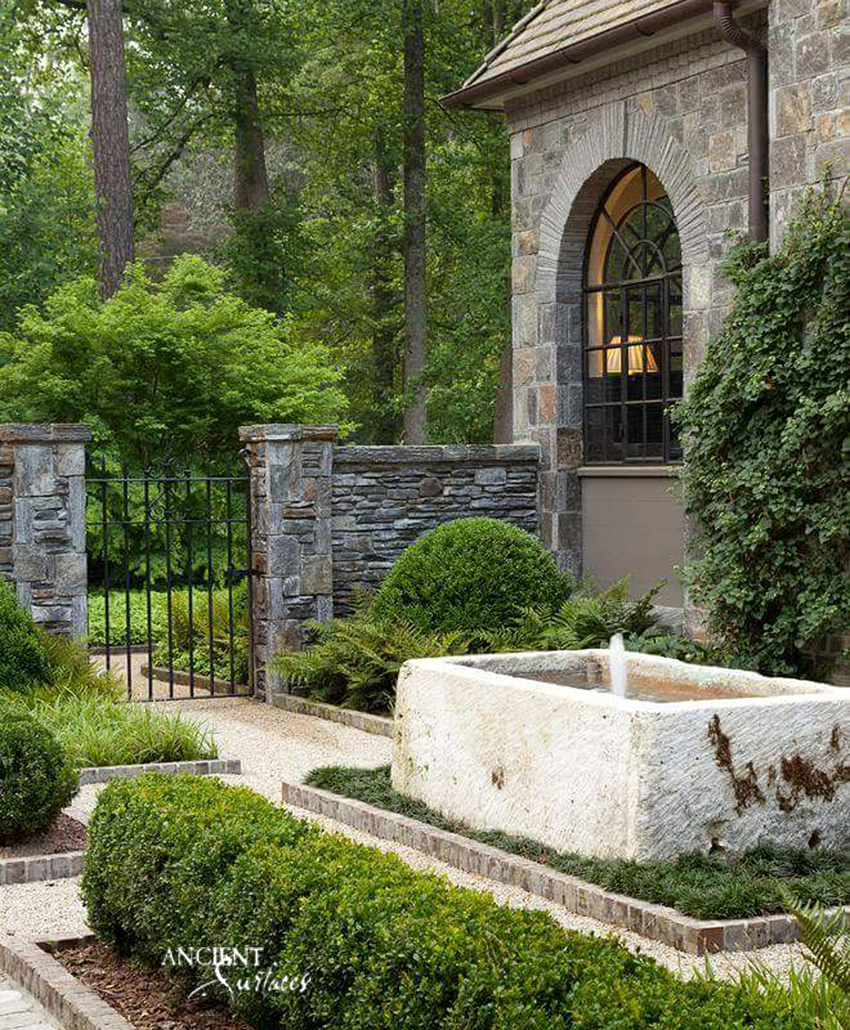
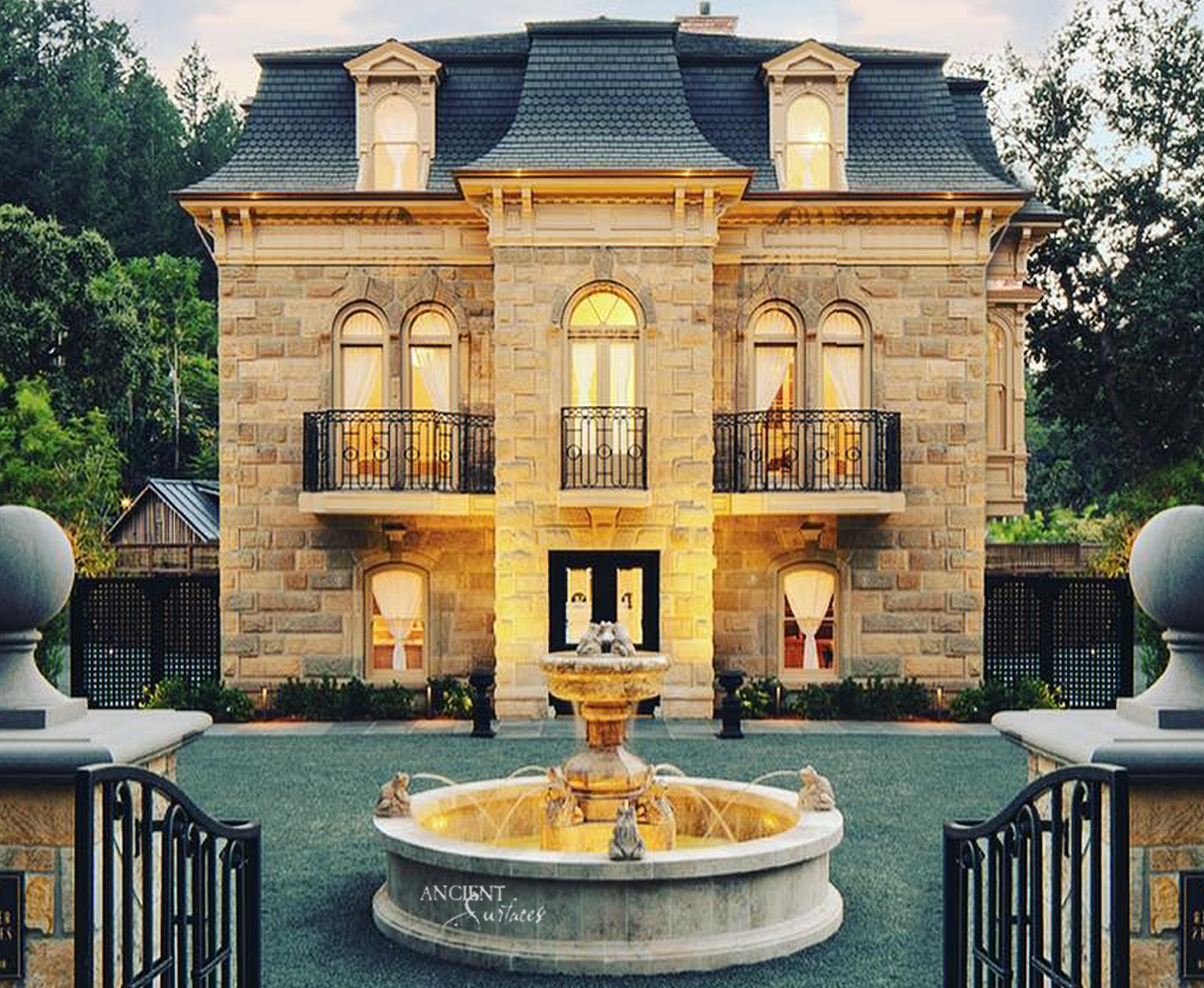
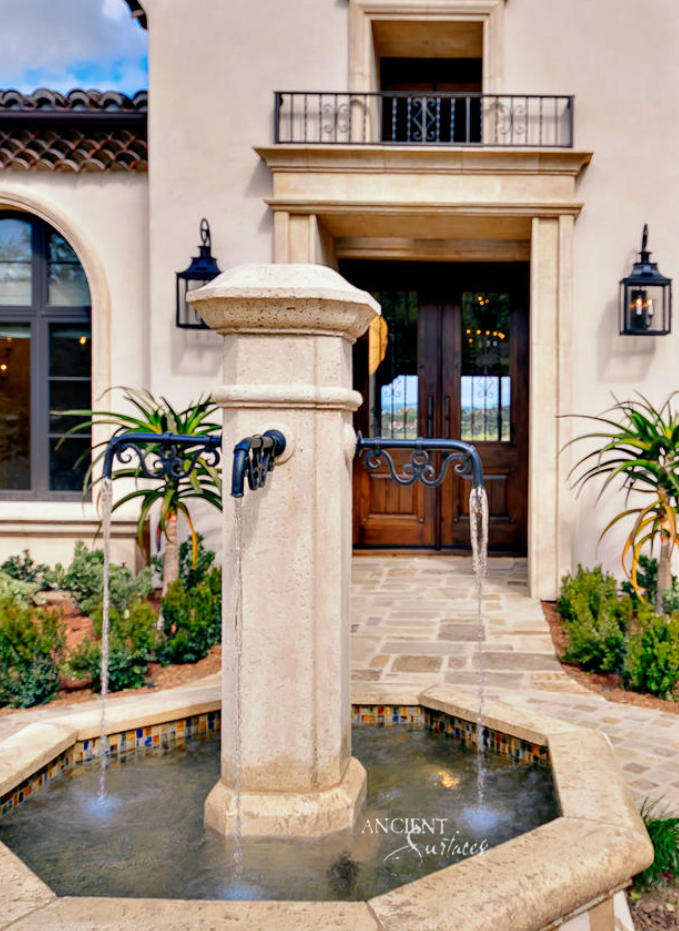

Come visit our interactive digital online catalog
Call us at: 212-461-0245 // 212-913-9588
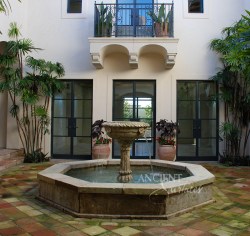
Provence Style inclosed Courtyard Featuring Antique Stone Fountains by Ancient Surfaces.

A Custom Carved Stone Fountain by Ancient Surfaces sold to a local dealer.
The most important characteristic of indoor courtyard wall fountain design is serenity. A courtyard wall fountain mounted on a bed of antique stone cladding including salvaged rough iron fencing or even plants is simply breath taking. Walls fountains of an indoor courtyard can vary in size as long as they can esthetically and synergistically be layered onto their wall space.
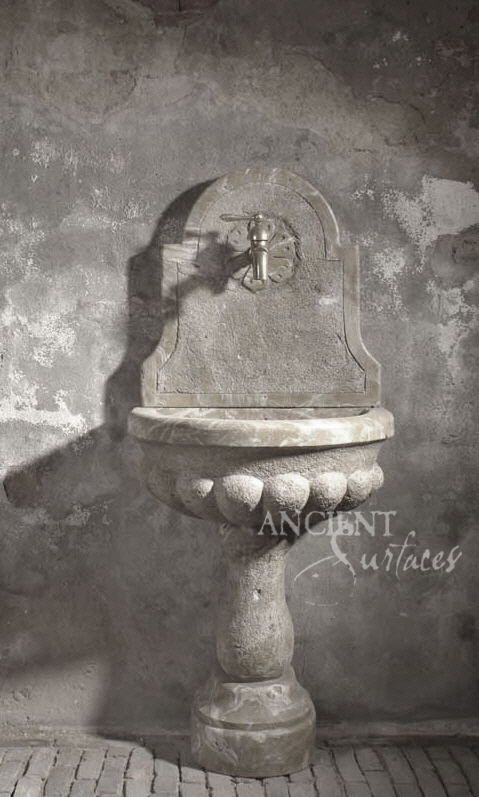
Antique Fountain Sink in an Al Fresco style dining space. By Ancient Surfaces.
An Enclosing en-plein-air type of outdoor dining spaces can typically be open on all 3 sides and will be sufficient for creating a sense of enclosure. In order to avoid a fortress-like appearance, many homeowners opt to use one wall or partially see-through short wall with a small stone sink of trough fountain padded with a line of thick foliage shrubs or trees. This helps create a sense of greenery and intrigue while welcomes visitors, yet providing privacy for courtyard activities.

Antique Fountain atop salvaged antique landscaping stone floors and grass. Provided by Ancient Surfaces.
A roof or patio cover can be added to a courtyard to further increase the sense of enclosure. However, this may make the garden space feel small and dark. One way to fix this problem is to have windows cut into the walls or fence. Consult a landscape designer to determine the best way to let the maximum amount of light into your courtyard.
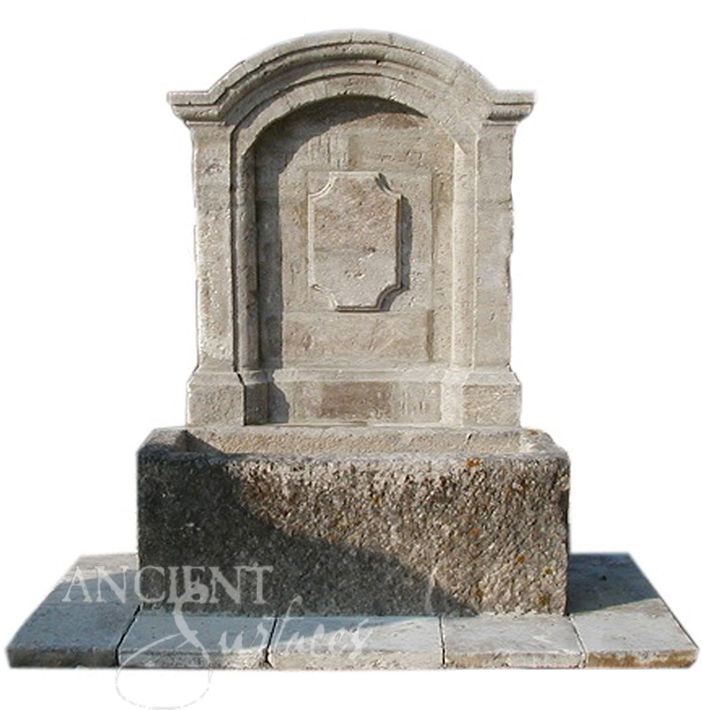
Al Fresco Antique Fountain Sink With Trough installed in an inclosed courtyard in California by Ancient Surfaces.
Courtyard Water Features
A inclosed courtyard can’t be complete without a central water stone fountain. The sound of moving water will help to mask ambient noises such as traffic and neighbors. In a formal courtyard design a classically styled fountain can serve as a centerpiece, while in an informal courtyard a wall, or disappearing urn fountain will have the same effect.
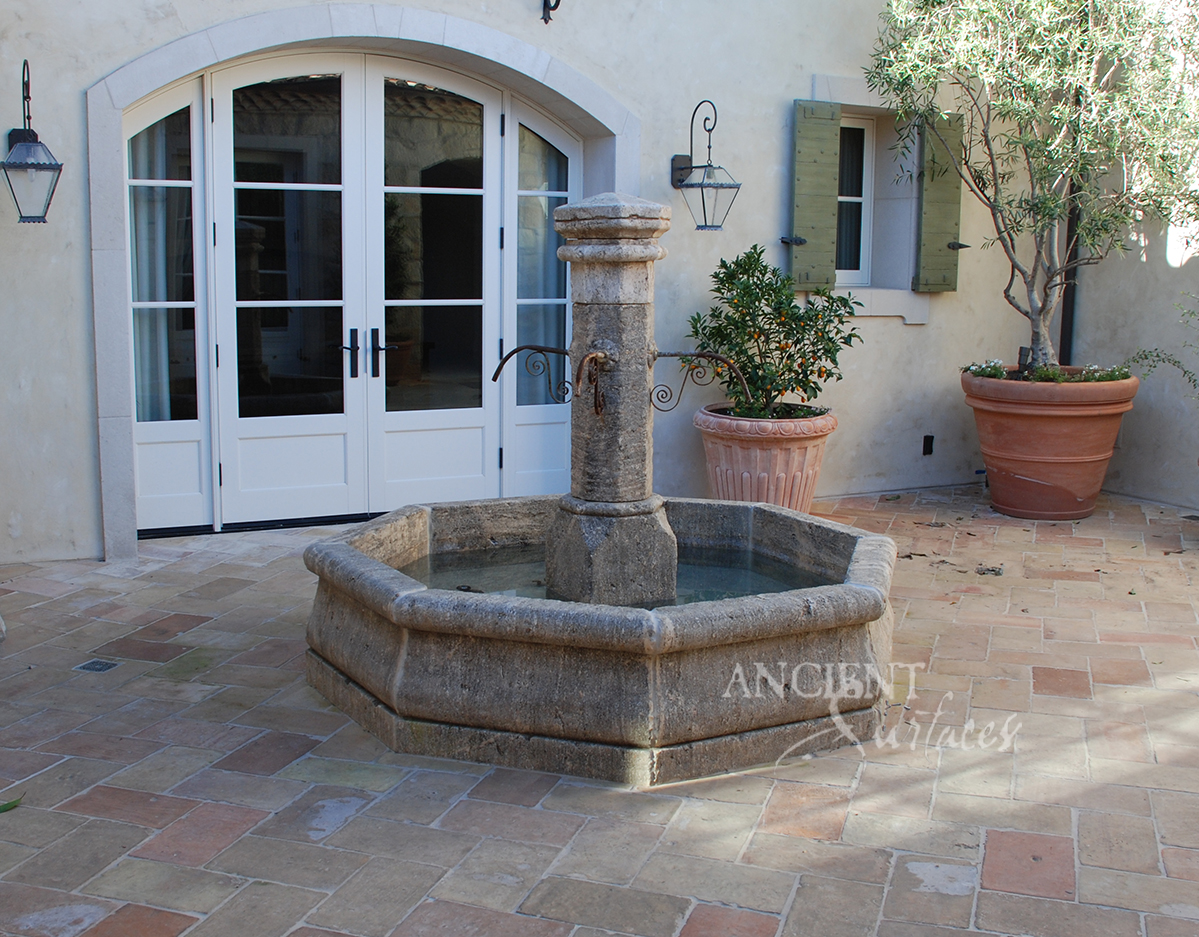
Crystal Cove Showcase House Inclosed Courtyard Stone Fountain. This piece was provided by Ancient Surfaces.
The size of an antique water stone fountain should be proportionate to the size of the courtyard. For example, a large tiered Spanish style fountain will visually overpower a small courtyard and produce too much noise for the space. A landscape designer or architect will be able to help you determine the proper scale for your courtyard water feature.
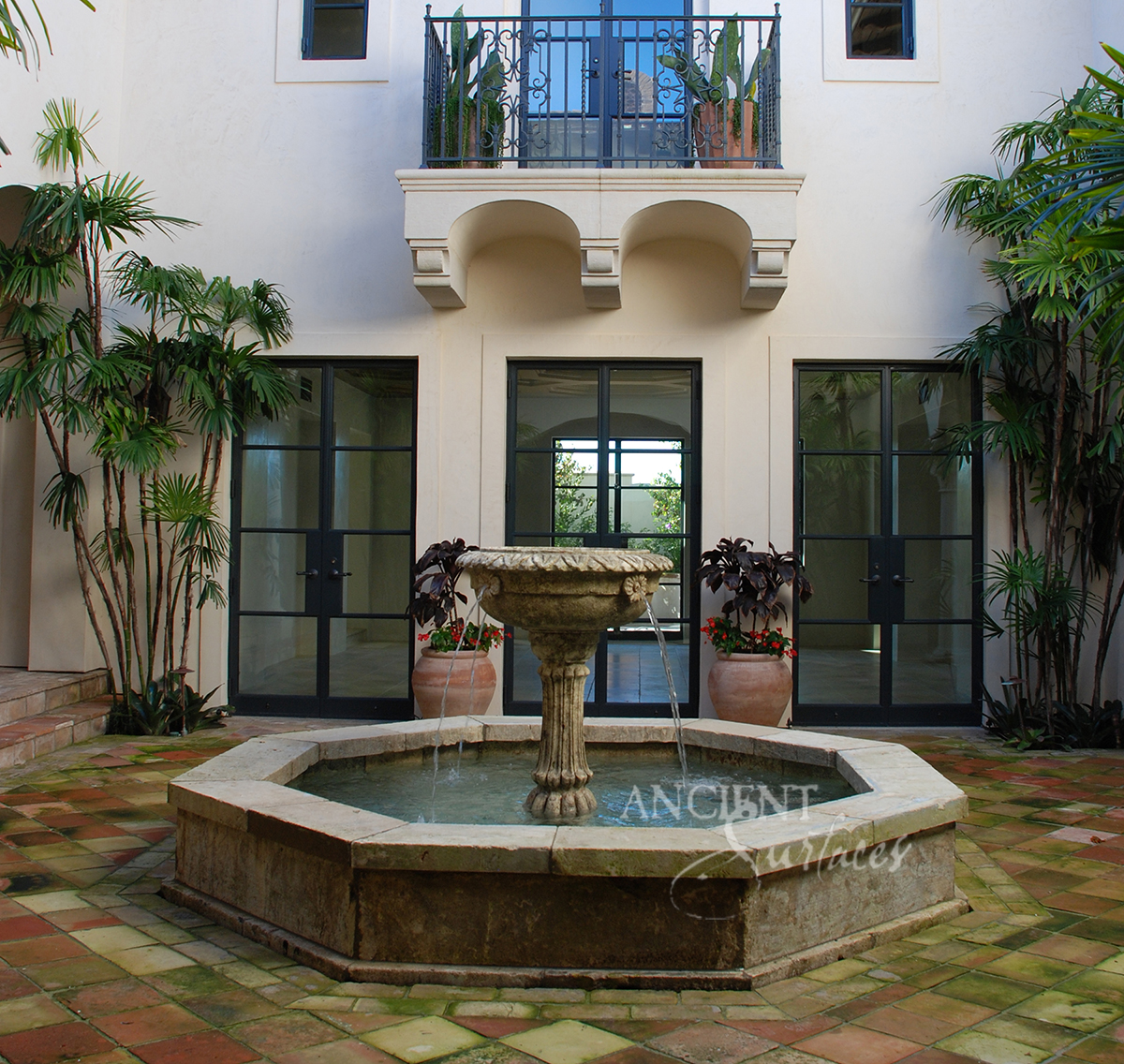
Antique Pool Fountain in an Inclosed Californian Courtyard. This Piece was Provided by Ancient Surfaces.
Adding Furniture, Plants, a fire element & Lighting to your courtyard fountain
The size of your courtyard will determine how you put the finishing touches on the space. A large courtyard may be able to accommodate an outdoor dining table and chairs and possibly even a fire feature such as a small stone fire pit. On-the-other-hand, a small courtyard can be easily overwhelmed with accessories. In this case, keep things simple – a basic bench and a few potted plants with a simple wall fountain will do the trick.
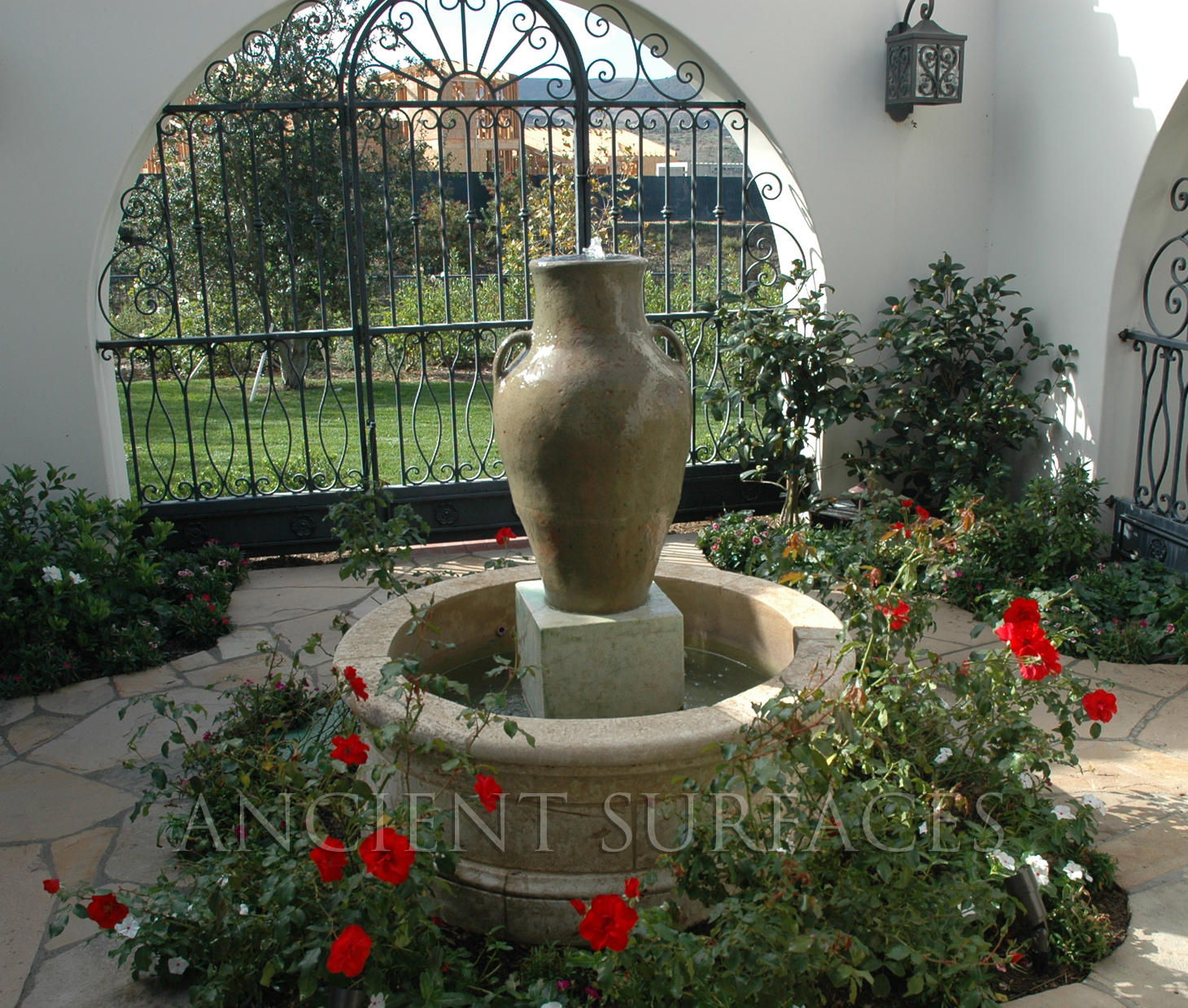
Antique Stone Wellhead Pool Style courtyard Fountain Featuring an antique jar. Provided by Ancient Surfaces.
Plants are the key to softening both the inside and outside of courtyard walls. Hedges and ornamental grasses can be grown along the walls, or a grouping of container gardens can be placed in a corner. Climbing plants are great because they will grow up and over the walls. If you live in a climate that allows, bougainvillea will add a nice pop of tropical color. The plants you choose can help establish a theme in your courtyard. For example, ferns and evergreens will create a South East Asian vibe.
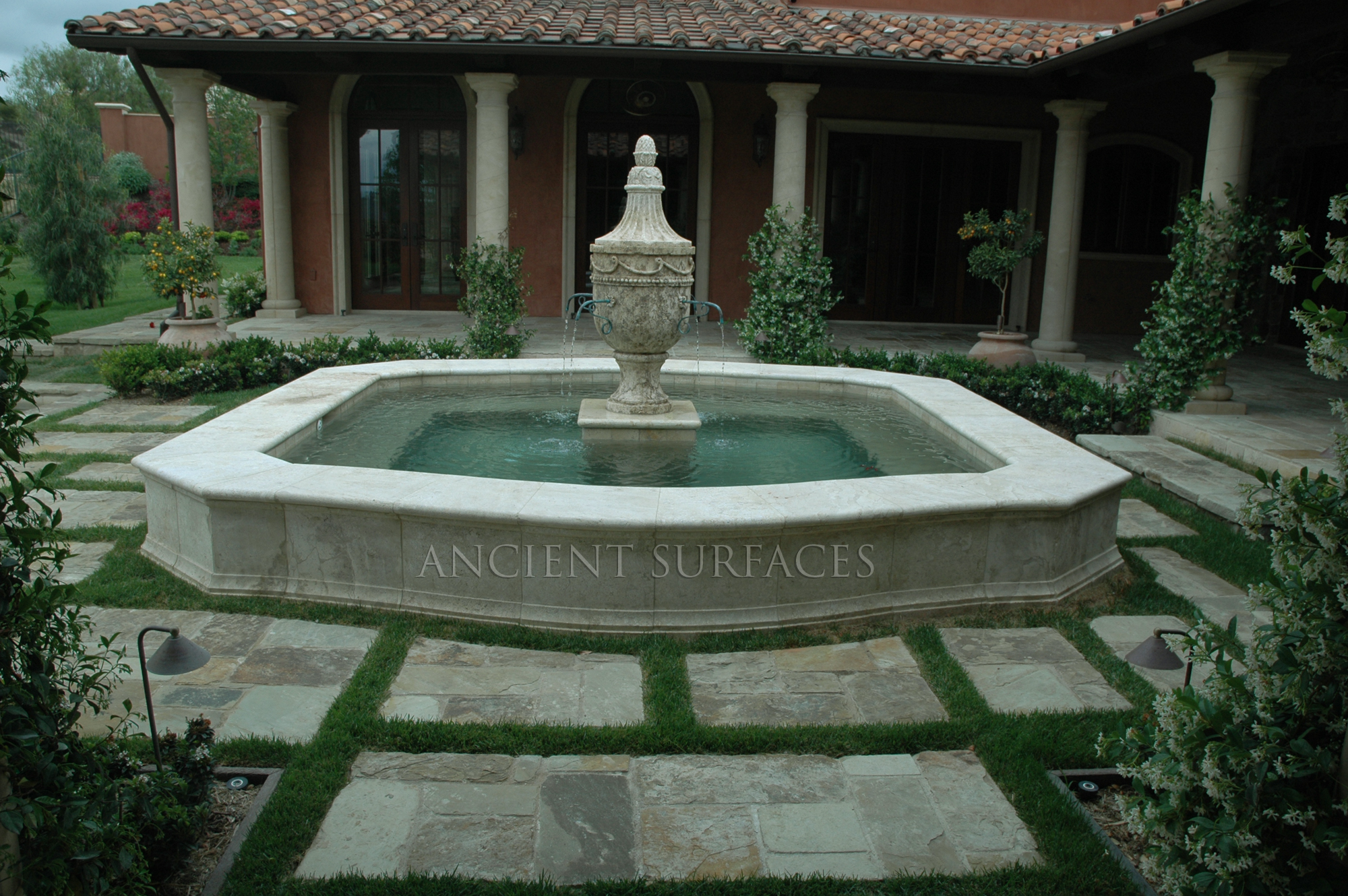
A Massive 16 Feet Long Pool Stone Fountain Doubling as an Outdoor Jacuzzi Spa. Provided by Ancient Surfaces.
Finally, a courtyard needs lighting. First and foremost all pathways should be lit for safety. Then you can think about lighting your water feature to make it a nighttime focal point. And last but not least, you can add sparkling string lights or Moroccan inspired lanterns for ambiance.

Antique Octagonal Stone Courtyard Fountain Featuring Pool lights. Provided by Ancient Surfaces.
To learn more please visit our Website at:
www.ancientsurfaces.com/Antique-Pool-Fountains.html
Call us at: 212-461-0245 // 212-913-9588


Visit our Antique Pool Fountain Gallery on Houzz

212-461-0245 // 212-913-9588
A fountain (from the Latin word “fontis” meaning a source or spring) is a piece of architecture which pours water into a basin or jets it into the air to supply drinking water and/or for a decorative or dramatic effect.
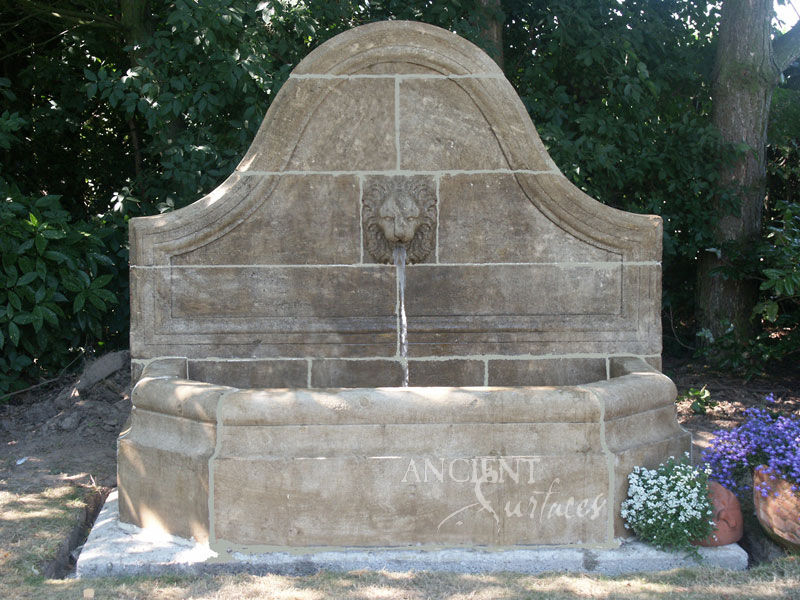
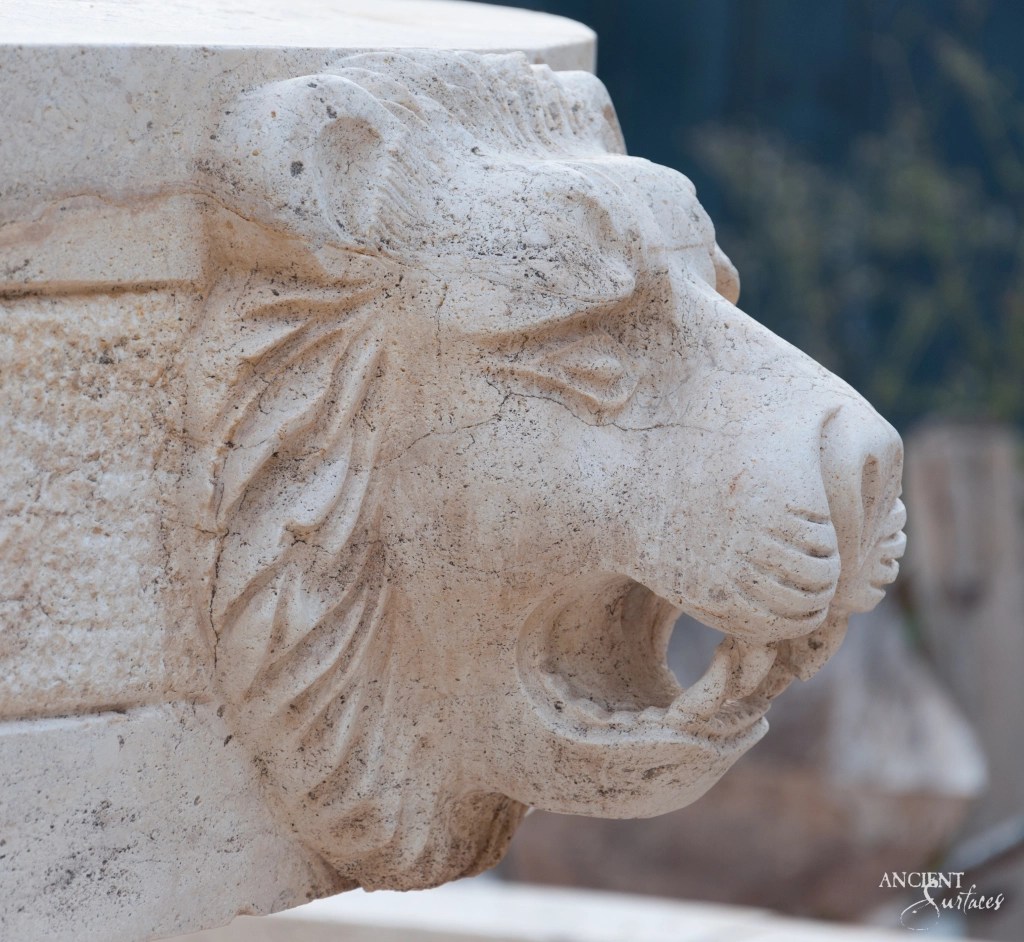
Antique lion head wall fountain by Ancient Surfaces.
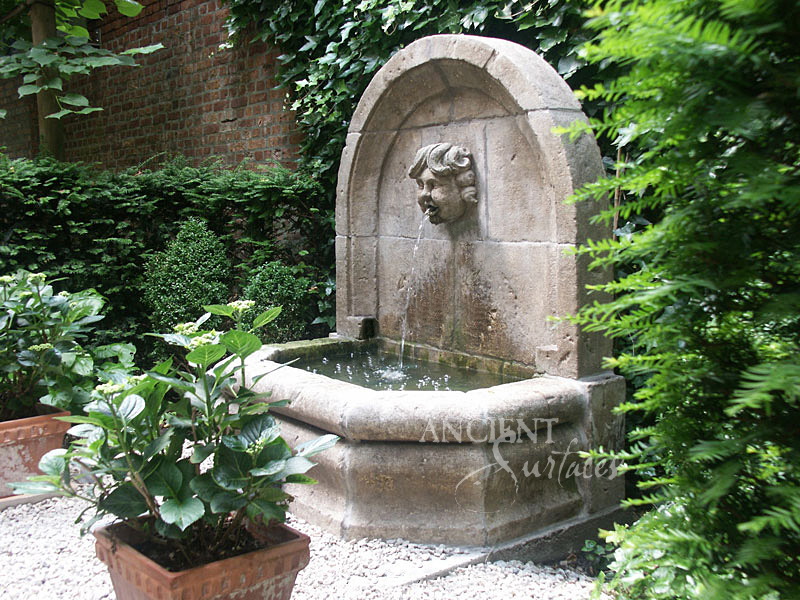
Antique Cherub head wall fountain by Ancient Surfaces.
Fountains were originally purely functional, connected to springs or aqueducts and used to provide drinking water and water for bathing and washing to the residents of cities, towns and villages. Until the late 19th century most fountains operated by gravity, and needed a source of water higher than the fountain, such as a reservoir or aqueduct, to make the water flow or jet into the air.
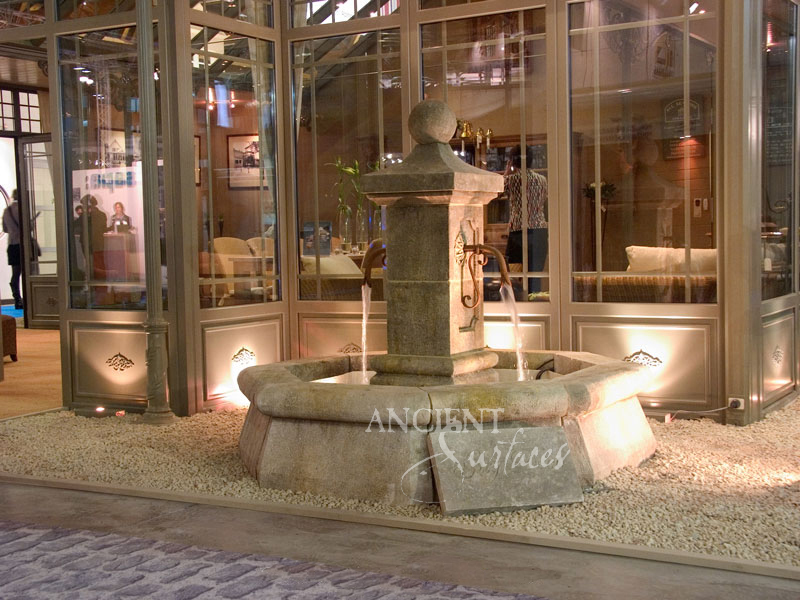
Antique Octagonal Stone Fountain by Ancient Surfaces.
In addition to providing drinking water, fountains were used for decoration and to celebrate their builders. Roman fountains were decorated with bronze or stone masks of animals or heroes. In the Middle Ages, Moorish and Muslim garden designers used fountains to create miniature versions of the gardens of paradise.
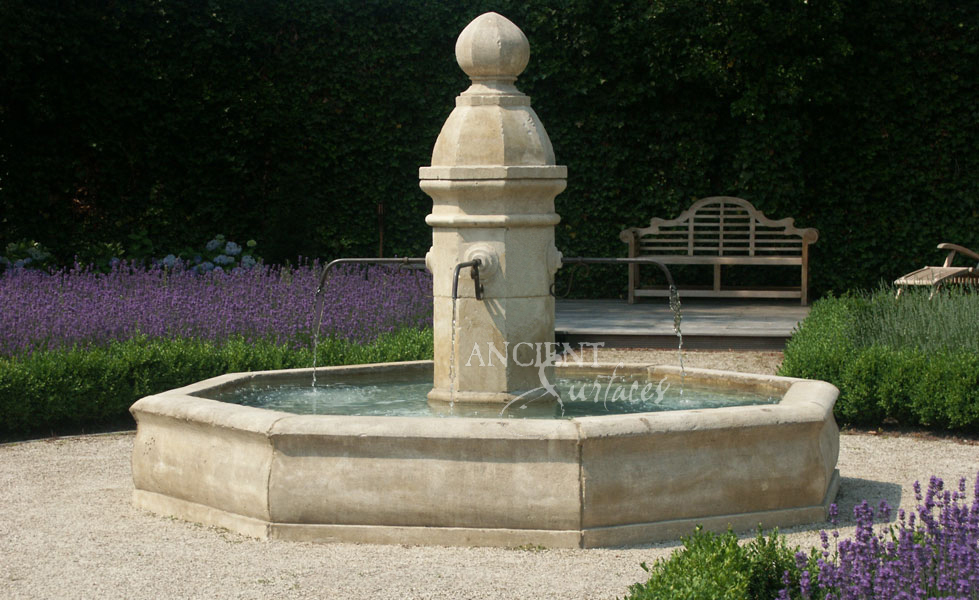
Antique Octagonal Stone Fountain by Ancient Surfaces.
Ancient civilizations built stone basins to capture and hold precious drinking water.
A carved stone basin, dating to around 2000 BC, was discovered in the ruins of the ancient Sumerian city of Lagash.
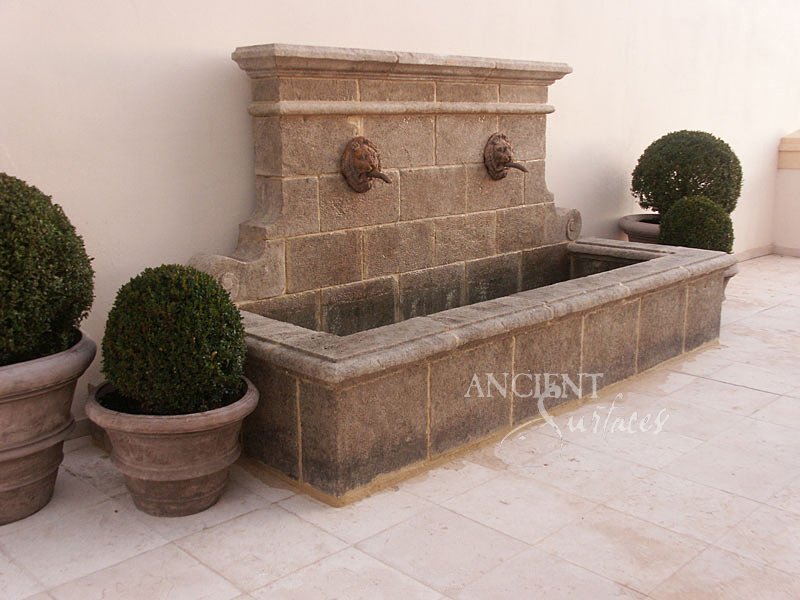
Antique double headed lion wall fountain by Ancient Surfaces.
The ancient Assyrians constructed a series of basins in the gorge of the Comel River, carved in solid rock, connected by small channels, descending to a stream.
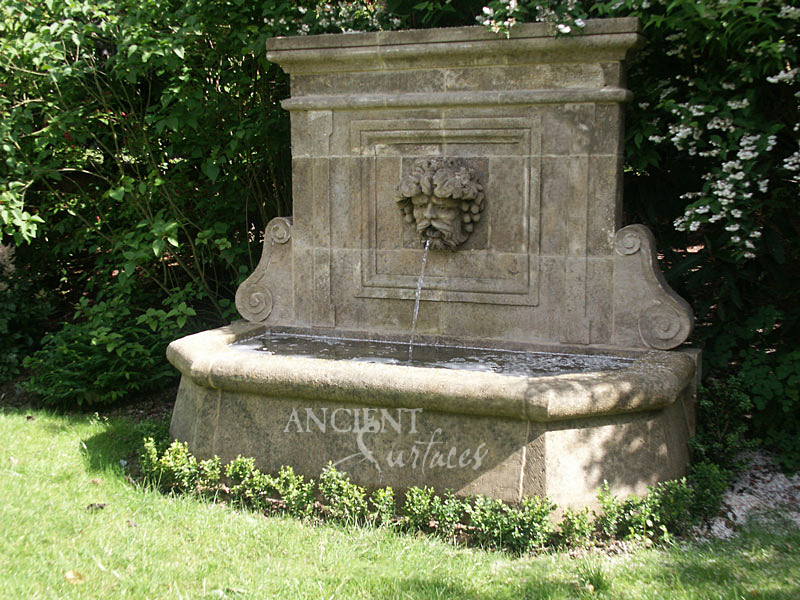
Antique Bacchus head wall fountain by Ancient Surfaces.
The lowest basin was decorated with carved reliefs of two lions.
The ancient Egyptians had ingenious systems for hoisting water up from the Nile for drinking and irrigation, but without a higher source of water it was not possible to make water flow by gravity, and no Egyptian fountains or pictures of fountains have been found.

Antique Medieval wall fountain by Ancient Surfaces.
The ancient Greeks were apparently the first to use aqueducts and gravity-powered fountains to distribute water. According to ancient historians, fountains existed in Athens, Corinth, and other ancient Greek cities in the 6th century BC as the terminating points of aqueducts which brought water from springs and rivers into the cities.
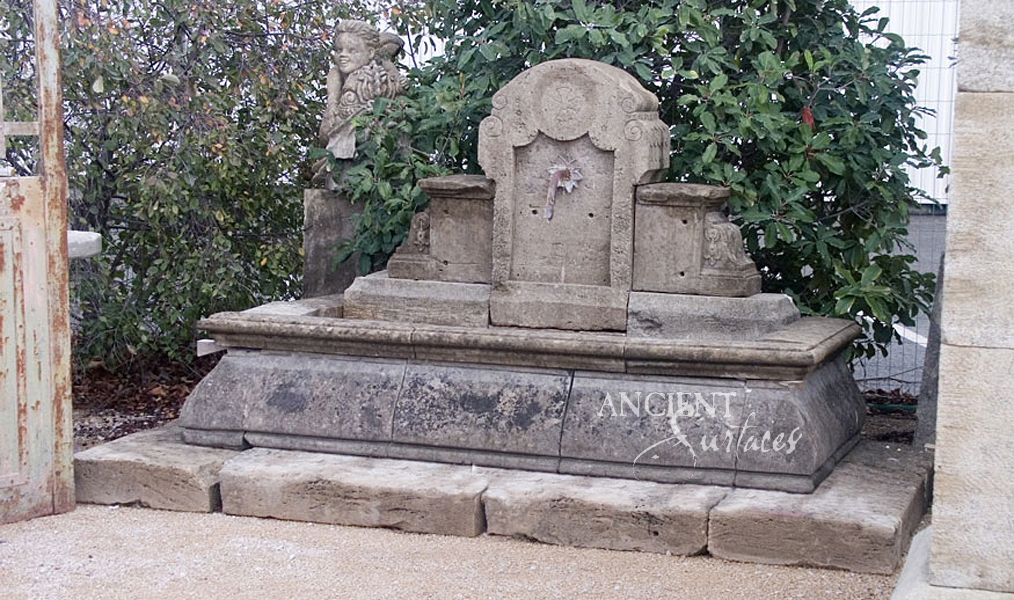
Antique Medieval wall fountain by Ancient Surfaces.
In the 6th century BC the Athenian ruler Peisistratos built the main fountain of Athens, the Enneacrounos, in the Agora, or main square.
It had nine large cannons, or spouts, which supplied drinking water to local residents.
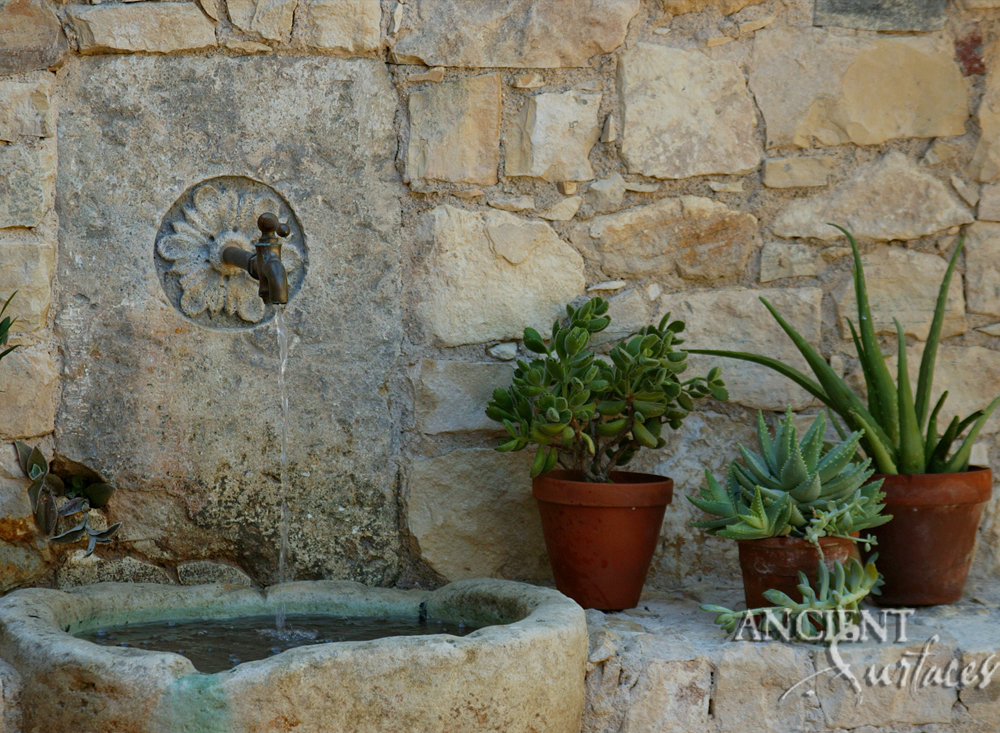
Antique Medieval wall fountain by Ancient Surfaces.
Greek fountains were made of stone or marble, with water flowing through bronze pipes and emerging from the mouth of a sculpted mask that represented the head of a lion or the muzzle of an animal.
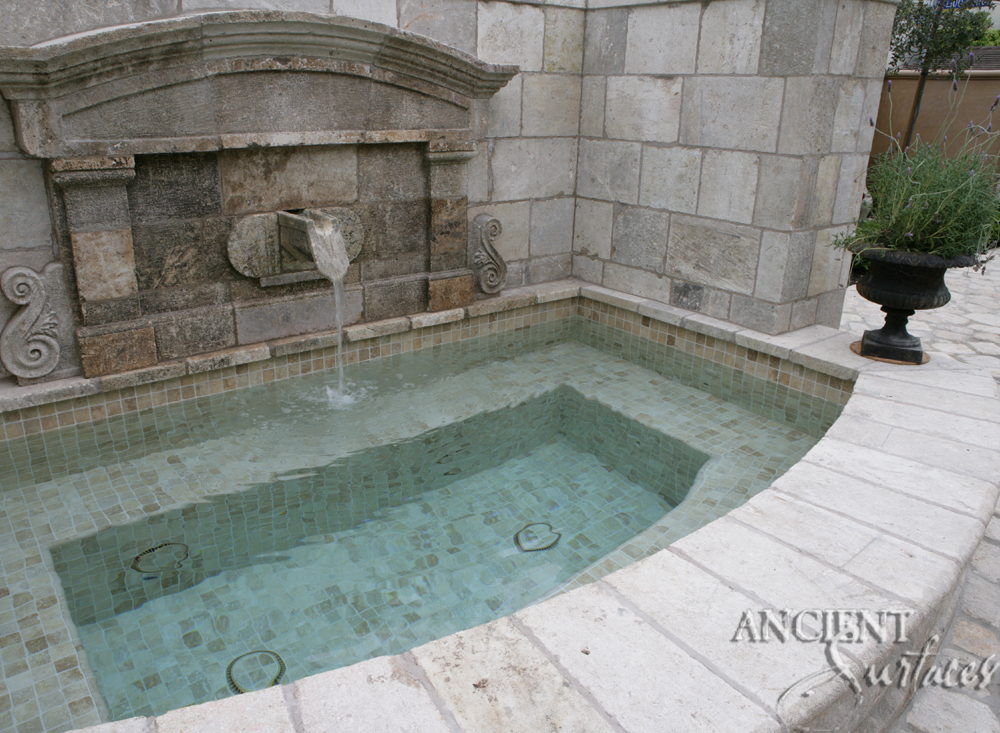
Antique Medieval wall fountain by Ancient Surfaces.
Most Greek fountains flowed by simple gravity, but they also discovered how to use principle of a siphon to make water spout, as seen in pictures on Greek vases.
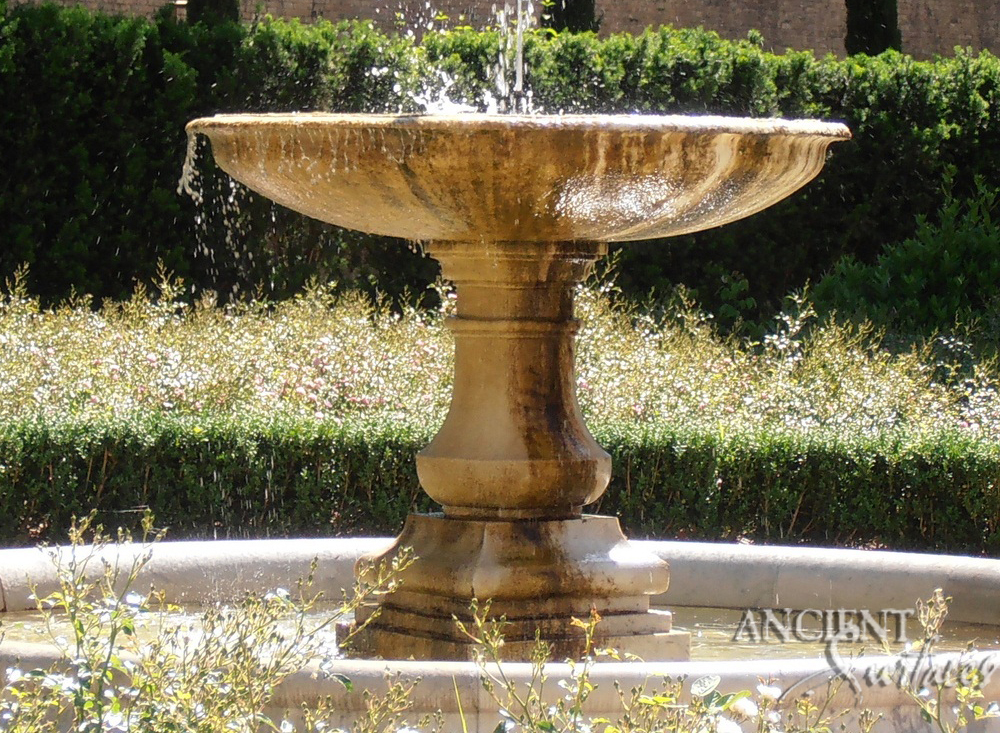
Antique Medieval wall fountain by Ancient Surfaces.
The Ancient Romans built an extensive system of aqueduct from mountain rivers and lakes to provide water for the fountains and baths of Rome.
The Roman engineers used lead pipes instead of bronze to distribute the water throughout the city.

Antique Medieval wall fountain by Ancient Surfaces.
The excavations at Pompeii, which revealed the city as it was when it was destroyed by Mount Vesuvius in 79 AD, uncovered free-standing fountains and basins placed at intervals along city streets, fed by siphoning water upwards from lead pipes under the street.
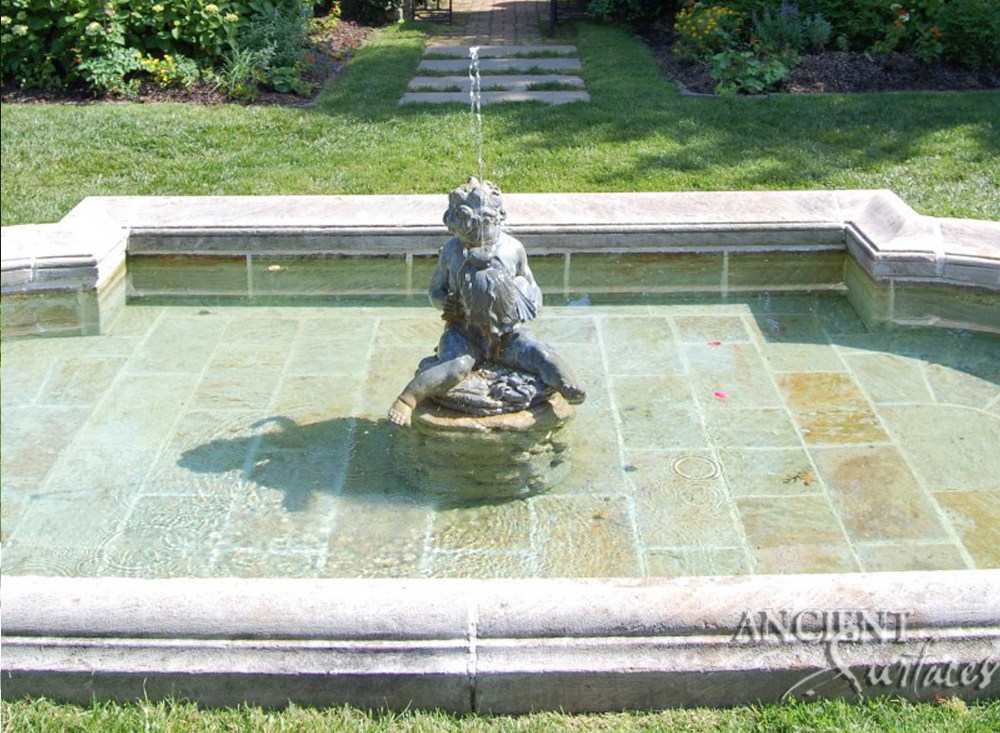
Antique Medieval wall fountain by Ancient Surfaces.
The excavations of Pompeii also showed that the homes of wealthy Romans often had a small fountain in the atrium, or interior courtyard, with water coming from city water supply and spouting into a small bowl or basin.

Antique Medieval wall fountain by Ancient Surfaces.
Ancient Rome was a city of fountains. According to Sextus Julius Frontinus, the Roman consul who was named curator aquarum or guardian of the water of Rome in 98 AD, Rome had nine aqueducts which fed 39 monumental fountains and 591 public basins, not counting the water supplied to the Imperial household, baths and owners of private villas.
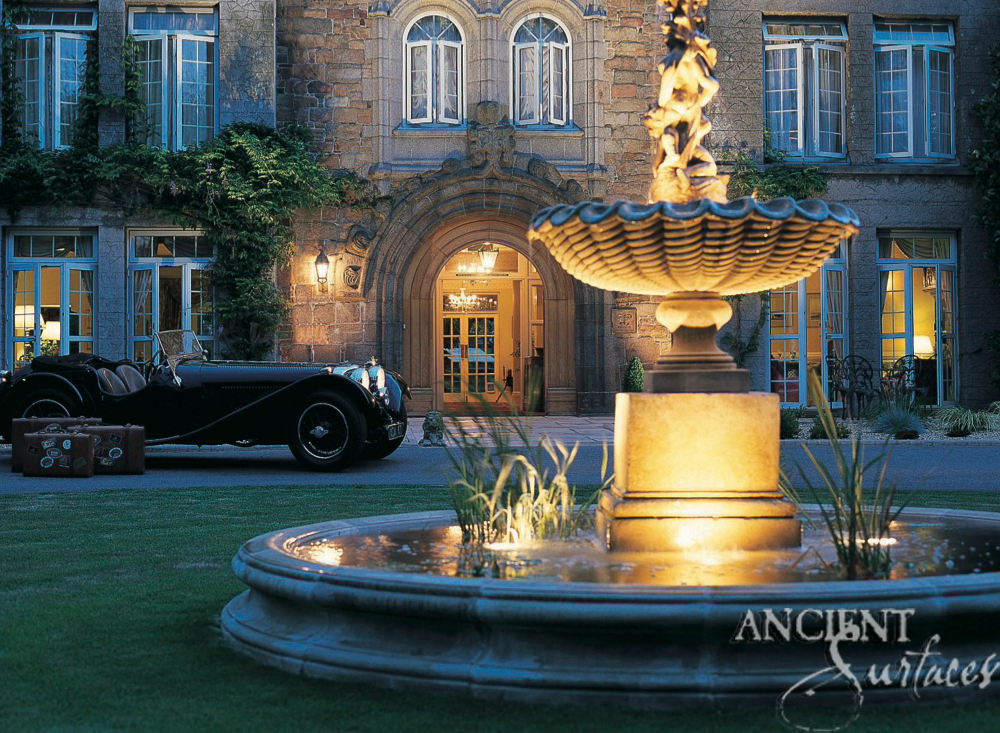
Antique Medieval wall fountain by Ancient Surfaces.
Each of the major fountains was connected to two different aqueducts, in case one was shut down for service. The Romans were able to make fountains jet water into the air, by using the pressure of water flowing from a distant and higher source of water to create hydraulic head, or force. Illustrations of fountains in gardens spouting water are found on wall paintings in Rome from the 1st century BC, and in the villas of Pompeii.
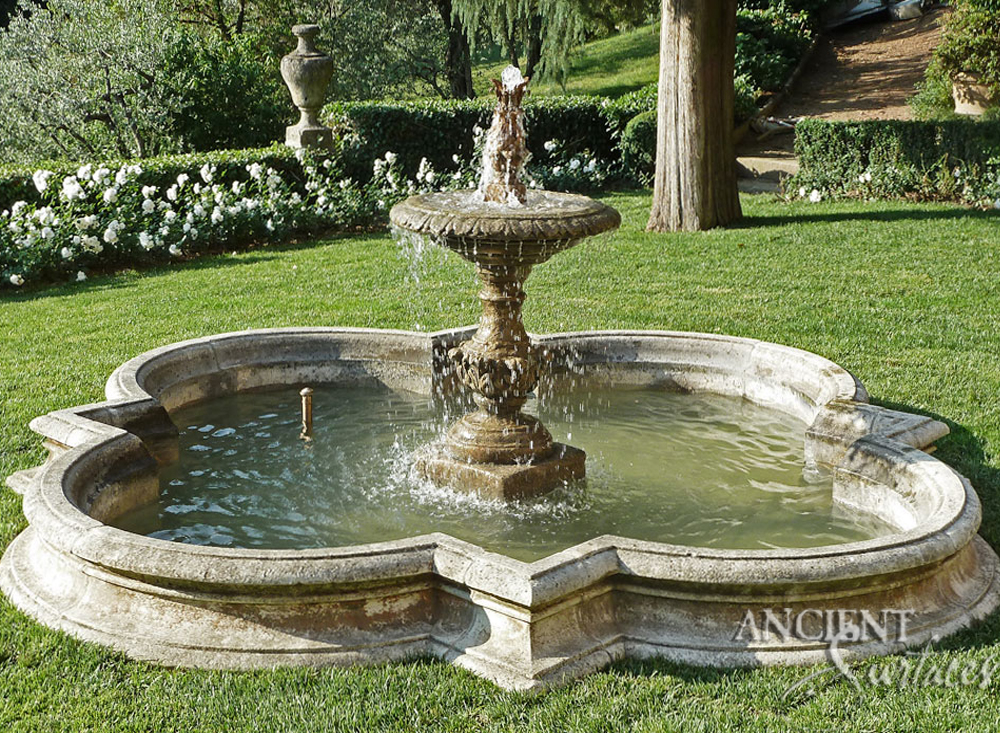
Antique Medieval wall fountain by Ancient Surfaces.
The Villa of Hadrian in Tivoli featured a large swimming basin with jets of water.
Pliny the Younger described the banquet room of a Roman villa where a fountain began to jet water when visitors sat on a marble seat.
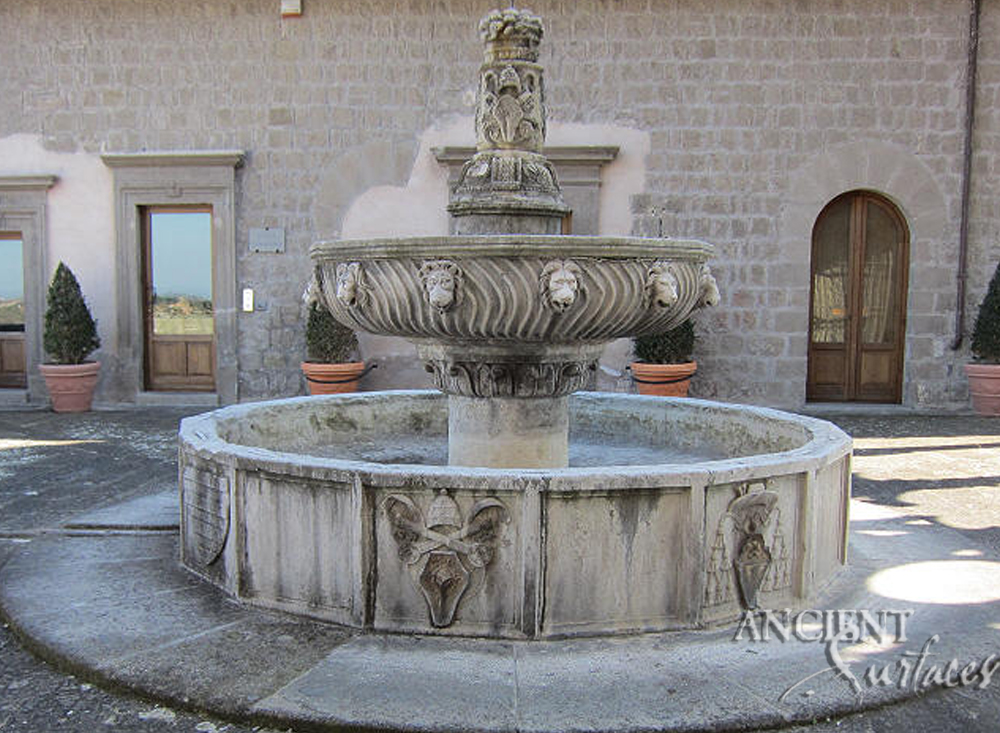
Antique Medieval wall fountain by Ancient Surfaces.
The water flowed into a basin, where the courses of a banquet were served in floating dishes shaped like boats.
Roman engineers built aqueducts and fountains throughout the Roman Empire.
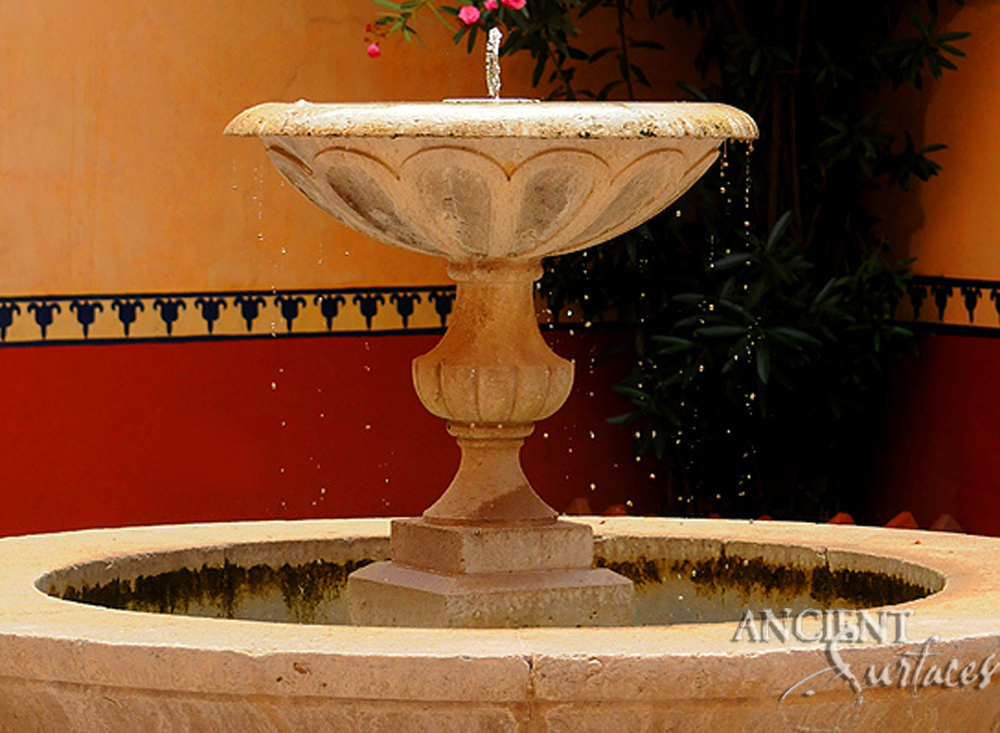
Antique Medieval wall fountain by Ancient Surfaces.
Call us at: 212-461-0245 // 212-913-9588
Visit our Antique Pool Fountain Gallery on Houzz
Enclosing a Courtyard
The most important characteristic of courtyard design is enclosure. A courtyard can be enclosed with walls, fencing or even plants. Depending on the level of privacy you desire, the walls of a courtyard can be tall or short, solid or transparent.
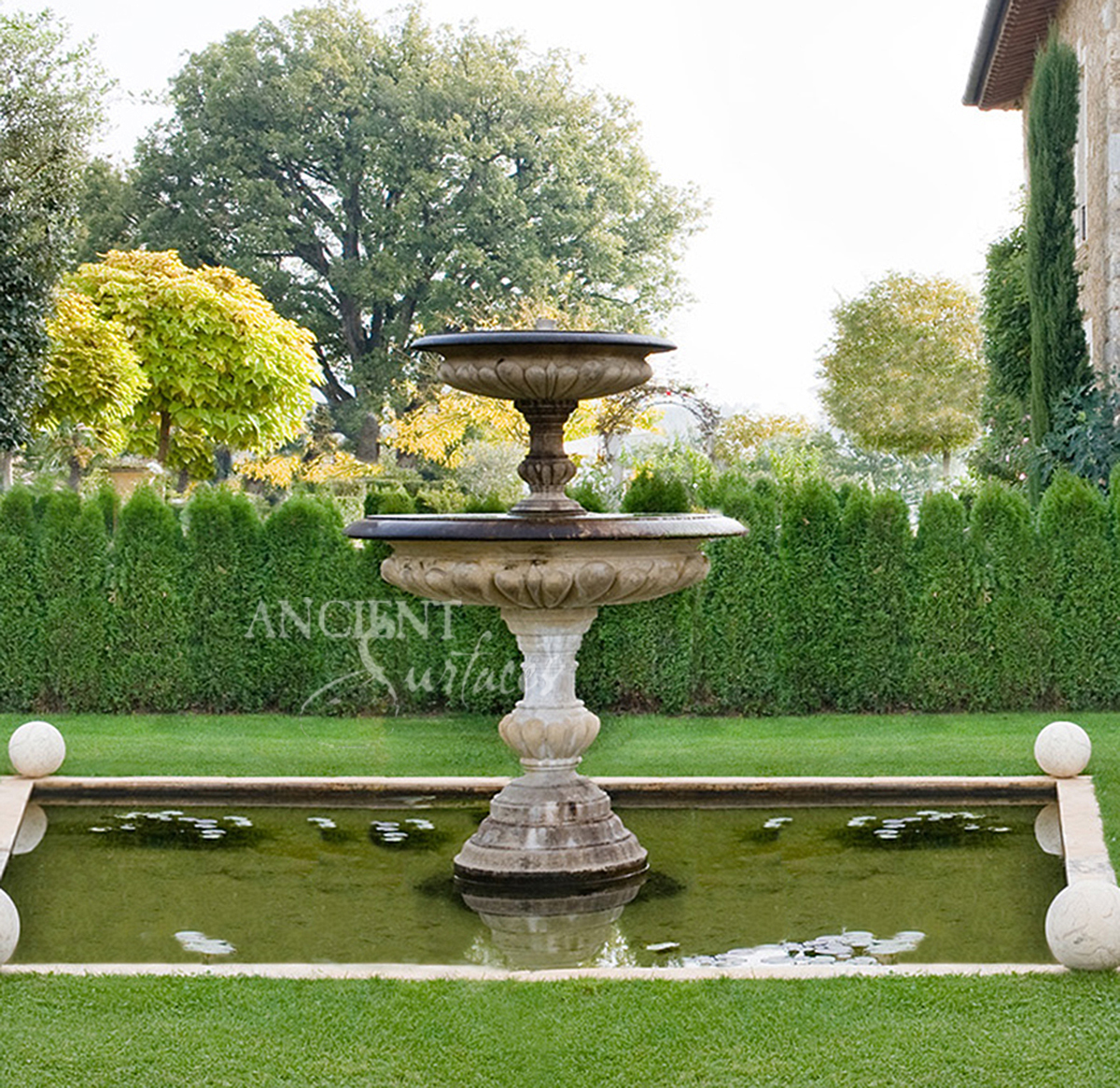
‘Foundation Slabs’ on the Pool Coping Edge. Antique tiered stone fountain by Ancient Surfaces. Photo of a hotel exterior garden with lawn.
Enclosing a courtyard on all four sides is not always a requirement – typically three sides will be sufficient for creating a sense of enclosure. In order to avoid a fortress-like appearance, many homeowners opt to use low walls or partially see-through fencing padded with a line of thick foliage shrubs or trees. This helps create a sense of greenery and intrigue while welcomes visitors, yet providing privacy for courtyard activities.
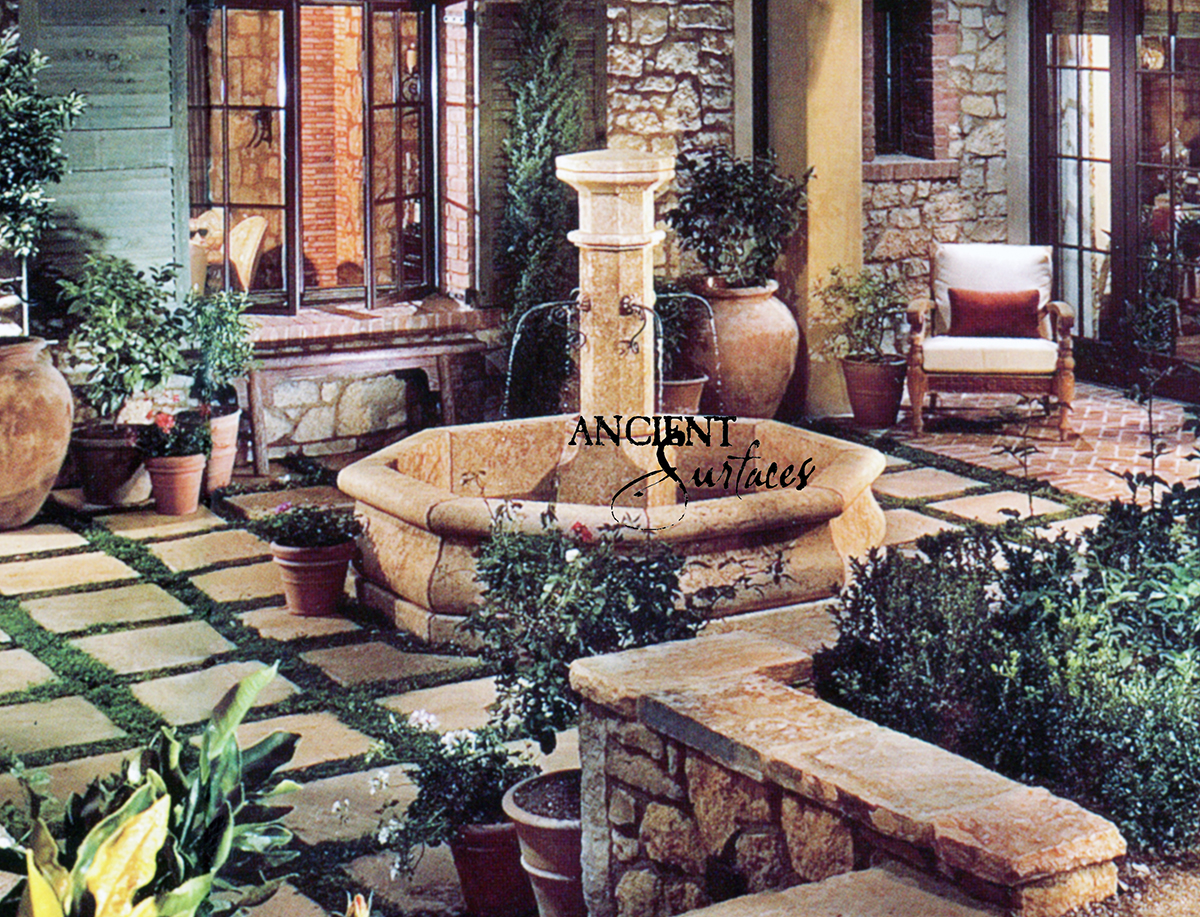
An Octagonal antique Limestone Pool Fountain By Ancient Surfaces in an Irvine California Home.
A roof or patio cover can be added to a courtyard to further increase the sense of enclosure. However, this may make the garden space feel small and dark. One way to fix this problem is to have windows cut into the walls or fence. Consult a landscape designer to determine the best way to let the maximum amount of light into your courtyard.
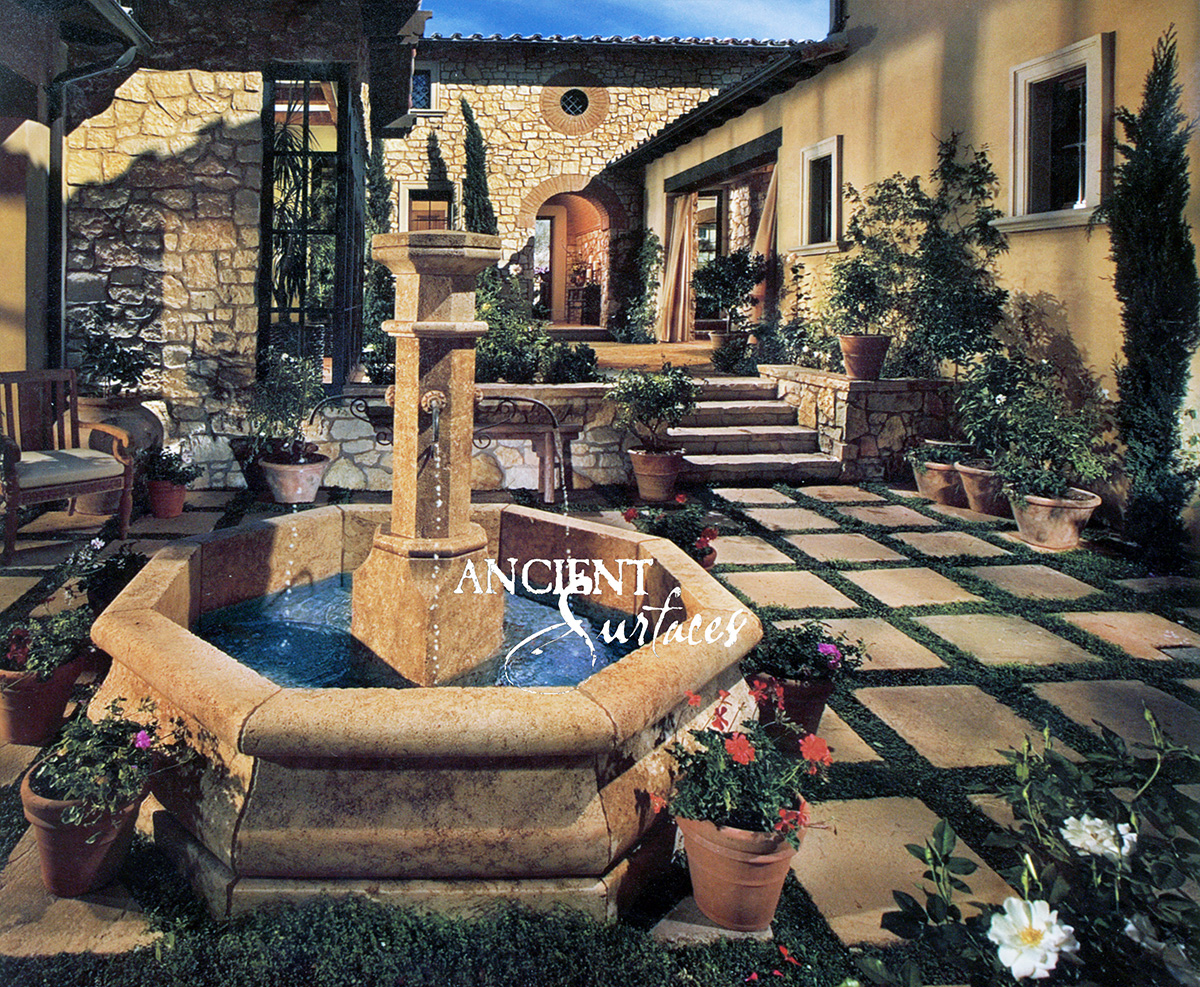
Octagonal Antique Limestone Pool Fountain by Ancient Surfaces. A semi closed courtyard in California.
Courtyard Water Features
A front courtyard would not be complete without a water feature. The sound of moving water will help to mask ambient noises such as traffic and neighbors. In a formal courtyard design a classically styled fountain can serve as a centerpiece, while in an informal courtyard a wall, or disappearing urn fountain will do the trick.
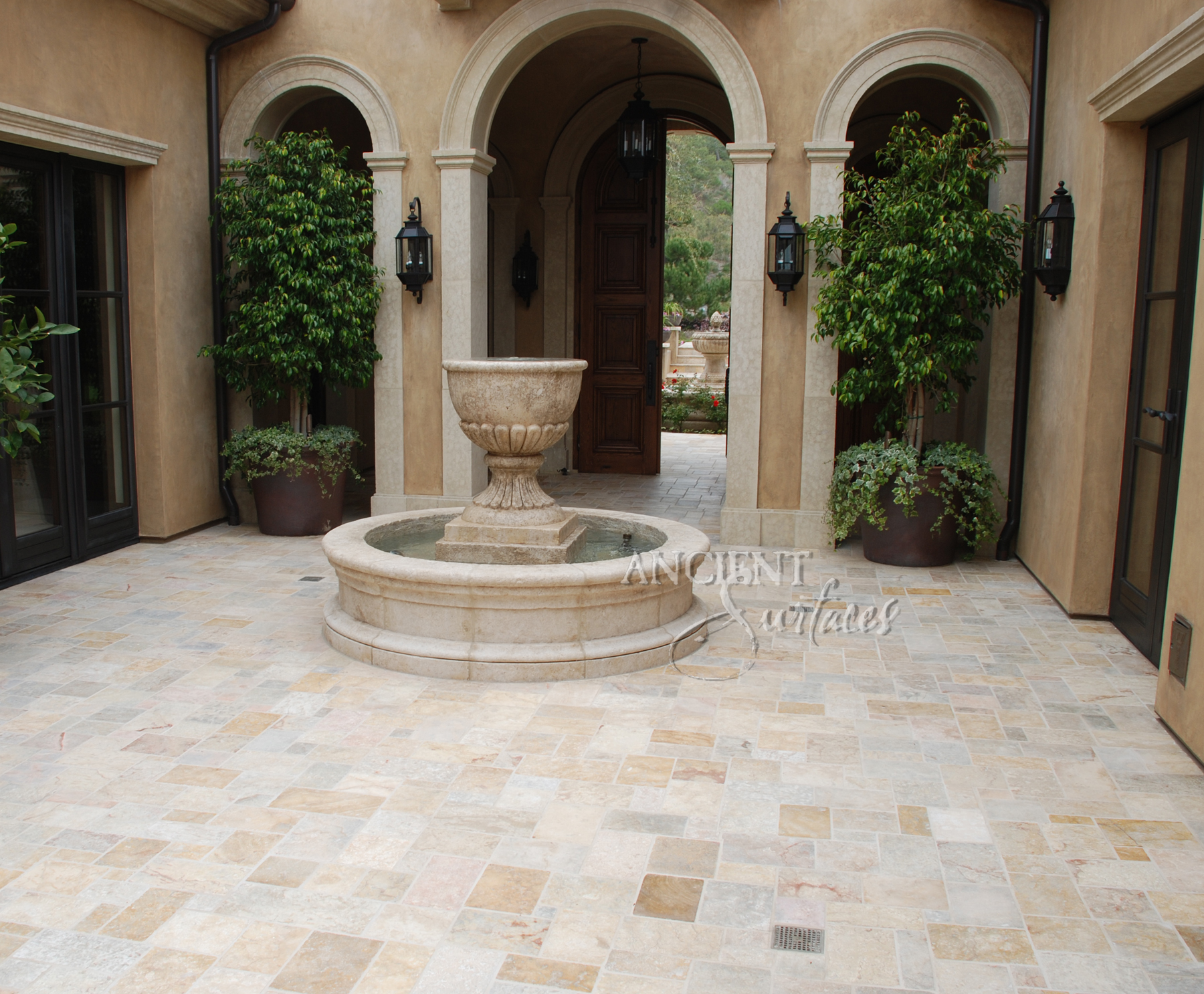
A hand carved entryway courtyard stone fountain sitting on top of reclaimed Arcane Stone flooring. By Ancient Surfaces
The size of a water feature should be proportionate to the size of the courtyard. For example, a large tiered fountain will visually overpower a small courtyard and produce too much noise for the space. A landscape designer or architect will be able to help you determine the proper scale for your courtyard water feature.
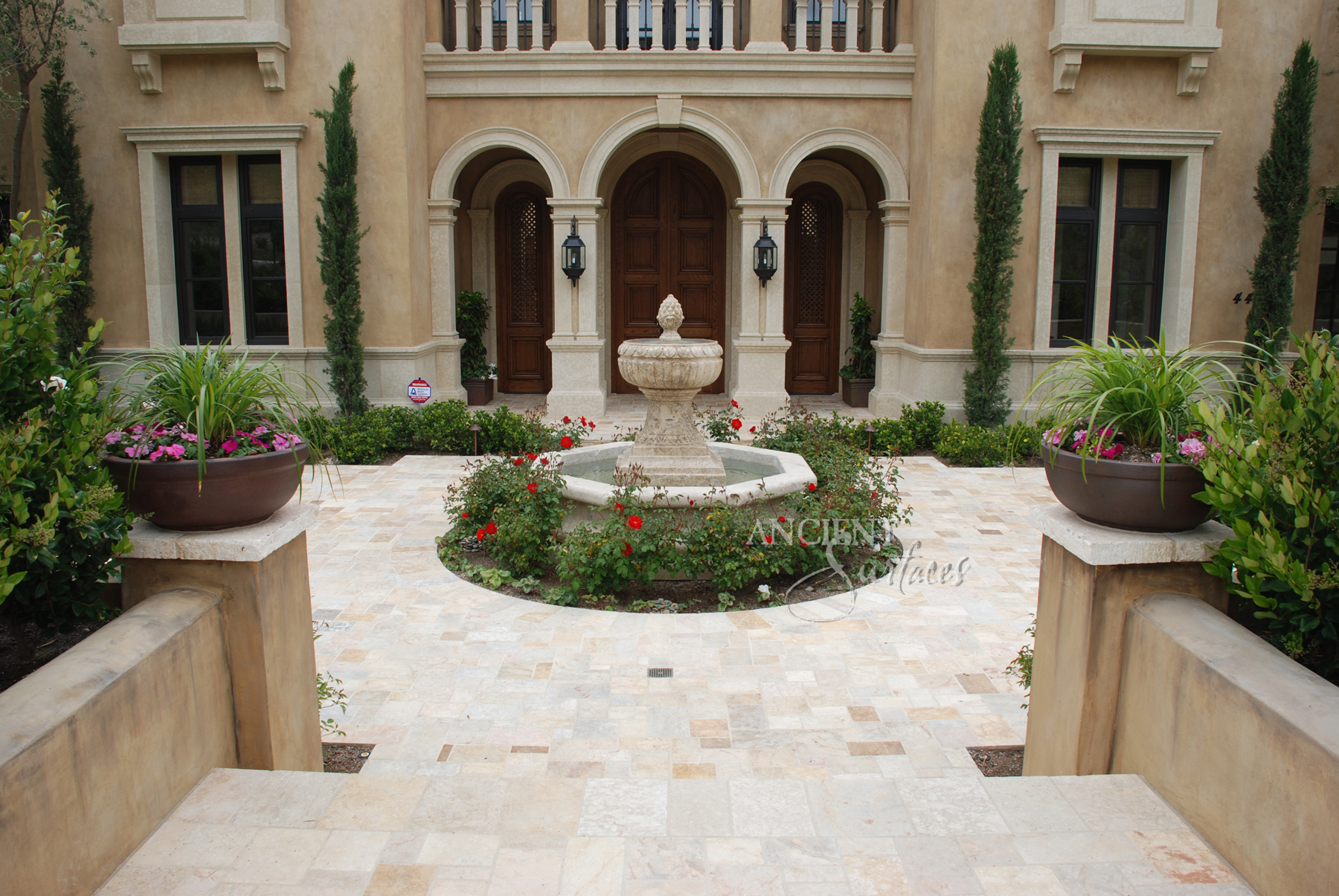
A hand carved entryway courtyard stone fountain sitting on top of reclaimed Arcane Stone flooring. By Ancient Surfaces
Adding Furniture, Plants,a fire element & Lighting to your courtyard fountain
The size of your courtyard will determine how you put the finishing touches on the space. A large courtyard may be able to accommodate an outdoor dining table and chairs and possibly even a fire feature such as a small stone fire pit. On-the-other-hand, a small courtyard can be easily overwhelmed with accessories. In this case, keep things simple – a basic bench and a few potted plants with a simple wall fountain will do the trick.
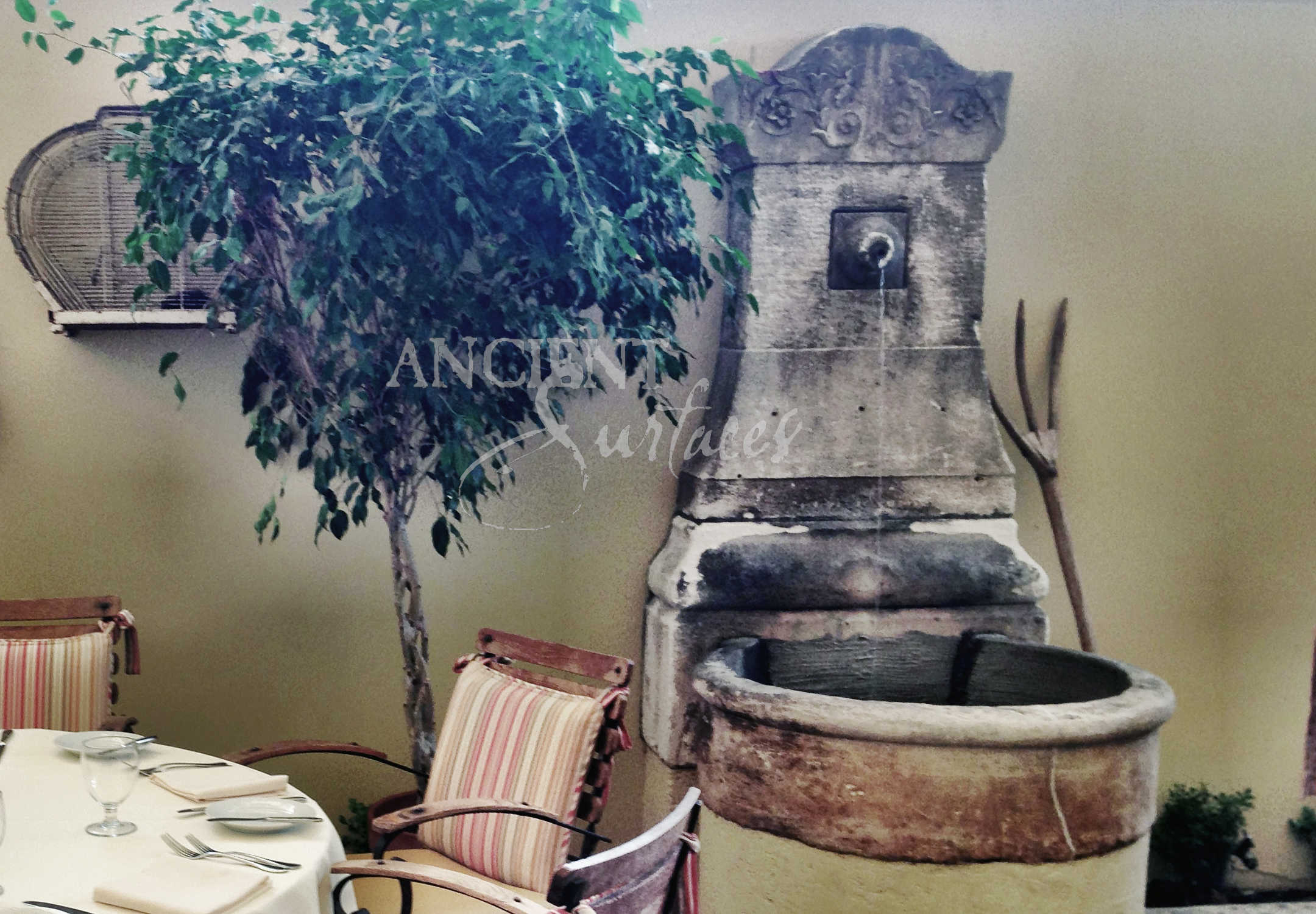
Small Antique French Limestone Wall Fountain installed in a small courtyard. By Ancient Surfaces.
Plants are the key to softening both the inside and outside of courtyard walls. Hedges and ornamental grasses can be grown along the walls, or a grouping of container gardens can be placed in a corner. Climbing plants are great because they will grow up and over the walls. If you live in a climate that allows, bougainvillea will add a nice pop of tropical color. The plants you choose can help establish a theme in your courtyard. For example, ferns and evergreens will create a South East Asian vibe.
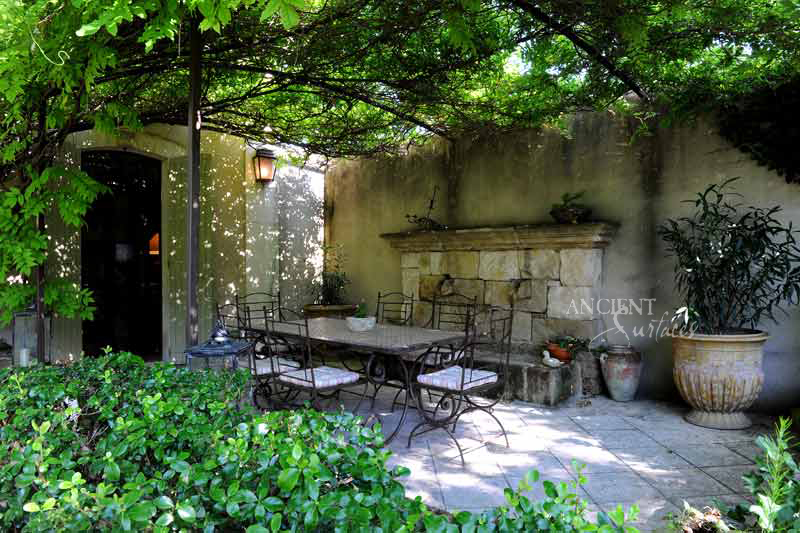
Outdoor Courtyard with heavy foliage, a wall fountain and an outdoor dining table by Ancient Surfaces.
Finally, a courtyard needs lighting. First and foremost all pathways should be lit for safety. Then you can think about lighting your water feature to make it a nighttime focal point. And last but not least, you can add sparkling string lights or Moroccan inspired lanterns for ambiance.
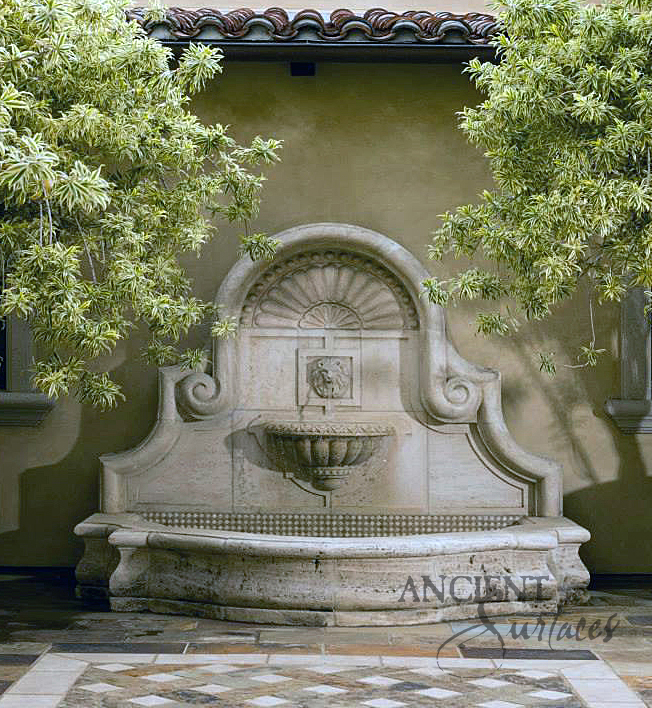
Hand Carved Limestone Classical Wall Fountain in an Exposed Open Inside Courtyard By Ancient Surfaces.
To learn more please visit our Website at:
www.ancientsurfaces.com/Antique-Pool-Fountains.html
Call us at: 212-461-0245 // 212-913-9588
Visit our Antique Pool Fountain Gallery on Houzz
 Antique Stone Fountains by Ancient Surfaces.